Tipping is not mandatory in Uganda, but it is widely expected in the gorilla trekking context and is an important supplement to the formal wages paid to rangers, guides, and porters. Getting the amount right — enough to be genuinely appreciated without being conspicuous or creating expectations that affect other visitors — requires understanding the local economy and the norms that have developed around gorilla tourism.
The Tip for Your Ranger Guide
The ranger who leads your gorilla trek is a trained Uganda Wildlife Authority employee with specialist knowledge, significant responsibility, and a salary that reflects Uganda’s public sector pay scale rather than the premium tourism economy. Tips are an important supplement to formal income.
The standard guidance from tour operators and the Uganda Tourism Board is $15-$30 per person per trek for the lead ranger guide. For a group of four trekkers, the ranger receives $60-$120 in total tips — a meaningful amount in the local economy. A particularly exceptional guide who provided outstanding interpretation, exceptional problem-solving, or went significantly beyond normal duties warrants the higher end of the range.
Tips should be given directly to the ranger at the end of the trek, in cash (US dollars or Ugandan shillings are both acceptable). A brief expression of appreciation for specific things they did well — identifying a particular bird, explaining a gorilla interaction, managing a difficult trail section — makes the tip more personal and more meaningful than cash handed over without comment.
The Tip for Your Porter
Porters are hired from local communities adjacent to the park and represent one of the most direct economic connections between gorilla tourism and community welfare. They work hard, often on difficult terrain, and earn their income day by day rather than through salary. Tipping porters well is one of the best things visitors can do for local economic benefit.
The standard tip for a porter is $10-$20 per person they assisted during the trek. A porter who carries your bag, assists you on steep sections, and maintains good humour throughout a difficult trek deserves the higher end of this range. Pay the porter directly, in cash, at the trailhead after the trek.
The Tip for Your Driver-Guide
If you are using a tour operator’s vehicle and driver-guide for your full trip (Entebbe to Bwindi and back), the driver-guide deserves a tip that reflects the total service provided, not just the trekking day. A standard tip is $10-$20 per person per day of total service. For a five-day trip, this means $50-$100 per person in total, given at the end of the trip. A driver who provided excellent service — punctual, knowledgeable, safe, flexible, and good company — warrants the higher end.
Lodge and Restaurant Staff
Tipping lodge staff is at your discretion. The norm is $5-$10 per person per night at mid-range to luxury lodges, given to housekeeping at checkout. Restaurant staff at independent restaurants expect 10% of the bill if service is not included. Budget guesthouses do not typically expect tips beyond rounding up on the bill.
When and How to Pay
Carry tip money in small denomination cash throughout the trek. US dollars and Ugandan shillings are both accepted. Do not tip via credit card or mobile money — rangers and porters need cash. Prepare separate tip envelopes or have appropriate denomination bills ready before the trek so the process is smooth rather than awkward. Most visitors find that giving tips with a few words of genuine appreciation — specific to what the person did well — is better received than the cash alone.
Total Tip Budget for a 5-Day Trip
- Ranger guide (1 trek): $20-$30
- Porter (1 trek): $15-$20
- Driver-guide (5 days): $60-$100
- Lodge housekeeping (3 nights): $15-$30
- Total tip budget: $110-$180 per person
Budget this in cash before departing your home country. It is difficult to obtain appropriate denomination dollar bills in Uganda’s more remote areas.
Frequently Asked Questions
Rough ranges per person (including international flights): Budget: $1,500–$2,500 (economy flight, basic lodge, group tour). Mid-range: $2,800–$4,500 (comfortable lodges, small group or private tour). Luxury: $6,000–$15,000+ (private guide, charter flights, high-end lodges). The $800 permit is a fixed cost for everyone regardless of budget.
The permit covers only the 1-hour gorilla tracking. Budget separately for: Bwindi park entry fee ($40/day), porter hire ($15–$20 per trek — strongly recommended), ranger/tracker tip ($20–$30 per person), accommodation, ground transfers, and international flights. Most tour operators bundle these except the tip.
The only official discount is the low season rate: $600 FNR during April, May, and November (vs. $800 standard). EAC foreign residents pay $700 year-round ($500 low season). There are no group discounts, early-booking discounts, or operator-negotiated rates — the permit price is fixed by Uganda Wildlife Authority.
The permit itself costs the same either way. Booking through a licensed tour operator adds their service fee but simplifies the logistics significantly — permit transfer, sector assignment, accommodation at the right sector, early morning transfers, and post-trek arrangements are all managed for you. Self-arranged gorilla trekking is possible but requires careful coordination.
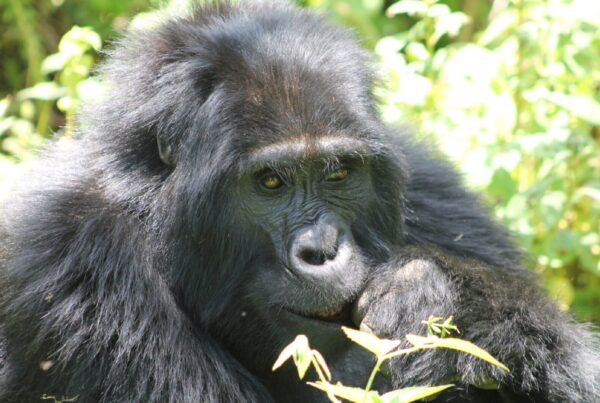
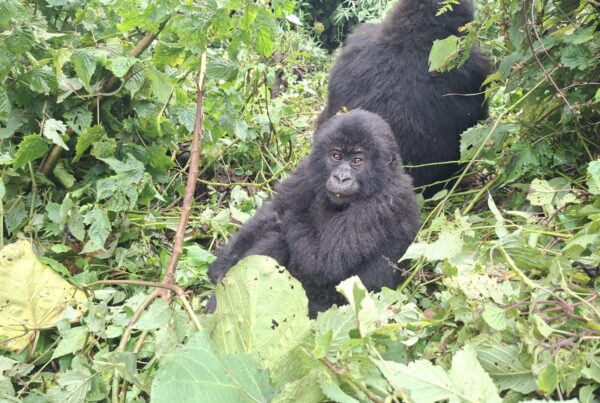
Uganda is home to the mountain gorilla (Gorilla beringei beringei), one of two subspecies of eastern gorilla. They live exclusively in the Virunga volcanic highlands (Uganda/Rwanda/DRC) and Bwindi Impenetrable Forest (Uganda only). Mountain gorillas are the only gorilla subspecies that cannot survive in captivity — every individual you can trek is a wild animal.