Gorilla trekking misconceptions circulate persistently through travel media, social content, and word of mouth — and they have real consequences: visitors who believe gorilla encounters are guaranteed arrive unprepared for the possibility of a cancellation, those who think the trek is always short are not physically ready for 6-hour forest hikes, those who assume permits are always available book trips without securing the foundational element first, and those who believe gorillas are dangerous lose the quality of the encounter to unnecessary anxiety rather than experiencing the calm, observational closeness that defines the best gorilla encounters. This guide addresses the most persistent myths about gorilla trekking in Uganda, replacing each with accurate information grounded in current Uganda Wildlife Authority protocols, the published scientific record on mountain gorilla behaviour and conservation status, and the accumulated experience of the trekking process at Bwindi Impenetrable Forest. For the permit booking process that most misconceptions revolve around, see the permit guide.
Gorilla Trekking Myths: Quick Corrections
- Myth: Gorillas are dangerous → Habituated families are calm and accustomed to human presence; charges are rare and managed
- Myth: The trek is always short → Trek duration is 1–8 hours depending on family location; plan for a full day
- Myth: Permits are always available → Peak months sell out 6+ months in advance; book early
- Myth: Any fitness level works → Basic fitness is genuinely needed; the forest terrain is steep and uneven
- Myth: Photography is restricted → Photography is permitted; flash is the specific restriction
- Myth: Gorilla trekking supports poaching → FALSE — permit revenue is the primary anti-poaching funding source
Gorilla trekking occupies a unique place in the popular imagination, inspiring awe, curiosity, and more than its share of misconceptions. Travellers planning their first encounter with mountain gorillas often operate under assumptions that range from slightly inaccurate to completely false. These myths circulate through word of mouth, outdated guidebooks, social media, and well-meaning but ill-informed advice from people who have never actually trekked. Separating myth from fact is essential for realistic preparation, appropriate expectations, and a safe, respectful encounter.
This guide addresses the most persistent myths about gorilla trekking in Uganda, replacing them with factual information grounded in current UWA policies, scientific research, and the accumulated experience of thousands of trekkers. Whether you are worried about gorilla aggression, confused about permit rules, or uncertain what the experience actually involves, this myth-busting guide provides the clarity you need.
Myth: Gorillas Are Aggressive and Dangerous to Humans
The most widespread and persistent myth about gorilla trekking is that gorillas are inherently aggressive and that trekkers face significant danger during encounters. This misconception arises partly from the silverback’s imposing size and partly from fictional portrayals of gorillas as violent beasts.
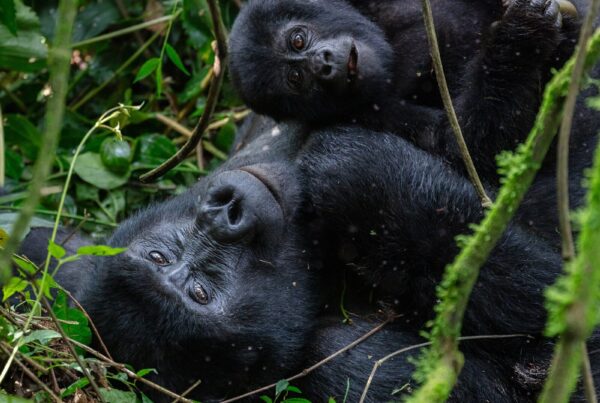
Fact: Mountain gorillas are not naturally aggressive toward humans. Decades of habituation have created tolerance, and in the entire history of gorilla tourism, there has never been a fatal attack on a trekker by a habituated mountain gorilla. Incidents of even minor injury are extraordinarily rare and almost always result from trekkers violating rules such as the seven-metre distance or ignoring guide instructions.
Gorillas are fundamentally peaceful animals whose social structure emphasises cooperation over conflict. Silverbacks may display dominance through chest-beating or vocalisations, but these are communication tools, not precursors to attack. A habituated silverback who feels respected and unthreatened will tolerate human presence with calm indifference.
Myth: You Can Buy Gorilla Permits at the Park Gate
Some travellers believe that gorilla permits can be purchased spontaneously at the park entrance, like tickets to a tourist attraction.
Fact: Gorilla permits cannot be bought at the park gate or on the day of trekking. They must be booked and paid for in advance through UWA or a licensed operator. Daily permits are limited to eight per gorilla family, and demand consistently exceeds supply. Travellers who arrive without pre-booked permits will be turned away, regardless of how far they have travelled or how much they are willing to pay.
During peak season, permits sell out months in advance. Even during low season, same-day availability is virtually nonexistent. Booking must be done through formal channels, with payment processed and confirmation received before you travel to the park.
Myth: Children Under Fifteen Can Trek With Parental Permission
Parents sometimes believe that the fifteen-year age minimum is flexible and that younger children can participate with parental consent or by signing a waiver.
Fact: The fifteen-year minimum age is absolute and strictly enforced. UWA rangers verify ages against passports at the pre-trek briefing, and children under fifteen are denied participation without exception, waiver, or refund. This rule exists to protect gorillas from disease transmission; children under fifteen are more likely to carry common childhood illnesses that could devastate gorilla populations.
No amount of parental advocacy, promises about the child’s maturity, or willingness to sign liability waivers changes this rule. Parents planning family safaris must accept that younger children cannot trek and should arrange alternative activities for them during trekking hours.
Myth: Gorilla Trekking Is Only for Elite Athletes
The physical challenge of gorilla trekking leads some prospective travellers to believe that they must be in exceptional physical condition to participate.
Fact: While gorilla trekking is genuinely strenuous, it does not require elite athleticism. People of varying fitness levels complete treks successfully every day. UWA assigns trekkers to gorilla families based partly on fitness, ensuring that less fit individuals are not sent on the most demanding routes. Porter assistance, sedan chairs for those with mobility limitations, and guide pacing all make the experience accessible to a wide range of physical abilities.
The key requirements are honest self-assessment, appropriate preparation, and willingness to use the support systems available. A fit seventy-year-old may complete the trek more easily than an unfit thirty-year-old. What matters is not your age or your marathon times but your ability to walk for several hours on uneven terrain with appropriate support.
Myth: You Can Touch the Gorillas If They Approach You
The sight of a curious juvenile approaching within arm’s reach tempts some trekkers to reach out and make physical contact.
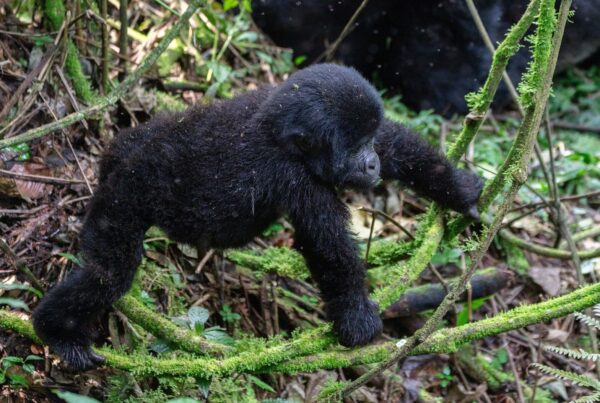
Fact: Touching gorillas is strictly prohibited and can result in immediate termination of the encounter. Physical contact poses the highest risk of disease transmission, and even brief touches can transfer pathogens that are harmless to humans but lethal to gorillas. When gorillas approach closer than seven metres, trekkers must retreat to maintain distance. If a gorilla touches you, which occasionally happens when juveniles are curious, remain still and allow your guide to manage the situation.
The seven-metre rule exists to protect both gorillas and humans. Gorillas share ninety-eight percent of their DNA with humans, making them extraordinarily susceptible to human diseases. The distance also reduces stress on gorillas, whose daily lives already include an hour of unavoidable human contact.
Myth: The Gorilla Habituation Experience Is the Same as Trekking
Some travellers assume that the Gorilla Habituation Experience is simply a longer version of standard gorilla trekking.
Fact: While both activities involve observing gorillas in their natural habitat, the habituation experience differs significantly from standard trekking. The habituation experience allows four hours with a semi-habituated gorilla family rather than one hour with a fully habituated family. The group size is limited to four participants rather than eight. The gorillas are less accustomed to human presence and may be more elusive or less predictable in their behaviour.
The habituation experience costs fifteen hundred dollars compared to eight hundred dollars for standard trekking, reflecting the smaller group size, extended duration, and specialised nature of the activity. It is designed for travellers who want deeper engagement with the habituation process, not merely more time with already-comfortable gorillas.
Myth: Gorilla Permits Are Fully Refundable If You Cancel
Some travellers assume that gorilla permits can be cancelled and refunded if travel plans change, like hotel reservations or flight tickets.
Fact: Gorilla permits are non-refundable in most circumstances. If you cancel for personal reasons, illness, flight changes, or any other reason not caused by UWA, you forfeit the full permit fee. This policy exists because permits represent limited daily opportunities that cannot be resold once the date has passed, and because permit revenue funds conservation operations that continue regardless of individual cancellations.
The only exception is a partial refund of approximately fifty percent if your group completes the full trek but fails to locate gorillas due to the animals’ movements. Even this refund requires documentation from your guide and is not automatic. Travel insurance that covers trip cancellation is the only reliable protection against forfeiting your permit fee.
Myth: Uganda Is Too Dangerous for Tourists
Safety concerns deter some travellers from considering Uganda at all, based on outdated or inaccurate perceptions of the country’s security situation.
Fact: Uganda is generally safe for tourists, including solo travellers and women, provided that standard travel precautions are observed. The Bwindi and Mgahinga region has an exceptional safety record for visitors, with virtually no incidents of violent crime against tourists. The Uganda Wildlife Authority maintains professional security at all trekking sites, and the tourism infrastructure operates reliably.
While Uganda, like any country, has areas where security is problematic, these areas are far from the gorilla trekking region and are not on any standard tourist itinerary. Travellers who follow their operator’s advice, avoid walking alone at night, and exercise the same caution they would in any unfamiliar destination will find Uganda welcoming and secure.
Myth: You Need Professional Camera Equipment for Good Photos
Some travellers believe that capturing worthwhile gorilla photographs requires expensive professional cameras and long telephoto lenses.
Fact: While professional equipment certainly helps, modern smartphones can produce genuinely impressive gorilla photographs in the right conditions. The key factors are not equipment but technique: stabilising the camera, using appropriate settings for low light, and composing thoughtfully within the seven-metre distance. Many of the most emotionally powerful gorilla photographs have been taken with smartphones by trekkers who focused on being present rather than fiddling with equipment.
That said, if you own a DSLR or mirrorless camera with a good lens, bring it. But do not avoid gorilla trekking because you lack professional gear, and do not let camera anxiety distract you from the experience itself.
Final Thoughts
Myths about gorilla trekking persist because the experience is so unusual, so emotionally charged, and so heavily marketed that reality and imagination easily blur. Separating fact from fiction allows you to approach your trek with accurate expectations, appropriate preparation, and respect for the animals, the people, and the conservation system that make the encounter possible.
The truth about gorilla trekking is more interesting than the myths. The real gorillas are neither dangerous monsters nor tame pets; they are wild, intelligent, socially complex creatures who tolerate our presence under carefully managed conditions. The real forest is neither a manicured garden nor an impassable wilderness; it is a living ecosystem that demands respect and rewards curiosity. And the real experience is neither effortless nor impossible; it is challenging, transformative, and genuinely extraordinary. That reality, free from myth and exaggeration, is what awaits you in Bwindi.
Frequently asked questions about gorilla trekking myths and facts
Are mountain gorillas dangerous to trek with?
Habituated mountain gorillas are not dangerous to trek with under the standard UWA protocol conditions. The habituation process — which takes 2–3 years of daily controlled human presence by researchers and rangers before a family is opened to tourism — specifically conditions the gorilla family to associate human presence with neutral outcomes, eliminating the defensive aggression response that unhabituated gorillas show toward humans. Habituated gorillas treat the 8 permitted daily trekkers with indifference or mild curiosity rather than as a threat. Gorilla mock charges — a display behaviour, not an attack — occasionally occur and are specifically addressed in the pre-trek briefing: stand still, do not make eye contact, crouch down, stay quiet, follow the ranger guide’s instructions. In a mock charge, the silverback is demonstrating dominance and communicating that he has registered your presence — he is not initiating an attack. The ranger guide has specific training in managing the encounter if a charge direction comes toward the group. The real risk in gorilla trekking is not gorilla aggression but the physical demands of the forest terrain and the health protocol requirement — visitors with active respiratory illness are turned away to protect the gorillas from disease transmission.
Is it true that gorilla trekking always takes only 1 hour?
The 1-hour rule that is widely cited for gorilla trekking is not the trek duration — it is the time you are permitted to spend with the gorilla family once you have located them. The trek itself — the walk through the forest from the briefing station to where the family is found — has no fixed duration and is entirely determined by where the gorilla family has moved since the previous evening. This can range from less than 30 minutes (if the family is near the trail head and has not moved far overnight) to 6–8 hours of sustained forest hiking (if the family has moved deep into the forest canopy or descended to lower elevations). The average trek duration across Bwindi’s sectors is approximately 3–5 hours total (to the family and back), but visitors should plan physically and logistically for a full day: arrive well-rested, eat a full breakfast, carry water and trail snacks, wear appropriate footwear, and clear the rest of the day’s schedule. Booking an early afternoon flight departure from Entebbe on a gorilla trek day, for example, is a known risk — the trek’s variable duration makes tight transport connections from Bwindi dangerous.
Does gorilla trekking permit revenue actually go to conservation, or does it go elsewhere?
Uganda gorilla trekking permit revenue (USD 800 per permit) is the primary funding source for the Uganda Wildlife Authority’s conservation operations, including the ranger workforce, anti-poaching patrol operations, the mountain gorilla health monitoring programme, and the habituation programme that produces the habituated families available to trekkers. The revenue structure is transparent: all permit revenue goes to UWA as a government parastatal; UWA allocates a proportion of its national park revenue to the community revenue sharing scheme (currently 20% of UWA revenue from park fees is returned to community parishes bordering the parks as the Revenue Sharing Scheme); and the balance funds UWA’s operational budget including ranger salaries and conservation programmes. The mountain gorilla population’s recovery from a low of approximately 620 individuals in 2008 to over 1,000 individuals today is directly attributable to the effective protection that permit-funded ranger operations provide. The claim that gorilla trekking contributes to poaching by publicising the gorilla locations is demonstrably false — the habituated families’ daily ranger accompaniment is specifically the mechanism that keeps them under continuous protection against poaching, and the economic value of the tourism revenue creates strong institutional motivation to maintain that protection.
Is gorilla trekking appropriate for people with limited fitness?
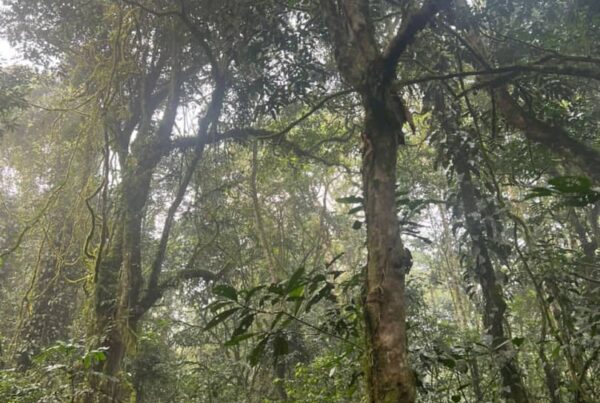
Gorilla trekking at Bwindi requires a genuine baseline of physical fitness — it is not an activity that can be completed comfortably by visitors with limited mobility, serious cardiovascular conditions, or no regular physical activity, on the more demanding trekking days. The terrain involves steep ascents and descents on loose volcanic soil and root networks, stream crossings, dense vegetation sections that require bending and pushing through undergrowth, and sustained physical exertion at elevations of 1,400–2,400m. On an easy day (family near the trail head), a person of moderate fitness can complete the trek. On a hard day (6+ hours, steep terrain), it requires cardiovascular endurance and leg strength equivalent to a long hiking day. The practical preparation advice: build cardiovascular fitness through 3–4 weeks of daily walking before the trip (building to 5–7km daily with elevation where possible), ensure you can comfortably walk for 4+ hours continuously before committing to the trek. A porter is available to carry your pack and assist on steep sections — booking a porter is strongly recommended for all trekkers and essential for those with any fitness concerns, as it frees your hands and removes pack weight from the sustained physical demand of the climb.
Can you take photos during gorilla trekking?
Photography is permitted and actively encouraged during gorilla trekking — the encounter is specifically one of the most photographable wildlife experiences in the world, and visitors are expected to photograph it. The only technical restriction is flash photography: camera flash is prohibited because it disturbs the gorillas, causes defensive reactions, and disrupts the habituated calm of the encounter. Modern camera equipment with good high-ISO performance (any mirrorless or DSLR camera released after 2016, and most recent smartphone cameras) handles the Bwindi forest light conditions without flash in most encounter scenarios — the forest can be dark under dense canopy but the gorillas’ dark colouring makes moderate ambient light workable with contemporary sensors. Recommendations: a camera with reliable autofocus in low light (mirrorless bodies with face/subject tracking are particularly effective), a lens with image stabilisation (hand-holding at low shutter speeds on a moving subject in low light), and either a 70–200mm or 100–400mm zoom for compositional flexibility (the 7-metre minimum distance means your 50mm will not fill the frame). Professional photographers should carry a backup camera body — equipment failure in the forest cannot be replaced on the day.
Prepare accurately for your Uganda gorilla trek
- Gorilla Permit Guide — the accurate facts about permit booking, availability, and process
- Uganda Gorilla Families — the habituated families and their specific character at each sector
- Bwindi Sector Guide — sector terrain difficulty and what physical preparation each sector requires
- Full Safari Cost Guide — accurate costs without the myths about permits being cheaper than listed price
- Safari Itineraries — Uganda safari itineraries built on accurate rather than mythological trek planning assumptions
- Gorilla Myths and Fascinating Facts: Unveiling the Truth About Africa’s Gentle Giants
- Is Gorilla Trekking Safe? Safety Facts and Myths
- Silverback Gorilla vs. Grizzly Bear: Strength, Survival, and the Myths of the Wild
- 20 Fun Facts About Mountains (So Fascinating)
- Uganda Gorilla Trekking Myths: 12 Things People Get Completely Wrong
- Are Gorillas Dangerous? The Truth About Gorilla Aggression
- What Happens If Gorillas Are Not Found on Trek? The Honest Truth
- What People Get Wrong About Gorilla Trekking: Myths Busted
- What Happens If Gorillas Are Not Found on Trek? The Truth
- How Big Is a Mountain Gorilla? Size, Weight and Strength Facts