Updated
Gorilla vs Chimpanzee: What Is the Difference?
Africa’s Two Great Apes: A Clear Comparison
gorilla vs chimpanzee what is the difference is a subject central to Uganda’s wildlife tourism, where mountain gorilla conservation and responsible visitor experiences go hand in hand. Gorillas and chimpanzees are both African great apes, both critically important conservation priorities, and both available for guided trekking experiences in Uganda. But they are profoundly different animals in size, behaviour, social structure, diet, and the character of the trekking encounter they provide. Understanding the key differences between gorillas and chimpanzees helps travellers choose the right experience and appreciate both species more fully.
Size: No Contest
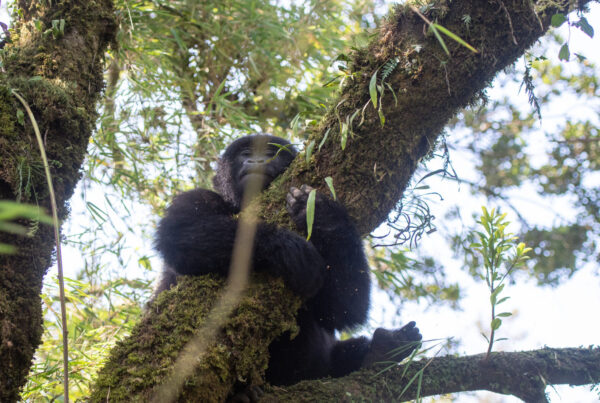
The most immediately obvious difference is size. Mountain gorilla silverbacks weigh 140 to 200 kilograms and stand 1.5 to 1.8 metres tall bipedally. Chimpanzee males weigh 40 to 70 kilograms — roughly one-third to one-quarter the mass of a gorilla silverback. Female gorillas (70 to 100 kg) are still larger than adult male chimpanzees.
This size difference translates directly to the physical experience of each encounter. A silverback gorilla at seven metres occupies a substantial portion of your field of vision and commands physical presence that is felt as much as seen. A chimpanzee at the same distance is much smaller — impressive and fascinating, but not physically overwhelming in the same way.
Social Structure: Families vs Communities
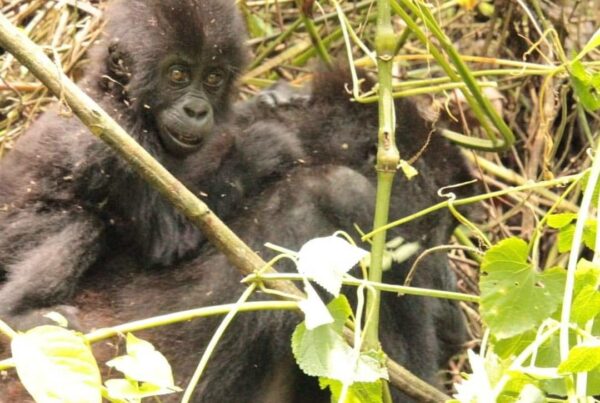
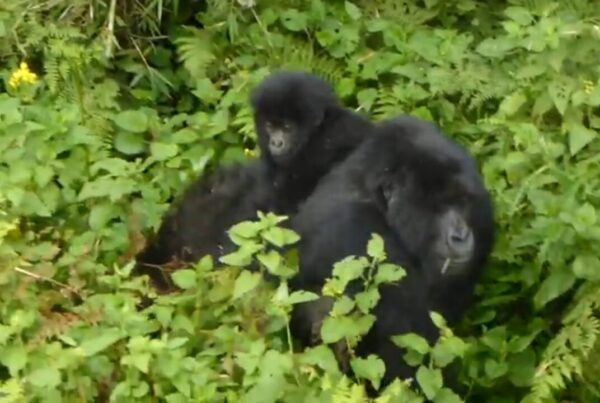
Mountain gorillas live in cohesive family groups led by a dominant silverback, typically containing 5 to 30 individuals including females, juveniles, and infants. The group moves and forages together as a unit, and membership in the group is relatively stable over years. Social bonds within a gorilla family are deep and long-lasting.
Chimpanzees live in larger, fission-fusion communities of 20 to 150 individuals that split into smaller subgroups (parties) and re-merge fluidly throughout the day. Individual chimps within a community may not see each other for days or weeks, then aggregate at a fruiting tree or in response to social events. This fission-fusion structure makes chimpanzee social dynamics more complex, volatile, and frankly more dramatic than gorilla social life.
Temperament: Calm vs Electric
The temperament difference between gorillas and chimpanzees is one of the most striking distinctions experienced trekkers describe. Habituated gorilla families are typically calm during encounters — a silverback may glance at your group and return to feeding, females continue nursing infants, juveniles play nearby. The encounter has a quality of watching a family going about its day with equanimity.
Chimpanzees are different: loud, fast, unpredictable, and socially explosive. A chimp community encounter can involve animals screaming, charging, mating, fighting, and displaying within minutes. Chimpanzees vocalise constantly and energetically, and their movement through the forest canopy is rapid and athletic. The chimpanzee encounter is exhilarating and sometimes overwhelming in its sensory intensity.
Neither temperament is better — they are simply different emotional registers that different travellers respond to differently. Those who prefer quiet intensity tend to favour gorillas. Those who want wildlife that surprises them at every moment often find chimps more viscerally exciting.
Diet: Specialists vs Omnivores
Mountain gorillas are almost entirely herbivorous, consuming leaves, stems, roots, bark, and some fruit. Their diet is dominated by bulk vegetation that their massive digestive systems process in large quantities daily. They rarely eat animal protein — insects occasionally, but meat almost never.
Chimpanzees are omnivores with a notably varied diet that includes fruit (the staple), leaves, insects (particularly termites and ants harvested with tools), eggs, honey, and — most dramatically — meat. Chimpanzees hunt and kill other mammals, including red colobus monkeys, in coordinated group hunts that are among the most behaviourally sophisticated feeding events documented in non-human primates. The chimp hunt is one of the most compelling examples of cooperative behaviour in the animal kingdom.
Intelligence and Tool Use
Both gorillas and chimpanzees are cognitively sophisticated, but chimpanzees have a more extensively documented history of tool use in the wild. West African chimpanzees use stone hammers and anvils to crack nuts — a behaviour that requires years of practice and is culturally transmitted within populations. East African chimps use grass stems to fish termites from mounds. The depth and complexity of chimpanzee material culture is currently unparalleled in any non-human primate.
Gorilla tool use in the wild is less well documented, though captive studies demonstrate strong cognitive capabilities. Field observations have recorded gorillas using sticks to test water depth and using moss to sponge up water — suggesting tool use capacity that the constraints of their ecology may limit more than their cognitive ability does.
Trekking Experience: Uganda Does Both
Uganda is uniquely positioned to offer both gorilla trekking in Bwindi and chimpanzee trekking in Kibale Forest National Park — considered by many primatologists to have the highest density of chimpanzees in Africa. Many visitors combine both, spending two to three days with gorillas in Bwindi and two days with chimps in Kibale, experiencing the full spectrum of African great ape diversity in a single trip.
The two permits are priced very differently: gorilla permits cost $800 per person, while chimpanzee trekking in Kibale costs approximately $250 per person. Both experiences are genuinely extraordinary. If budget constrains you to one, the gorilla encounter is the rarer, more unique experience — chimps can be seen in several African countries, while mountain gorillas exist only in Uganda, Rwanda, and DRC.
Final Thoughts
Gorillas and chimpanzees are Africa’s two great ape giants, each extraordinary in different ways. The gorilla offers scale, calm intelligence, and the physical presence of the largest living primate. The chimpanzee offers energy, complexity, and a behavioural drama that few wildlife encounters can match. Uganda offers both. If your itinerary allows, see both. If you must choose one, consider what kind of encounter you are seeking, then let that guide your choice between these two irreplaceable animals.