Updated
7 Things That Surprised Every First-Time Gorilla Trekker: Honest List
First-time gorilla trekking surprises that no brochure prepares you for
First-time gorilla trekking surprises are consistent enough across visitor accounts that they deserve honest documentation. Every year, thousands of visitors to Bwindi Impenetrable Forest and Mgahinga Gorilla National Park arrive with expectations shaped by wildlife documentaries, photography, and the accounts of people who have already been. They know, intellectually, what to expect. And then they actually do it — and discover that several things are completely different from what they imagined, in ways that are almost universally positive but occasionally also uncomfortable. This is an honest account of the seven things that most reliably surprise first-time gorilla trekkers.
1. How close the gorillas actually are
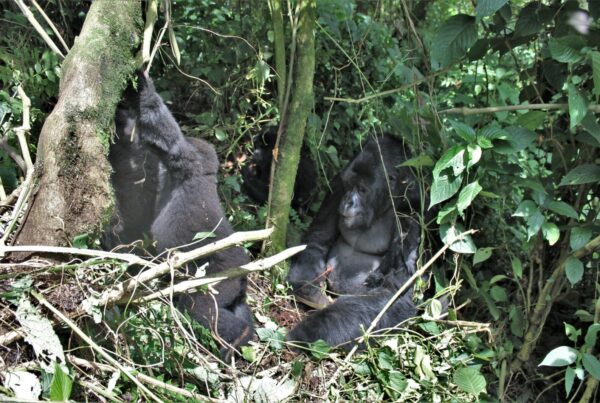
The Uganda Wildlife Authority regulation requires trekkers to maintain a minimum distance of 7 metres from the gorillas at all times. What surprises almost every first-time visitor is that 7 metres is extremely close. In the confined space of the forest, 7 metres is less than the length of a small room. And because gorillas are not static — they move through the vegetation, they approach the group out of curiosity, they cross the path — the actual minimum distance during many encounters is considerably less than 7 metres, reduced by the animals’ own movement rather than by any rule violation. Trekkers who expect a distant, binocular-mediated view of gorillas in thick undergrowth are astonished to find themselves in something closer to the experience of standing in a small room with a family of extremely large, completely relaxed wild animals.
The 7-metre rule in practice
Rangers enforce the 7-metre rule, but they enforce it from the human side — they manage the trekkers’ positioning to ensure visitors do not approach too close. They cannot and do not manage the gorillas’ positioning. When a silverback decides to rest 4 metres from the trekking group, the ranger ensures that the group stays in place and behaves appropriately. The resulting encounter — a wild gorilla family at 4 metres distance, completely unbothered by the presence of eight humans — is one that most trekkers describe as incomprehensible until it is experienced.
2. How physically demanding the trek can be
Every source of information about gorilla trekking mentions that it can be physically demanding. What surprises first-timers is the degree to which this is true, particularly in the denser and steeper sectors of Bwindi. The trek involves sustained uphill walking on steep, uneven terrain, often in heat and humidity, with the added challenge of pushing through thick undergrowth once the gorillas are found. Most trekking groups contain at least one person who finds the physical demands genuinely difficult, and this is reflected in the availability of porter services and in the park gate’s briefing, which mentions that some treks take up to six hours. The experience of arriving at the gorillas exhausted, sweating, and slightly dishevelled — and finding a silverback resting in perfect composure about 5 metres away — is one that first-timers find both humbling and hilarious.
3. The silence inside the forest
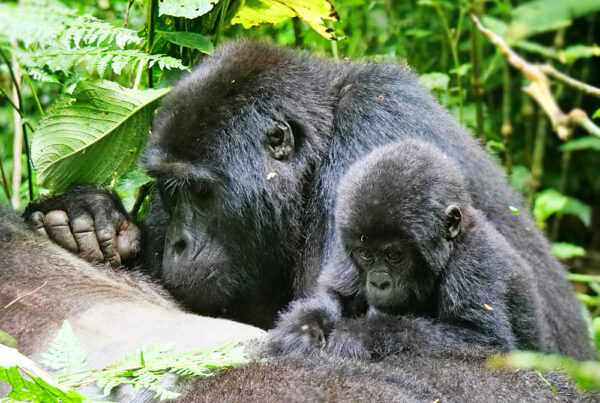
Bwindi Impenetrable Forest produces a particular quality of silence that surprises almost every visitor who has not previously spent time in undisturbed ancient rainforest. It is not truly silent — the birds call constantly, the wind moves in the canopy overhead, the forest makes its own sounds. But the absence of mechanical noise, traffic, voices, and all the background hum of human activity creates an acoustic environment that most modern humans have rarely or never experienced. In this silence, the sounds of the gorillas — the crack of a branch, the soft vocalisation of a mother to her infant, the deep breathing of the resting silverback — arrive with an immediacy and clarity that intensifies the encounter considerably.
4. How quickly the hour passes
The permitted time with the gorilla family is one hour. First-time trekkers who know this in advance almost all report the same experience: the hour passed in approximately 15 minutes. The combination of sensory overload — the proximity of the animals, the visual complexity of the encounter, the emotional intensity of the experience — compresses time in a way that participants consistently find disorienting. Rangers who have led hundreds of treks describe the moment when they tell a group that the hour is up as one of the most reliable disappointments they deliver, regardless of how good the encounter has been. Nobody has ever felt that one hour was enough.
5. The quality of the ranger’s knowledge
Uganda Wildlife Authority rangers who lead gorilla treks have typically been working with their assigned family groups for years and in many cases for more than a decade. They know each gorilla individually, know the family’s history, understand the current dynamics of the group, and can provide a running commentary on what is happening in front of the trekking group that transforms the encounter from a wildlife sighting into an education. First-time trekkers who arrive expecting a forest guide who can point out gorillas are surprised to find themselves in the company of an expert primatologist who can explain, in real time, the social significance of every gesture and interaction they are witnessing.
6. The smell of the gorillas
Mountain gorillas have a distinctive smell that is described consistently by trekkers but rarely discussed in the public material about gorilla trekking. It is not unpleasant — most visitors describe it as strong, animal, and intensely present. It is an information-rich smell that communicates the physical reality of sharing a small space with a large wild animal in a way that sight and sound alone cannot. For many trekkers, the smell of the gorillas is the sensory detail that makes the encounter most real — the confirmation that this is not a zoo, not a documentary, not a theme park, but an actual encounter with a wild animal in its natural habitat.
What the smell tells researchers
Gorilla researchers note that the strength and character of a gorilla’s scent communicates information about the animal’s emotional and physical state — particularly in the case of male gorillas, whose glands produce a stronger scent when they are stressed or displaying. The relatively mild scent of habituated gorillas at rest is thus, in itself, evidence of successful habituation: an animal at ease in its environment smells different from a frightened or agitated one.
7. How it changes you
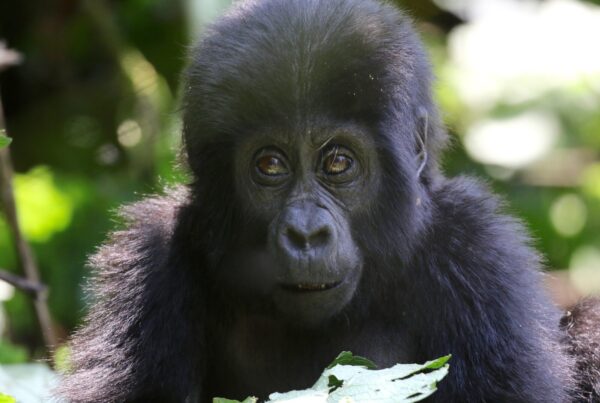
The last and most commonly reported surprise of first-time gorilla trekking is the persistence and depth of the experience’s emotional impact. Most trekkers expect to be impressed. What they do not expect is to be changed. The encounter with mountain gorillas — with the intelligence in their eyes, the obviousness of their family bonds, the sheer physical reality of being in the presence of a wild animal that is also, in some essential way, a close relative — produces a shift in perspective that visitors report carrying with them for years afterwards. The experience of gorilla trekking changes how people think about conservation, about human uniqueness, about the natural world, and about their own place within it. This is the surprise that the photographs cannot prepare you for — because it is not something that happens in the moment of the encounter, but in the weeks and months that follow.