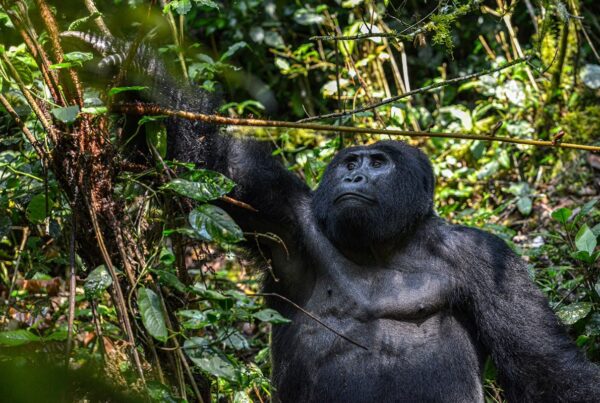
Uganda gorilla trekking in 2026 operates on the same fundamental structure that has made it the world’s premier gorilla encounter destination since the first tourist treks at Bwindi in 1993: a USD 800 permit, a 60-minute encounter with a habituated mountain gorilla family in Bwindi Impenetrable Forest, an 8-visitor maximum per family per day, and the ranger-led trek through highland forest that the experience requires — all funded by the permit revenue that also pays for the anti-poaching operations, daily family monitoring, and veterinary programme that have contributed to the mountain gorilla population growing from approximately 620 individuals in 2002 to over 1,000 today. This guide covers what Uganda gorilla trekking in 2026 actually involves — the permit, the preparation, the sectors, the trek, and the encounter — with the current and specific information that the visitor planning their first gorilla trek needs, without the marketing softening that obscures what the experience genuinely requires. For the permit booking, see the permit guide; for the sector selection, see the Bwindi sector guide.
Uganda Gorilla Trekking 2026: Essential Information
- Permit cost: USD 800 per person per trek — purchase through Uganda Wildlife Authority or a licensed operator
- Sectors: Buhoma (north), Ruhija (northeast), Rushaga (south), Nkuringo (southwest) — each with different terrain and families
- Minimum age: 15 years — enforced at the gate by passport check
- Physical requirement: Ability to walk 3-6 hours on steep forest terrain — varying by family location on the day
- Best booking lead time: July-August 2026 permits need to be booked now; shoulder season 4-6 months ahead
- Mountain gorilla population (2024 estimate): over 1,000 individuals across Bwindi and the Virunga range
Uganda gorilla trekking in 2026 stands among the most profound wildlife experiences on Earth. Deep within ancient rainforests, travelers come face to face with endangered mountain gorillas—watching them feed, groom, play, and interact in their natural habitat. This is not a zoo encounter or a distant safari sighting. It is raw, close, and deeply human.
Uganda holds more than half of the world’s remaining mountain gorillas, making it one of the most important conservation destinations globally. The country offers diverse trekking sectors, relatively accessible permit pricing compared to neighboring destinations, and a wide range of accommodation options that suit both midrange and luxury travelers.
This guide explores every essential detail you need to plan a successful and rewarding gorilla trekking safari in Uganda in 2026.
Gorilla Trekking in Uganda: What It Really Means
Gorilla trekking involves hiking through dense tropical rainforest under the guidance of experienced rangers to locate a habituated gorilla family. These families have undergone a careful process of human familiarization, allowing visitors to observe them safely at a controlled distance.
Uganda offers gorilla trekking in two protected areas, each with a distinct character.
Bwindi Impenetrable National Park
Bwindi is the heart of Uganda gorilla trekking. It is a UNESCO World Heritage Site known for its dense vegetation, steep valleys, and exceptional biodiversity. The park hosts over 20 habituated gorilla families spread across four sectors:
- Buhoma – the most accessible and historically established sector
- Ruhija – quieter, elevated, and ideal for birding
- Rushaga – highest number of gorilla families and habituation experiences
- Nkuringo – physically demanding but scenically rewarding
Each sector offers a different trekking experience, terrain difficulty, and lodge selection.
Mgahinga Gorilla National Park
Mgahinga is smaller but incredibly scenic, located within the Virunga Mountain range. It offers a more exclusive experience with fewer visitors. The Nyakagezi gorilla family, known for its mobility in the past, now tends to remain within the park, making sightings more consistent.
Gorilla Trekking Permits in 2026
A gorilla permit is mandatory for trekking and must be secured in advance. In 2026, the pricing structure remains:
- USD 800 per person (Foreign Non-Residents)
- USD 700 per person (Foreign Residents)
- UGX 300,000 (East African Citizens)
The permit includes park entry, ranger guidance, security, and one hour with a gorilla family.
Availability is limited to a small number of visitors per group per day, ensuring minimal disturbance to the gorillas. Because of this, permits often sell out months in advance, especially during peak travel seasons.
Best Time to Go Gorilla Trekking in Uganda
Gorilla trekking operates year-round, but seasonal differences influence the overall experience.
Dry Seasons (June–September, December–February)
These months offer the best trekking conditions. Trails are less slippery, vegetation is slightly less dense, and photography becomes easier due to clearer light conditions.
This is the peak travel period, so permits and lodges should be booked well in advance.
Wet Seasons (March–May, October–November)
Rainfall increases, making trails muddy and physically more demanding. However, the forest becomes lush and vibrant, and there are fewer visitors.
For travelers who do not mind challenging conditions, this period can offer a more intimate experience.
The Gorilla Trekking Experience: Step by Step
A typical trekking day begins early in the morning at the park headquarters.
Briefing and Group Allocation
Rangers provide a detailed briefing on safety guidelines and assign groups based on fitness levels and gorilla family locations. Each group consists of a small number of trekkers.
The Trek Through the Forest
Treks can last anywhere from one hour to over six hours. The duration depends on the movement of the gorillas, terrain, and weather conditions.
The forest environment is thick, humid, and alive with sounds—birds, insects, and distant primate calls. Rangers and trackers move ahead to locate the gorillas and communicate their position.
The One-Hour Encounter
Once the gorillas are found, the group is allowed exactly one hour with them.
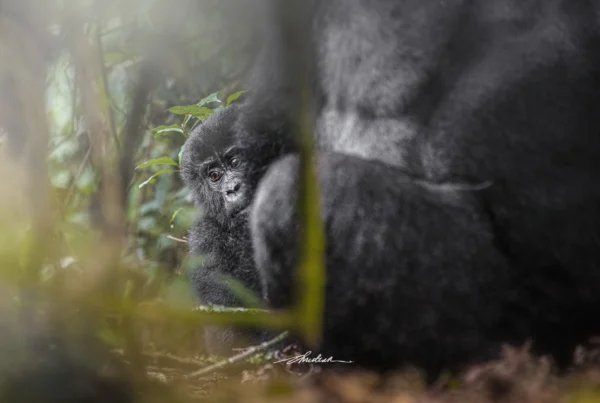
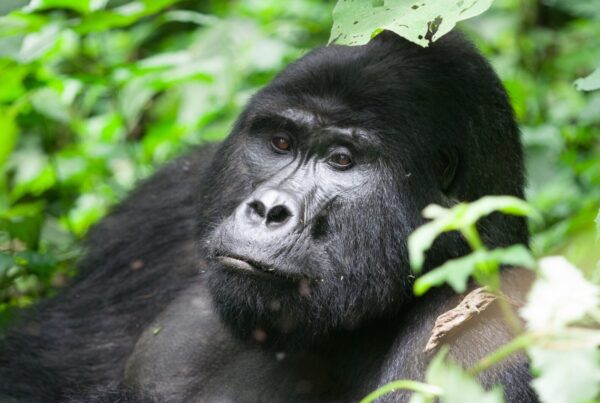
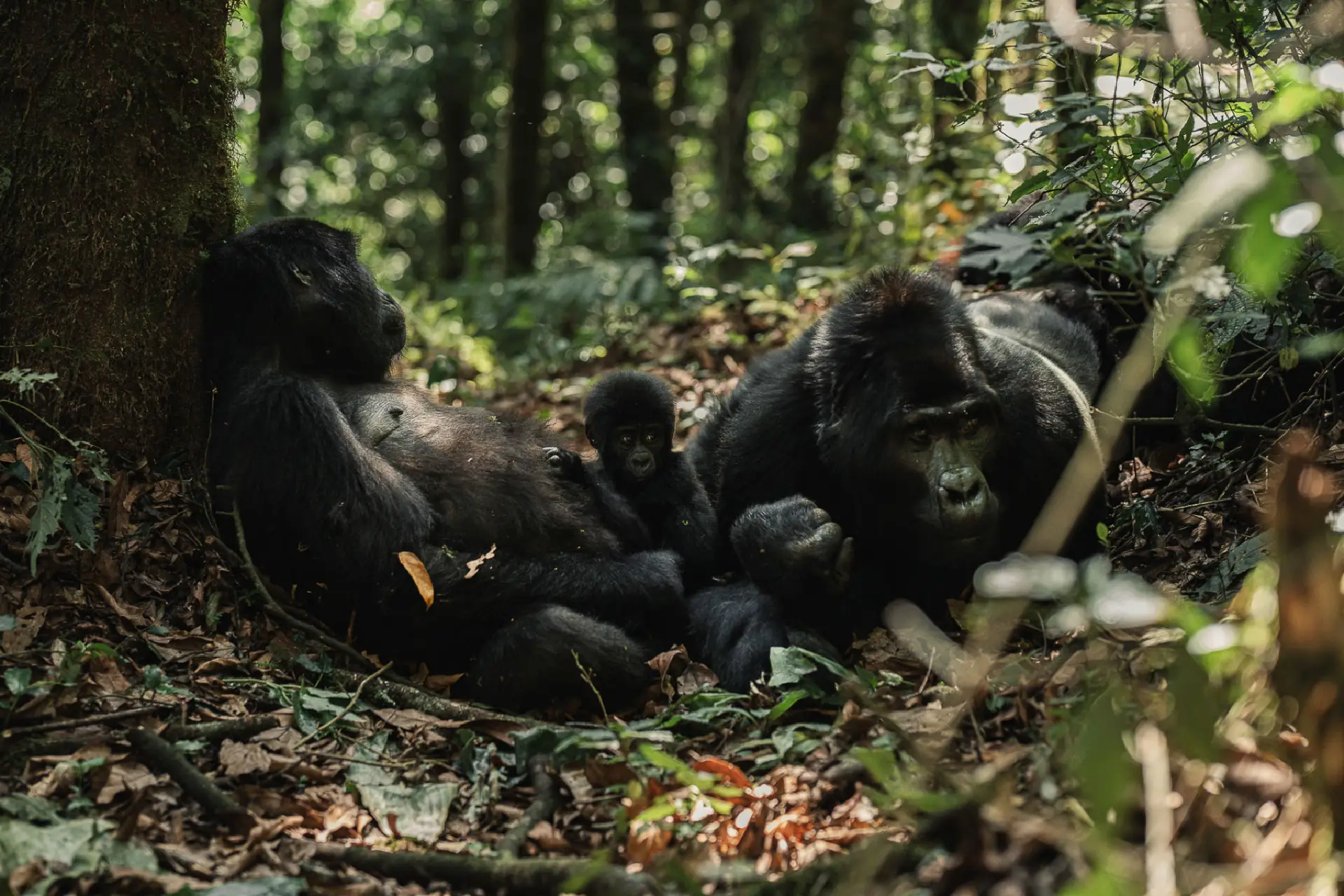
This moment is intense and unforgettable. You may observe a dominant silverback watching over the group, juveniles playing, mothers nursing infants, or the entire family feeding quietly.
The proximity is remarkable, often within a few meters, yet governed by strict rules to protect both humans and gorillas.
Physical Fitness and Trek Difficulty
Gorilla trekking requires moderate physical fitness. The terrain includes:
- Steep slopes
- Uneven forest floors
- Thick vegetation
- High humidity
Altitude ranges between 1,160 and 2,600 meters, which can affect breathing for some travelers.
Preparation improves the experience. Light cardio, walking, and hiking before travel help build endurance.
Porters are available at the park headquarters and are highly recommended. They assist with carrying bags and provide physical support during difficult sections of the trek.
Gorilla Habituation Experience
Uganda offers a unique extended experience known as gorilla habituation. This takes place in the Rushaga sector of Bwindi.
Instead of one hour, visitors spend up to four hours with a semi-habituated gorilla group alongside researchers and rangers.
Permit cost in 2026:
USD 1,800 per person
This experience allows deeper observation of behavior and is especially valuable for photographers and wildlife enthusiasts seeking more time in the forest.
Accommodation Options Near Gorilla Trekking Areas
Accommodation plays a key role in the overall experience. Staying within your assigned trekking sector reduces travel time and improves comfort.
Luxury Lodges
Luxury properties offer spacious cottages, forest views, fine dining, and personalized service. Many are located on ridges overlooking the forest, providing dramatic scenery and privacy.
Midrange Lodges
Midrange options provide excellent comfort, good food, and convenient access to trekking points. These lodges balance affordability with quality service.
Most lodges arrange transfers to the park headquarters and provide packed lunches for trekking days.
How to Get There
By Air
Domestic flights connect Entebbe to Kihihi (for Buhoma and Ruhija) and Kisoro (for Rushaga, Nkuringo, and Mgahinga). Flights significantly reduce travel time and offer scenic aerial views.
By Road
Driving from Kampala or Entebbe takes approximately 8–10 hours. The journey passes through rural landscapes, tea plantations, and small towns, offering insight into Uganda’s countryside.
Cost of Gorilla Trekking Safaris in 2026
The overall cost depends on travel style, accommodation level, and itinerary length.
- Midrange (3 Days): USD 1,800 – 2,500 per person
- Luxury (3 Days): USD 3,000 – 6,000+ per person
Costs usually include permits, accommodation, meals, transport, and guiding services.
Additional experiences such as chimpanzee trekking or game drives increase the overall cost but enhance the safari.
Packing for Gorilla Trekking
Proper gear ensures comfort and safety during the trek.
Essential items include:
- Waterproof hiking boots with good grip
- Long trousers and long-sleeved shirts
- Rain jacket or poncho
- Gardening gloves for handling vegetation
- Insect repellent
- Sunscreen
- Reusable water bottle
- Energy snacks
Clothing should be in neutral colors such as green, brown, or khaki.
Health and Safety Guidelines
Gorilla trekking follows strict rules to protect both visitors and wildlife.
- Maintain a minimum distance of 7 meters
- Do not trek if you are sick
- Avoid direct eye contact with gorillas
- Follow all ranger instructions
- Do not use flash photography
- These measures help prevent disease transmission and ensure a safe experience.
- Conservation Impact of Gorilla Trekking
- Gorilla trekking plays a direct role in conservation success.
Revenue from permits supports:
- Anti-poaching patrols
- Habitat protection
- Veterinary care for gorillas
- Community development projects
Local communities benefit through employment, tourism revenue, and infrastructure development. This creates a strong incentive to protect wildlife.
Uganda’s mountain gorilla population has steadily increased, showing that conservation tourism works when managed responsibly.
Combining Gorilla Trekking with Other Experiences
Uganda offers a complete safari beyond gorillas.
Travelers often combine trekking with:
- Chimpanzee tracking in Kibale Forest
- Wildlife safaris in Queen Elizabeth National Park
- Boat cruises along the Kazinga Channel
- Game drives in Murchison Falls National Park
- Cultural encounters with local communities
These additions create a diverse and well-rounded itinerary.
Who Should Consider Gorilla Trekking?
Gorilla trekking suits travelers seeking meaningful wildlife encounters. It appeals to those interested in conservation, photography, and immersive travel experiences.
The minimum age is 15 years. Good health and moderate fitness are required.
Frequently asked questions about Uganda gorilla trekking in 2026
What is the current state of mountain gorilla conservation in 2026?
Mountain gorilla conservation in 2026 presents a genuine partial success story within an ongoing threat context. The population growth trajectory that began in the 1990s following the National Park gazettal, anti-poaching investment, and gorilla tourism revenue has continued: the total mountain gorilla population across Bwindi and the Virunga range exceeded 1,000 individuals in the 2018 census update, the threshold that enabled the IUCN to downlist the subspecies from Critically Endangered to Endangered. This is the only great ape to be downlisted during a period when all other great apes have been uplisted toward greater threat. However, Endangered is not safe: a population of approximately 1,000 individuals in a restricted highland forest range remains vulnerable to disease outbreaks (respiratory illness transmitted from humans is the most significant ongoing threat), political instability in the DRC portion of the Virunga range (ongoing armed conflict has repeatedly reduced ranger capacity in the DRC sector), and climate change effects on the highland forest microclimate and food availability. The conservation system — ranger operations, veterinary programmes, community revenue sharing — continues to require the permit revenue it was built around. The visit in 2026 is both a wildlife encounter and a direct financial contribution to the conservation operation whose continued functioning determines whether the population trajectory continues to improve.
How do you choose between Bwindi’s four sectors for a 2026 gorilla trek?
The sector choice for a 2026 Uganda gorilla trek is primarily a decision about terrain difficulty, family availability, and lodge quality — the gorilla encounter quality itself does not differ meaningfully between sectors, because all habituated families provide the same 60-minute encounter format with the same ranger guide management. Buhoma (north): the most established sector, lowest altitude (1,600-1,800m), most accessible terrain, best lodge infrastructure directly at the gate — the right choice for visitors with fitness uncertainty, first-time visitors who want the smoothest logistics, and visitors prioritising lodge quality over maximising family availability options. Ruhija (northeast): highest altitude (1,800-2,200m), most demanding terrain, fewest families but exceptional birding — the right choice for fit visitors who are specifically interested in high-altitude forest ecology and the Albertine Rift bird diversity alongside the gorilla trek. Rushaga (south): most families of any sector, most diverse permit availability, good lodges, intermediate terrain difficulty — the right choice for visitors who want maximum family choice, are slightly flexible on lodge premium, and are planning a second trek. Nkuringo (southwest): most remote, steepest terrain, dramatic landscape position with DRC views — the right choice for physically fit visitors who specifically want the remote high-altitude forest character and are comfortable with the most demanding trek conditions.
What do you need to bring on a gorilla trek in Uganda?
Packing for a Uganda gorilla trek requires specific items that most visitors underpack for, and specific items that most visitors overpack with. The essential list: waterproof hiking boots with ankle support (the single most important item — cheap trainers are inadequate on Bwindi’s muddy slippery terrain; boots must be broken-in before travel); long-sleeved shirt and long trousers in earth tones (green, brown, khaki — not camouflage, which is illegal in Uganda; not bright colours, which disturb wildlife); lightweight waterproof jacket with hood that fits over a daypack (not a poncho — ponchos catch on vegetation during off-trail sections); gardening gloves or lightweight work gloves (for gripping vegetation and stabilising on steep terrain without the awkwardness of thick gloves); a daypack of 20-30 litres with 2 litres water capacity; camera and spare batteries (dead batteries are a common regret on the trek day — charge fully the night before and carry a power bank); insect repellent with 30%+ DEET; sunscreen; a light snack and water for the return trek. What not to bring: perfume or strong fragrances (gorillas are sensitive to unusual smells); flash-capable equipment you will be tempted to use despite the no-flash rule; and anything that is not manageable in a 25-30 litre daypack — the porter hire at USD 15 covers your daypack, not a full luggage load.
What makes a gorilla trekking experience “good” versus “average”?
The quality difference between a good and an average gorilla trekking experience is determined by factors within the visitor’s control more than factors outside it — specifically the mental and physical preparation, the presence and attentiveness during the encounter, and the ranger-relationship quality. Factors outside visitor control that affect the experience: which family is assigned (larger families provide more activity and individual variety; families ranging in open glades versus dense undergrowth provide better visibility); the family’s activity level on the day (feeding families move more and provide more variety; resting families provide longer sustained observation moments); and the weather and trail conditions. Factors within visitor control: physical preparedness (visitors who have built up their hiking fitness and arrive without physical anxiety about the trek’s demands are more relaxed and observational during the encounter); camera preparation (visitors whose camera is pre-set for the forest light conditions spend the encounter making images rather than adjusting settings); and presence quality (visitors who have explicitly planned to put the camera down for part of the encounter and observe without mediation consistently rate the experience higher). The ranger guide relationship: asking questions, engaging with the family information provided at the briefing, and listening to the guide’s commentary during the approach and encounter adds an interpretive layer that the passive visitor misses. The encounter with the gorillas is what the experience is; the preparation determines whether you are ready to receive it fully.
What are the best resources for planning Uganda gorilla trekking in 2026?
Planning Uganda gorilla trekking in 2026 well requires a combination of specific, current information sources rather than the general travel platform reviews that aggregate visitor accounts without verification. The primary sources for reliable, specific information: Uganda Wildlife Authority’s official site (ugandawildlife.org) for current permit prices, availability, and booking mechanics — the UWA site is the authoritative source for everything permit-related and should be the first reference rather than the last; licensed Uganda safari operator consultations for itinerary construction, lodge selection, and the current availability landscape that the UWA portal alone does not communicate; the specific sector guide information on this site for the habitat, terrain, and family character of each sector; recent verified visitor accounts from people who have done the trek in 2024-2025 (trip advisor and travel blogs can be useful if the accounts are date-stamped and specific — generic “it was amazing” accounts are not informative). What to be cautious about: outdated permit price information on non-official sites (the permit price has changed twice since 2017 and sites that have not been updated may show the old price); operator quotes that inflate the permit cost above the UWA published price; and accounts that do not distinguish between sectors (a “short easy trek” at Buhoma is not the same experience as a “short easy trek” at Nkuringo, and accounts that omit the sector are not useful for planning purposes).
Plan your Uganda gorilla trekking trip in 2026
- Gorilla Permit Guide — current permit booking process and UWA direct booking
- Bwindi Sector Guide — sector comparison for 2026 visit planning
- Uganda Gorilla Families — the families at each sector for pre-trip research
- Full Safari Cost Guide — complete trip budget for 2026
- Safari Itineraries — Uganda 2026 itineraries for all trip lengths