Updated
Safari Animals to See in Africa — Whether you dream of locking eyes with a lion, watching elephants protect their young, or spotting a rare pangolin under the moonlight, this guide will take you through 50 of Africa’s most unforgettable animals. Africa’s safari wildlife spans more ecological diversity than any other continent’s megafauna assemblage: from the open savannah’s iconic Big Five (lion, leopard, elephant, buffalo, rhino) and the great migration’s million-strong wildebeest herds to the mountain forests’ great apes, the Albertine Rift’s endemic primates, the Okavango Delta’s aquatic megafauna, and the southern African bushveld’s nocturnal species that most daylight safari visitors never encounter despite sharing the same parks — a wildlife range so broad that a visitor who spent 10 years in Africa would still be discovering first encounters with species they’d not knowingly seen before. This guide introduces 50 of Africa’s most compelling safari animals with field identification notes, conservation status, and the specific parks and landscapes where each is most reliably encountered — organised to be useful both for pre-trip research and as a post-safari identification reference. For visitors planning a Uganda-based safari where mountain gorillas are the primary target, the guide connects each species to the Uganda parks where it appears: mountain gorillas and chimpanzees at Bwindi and Kibale, tree-climbing lions at Ishasha (Queen Elizabeth), elephants and hippos throughout the main parks. See the gorilla families guide for species-level detail on Uganda’s mountain gorilla population, and the safari itineraries for where each species appears on the Uganda circuit.
Africa’s Safari Wildlife: Key Categories
- The Big Five: lion, leopard, elephant, Cape buffalo, rhino (black and white) — original “big five” was a hunting classification, now the most recognised safari target group
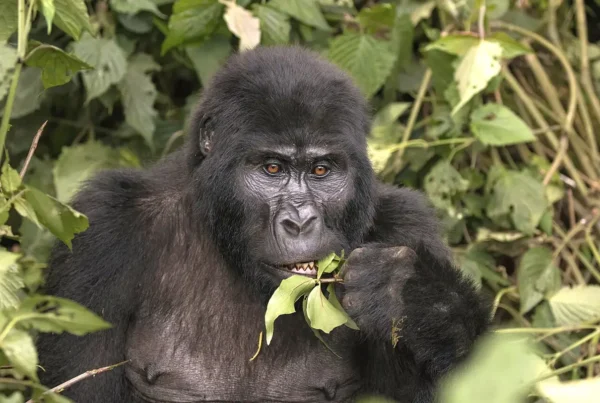
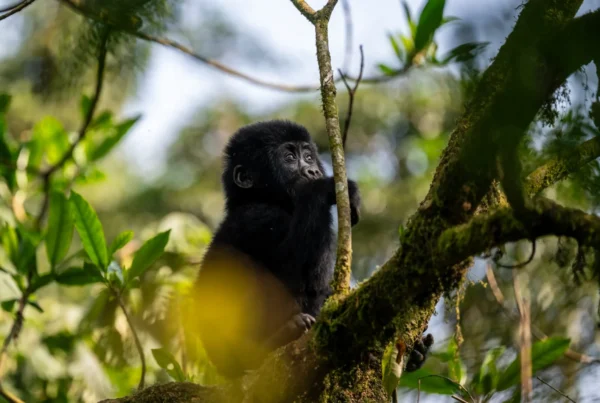
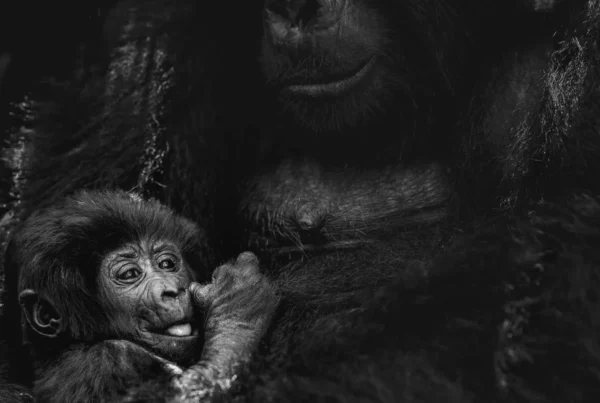
- Great apes: mountain gorillas (Uganda/Rwanda/DRC), chimpanzees (Uganda/Tanzania/Guinea), western lowland gorillas (Central Africa)
- Great migration species: wildebeest, zebra, Thomson’s gazelle — Serengeti-Mara ecosystem
- Aquatic megafauna: hippopotamus, Nile crocodile, African fish eagle — Uganda’s Kazinga Channel and Nile at Murchison
- Endangered endemics: mountain gorillas (Critically Endangered/Endangered), African wild dog, pangolin, black rhino
- Uganda alone holds 1,000+ bird species and 13 primate species — most diverse primate country in Africa
If Africa calls to your soul, it’s likely the untamed beauty of its wildlife that whispers first. From the golden savannahs of Kenya to the lush wetlands of Botswana, the continent offers a front-row seat to nature’s greatest show. A safari here is not just a trip — it’s a once-in-a-lifetime journey through landscapes where ancient rhythms still rule, and the wild ones roam free.
Safari Animals to See in Africa — Whether you dream of locking eyes with a lion, watching elephants protect their young, or spotting a rare pangolin under the moonlight, this guide will take you through 50 of Africa’s most unforgettable animals. You’ll learn where to see them, what makes them extraordinary, and why each encounter will stay with you forever.
Let’s begin the adventure.
1. African Lion — The King of the Savannah
Scientific name: Panthera leo
Conservation status: Vulnerable (IUCN)
The African lion is the undisputed monarch of the plains. With its golden mane catching the sunrise and its deep roar echoing for miles, the lion commands respect and awe. Lions live in prides — complex family units where hunting, cub-raising, and territory defense are shared responsibilities.
Where to See: Best sightings are in Tanzania’s Serengeti, Kenya’s Maasai Mara, and South Africa’s Kruger National Park.
Safari Tip: Go on an early morning game drive when lions are most active, often returning from the night’s hunt.
2. African Elephant — Gentle Giant of the Wild
Scientific name: Loxodonta africana
Conservation status: Endangered (IUCN)
The largest land animal on Earth, the African elephant is a symbol of wisdom, strength, and memory. Watching a herd move through the bush — calves trotting between their mothers’ legs, elders leading with quiet authority — is a deeply humbling experience.
Where to See: Chobe National Park in Botswana, Amboseli National Park in Kenya, and Addo Elephant Park in South Africa.
Safari Tip: Respect their space. Elephants can be incredibly gentle, but they are also fiercely protective of their young.
3. Cheetah — Africa’s Speed Demon
Scientific name: Acinonyx jubatus
Conservation status: Vulnerable (IUCN)
Built for speed, the cheetah is the fastest land mammal, capable of reaching 70 mph (112 km/h) in short bursts. Sleek and graceful, they are solitary hunters, often seen scanning the horizon from a termite mound before launching a lightning-fast chase.
Where to See: Namibian plains, Serengeti National Park (Tanzania), and Kgalagadi Transfrontier Park (Botswana/South Africa).
Safari Tip: Cheetahs hunt during the day — especially in the cool hours of early morning or late afternoon — making sightings more likely at those times.
4. Leopard — The Shadow of the Bush
Scientific name: Panthera pardus
Conservation status: Vulnerable (IUCN)
Elusive and mysterious, leopards are masters of camouflage. You might spot one draped across an acacia branch in the midday sun or slipping silently into tall grass at dusk. Unlike lions, leopards are solitary, marking vast territories with their scent.
Where to See: Sabi Sands (South Africa), Moremi Game Reserve (Botswana), and South Luangwa National Park (Zambia).
Safari Tip: Look up! Leopards love to stash their kills in trees to keep them safe from scavengers.
5. Rhinoceros — The Armored Grazer
Scientific names: Ceratotherium simum (White Rhino), Diceros bicornis (Black Rhino)
Conservation status: Near Threatened (White Rhino), Critically Endangered (Black Rhino)
With its thick skin, massive frame, and formidable horns, the rhino looks like a relic from the Ice Age. Despite their size, rhinos are surprisingly shy, often preferring to graze in peace. Tragically, they are among the most poached animals in Africa due to demand for their horns.
Where to See: Hluhluwe–iMfolozi Park (South Africa), Etosha National Park (Namibia), and Ol Pejeta Conservancy (Kenya).
Safari Tip: Go with guides who specialize in rhino tracking — they can interpret subtle signs in the bush that reveal where these giants are hiding.
6. African Buffalo — The Unpredictable Titan
Scientific name: Syncerus caffer
Conservation status: Least Concern (IUCN)
Don’t be fooled by its calm grazing appearance — the African buffalo is one of the most formidable and unpredictable animals in the bush. Weighing up to 900 kg (2,000 lbs), these massive bovines are known to stand their ground against lions, and sometimes even chase them away.
Where to See: Kruger National Park (South Africa), Okavango Delta (Botswana), and Queen Elizabeth National Park (Uganda).
Safari Tip: Herds can number in the hundreds — spotting a dust cloud on the horizon often means buffalo are on the move.
7. Hippopotamus — The River’s Heavyweight
Scientific name: Hippopotamus amphibius
Conservation status: Vulnerable (IUCN)
With their round, comical faces and constant yawns, hippos might look harmless — until you learn they are among Africa’s most dangerous animals. Spending most of their day submerged, they emerge at night to graze, covering surprising distances on land.
Where to See: The Zambezi River (Zambia/Zimbabwe), St. Lucia Estuary (South Africa), and Lake Naivasha (Kenya).
Safari Tip: Take a boat safari for an entirely different perspective — watching hippos at eye level is unforgettable.
8. Nile Crocodile — The Ancient Predator
Scientific name: Crocodylus niloticus
Conservation status: Least Concern (IUCN)
Survivors from the age of dinosaurs, Nile crocodiles are stealthy ambush predators. They can remain motionless for hours, waiting for prey to come to the water’s edge before striking with lightning speed.
Where to See: Chobe River (Botswana), Murchison Falls National Park (Uganda), and the Okavango Delta.
Safari Tip: Look for them basking on riverbanks in the morning before they slip back into the water.
9. Giraffe — The Graceful Giant
Scientific name: Giraffa camelopardalis
Conservation status: Vulnerable (IUCN)
At up to 6 meters (20 feet) tall, giraffes are the tallest land mammals. Their long necks aren’t just for show — they allow access to treetop leaves no other animal can reach. Watching a giraffe move is mesmerizing, each step a slow-motion glide across the savannah.
Where to See: Nairobi National Park (Kenya), Tarangire National Park (Tanzania), and Etosha National Park (Namibia).
Safari Tip: Dawn and dusk are the best times to see them in golden light, which makes for stunning photographs.
10. Zebra — The Striped Nomad
Scientific name: Equus quagga (Plains Zebra)
Conservation status: Near Threatened (IUCN)
Every zebra’s stripe pattern is unique, much like a fingerprint. Zebras are social grazers, often mingling with wildebeest for safety in numbers during migration.
Where to See: Serengeti (Tanzania), Maasai Mara (Kenya), and Hwange National Park (Zimbabwe).
Safari Tip: Watch for “zebra crossings” during migration season when thousands move in unison — it’s like a living river of stripes.
11. Wildebeest — The Migratory Marvel
Scientific name: Connochaetes taurinus
Conservation status: Least Concern (IUCN)
Wildebeest are best known for their role in the Great Migration, one of the world’s most spectacular wildlife events. Each year, over 1.5 million wildebeest travel between Tanzania and Kenya, driven by the rains and fresh grazing.
Where to See: Serengeti (Tanzania) and Maasai Mara (Kenya).
Safari Tip: Time your visit for July–October to witness dramatic river crossings — a heart-pounding mix of survival and instinct.
12. African Wild Dog — The Painted Hunter
Scientific name: Lycaon pictus
Conservation status: Endangered (IUCN)
With large ears and a patchwork coat, African wild dogs are as beautiful as they are rare. They’re skilled pack hunters with one of the highest success rates in the animal kingdom.
Where to See: Moremi Game Reserve (Botswana), Mana Pools National Park (Zimbabwe), and Selous Game Reserve (Tanzania).
Safari Tip: Sightings are rare — if your guide gets word of a pack nearby, drop everything and go.
13. Meerkat — The Desert Sentry
Scientific name: Suricata suricatta
Conservation status: Least Concern (IUCN)
Small but mighty in personality, meerkats are famous for standing upright to scan for danger. They live in tight-knit family groups, with babysitters, foragers, and sentinels all playing a role.
Where to See: Makgadikgadi Pans (Botswana) and the Kalahari Desert.
Safari Tip: Early mornings are best — you’ll find them warming up in the sun before heading out to forage.
14. Ostrich — The Sprinting Bird
Scientific name: Struthio camelus
Conservation status: Least Concern (IUCN)
The ostrich is the world’s largest bird, capable of sprinting at speeds up to 70 km/h (43 mph). They can’t fly, but their long legs make them masters of open plains survival.
Where to See: Etosha National Park (Namibia), Serengeti (Tanzania), and Karoo National Park (South Africa).
Safari Tip: Keep your camera ready — their comical expressions make for fantastic wildlife shots.
15. Kudu — The Elegant Antelope
Scientific name: Tragelaphus strepsiceros
Conservation status: Least Concern (IUCN)
The kudu is one of Africa’s most beautiful antelopes, with spiral horns and white facial stripes that give it a noble appearance. Despite their size, kudus are remarkably elusive, melting into the bush with surprising stealth.
Where to See: Kruger National Park (South Africa), Hwange National Park (Zimbabwe), and Ruaha National Park (Tanzania).
Safari Tip: Look for them in dry riverbeds — they often come to drink in the early morning.
16. Impala — The Savannah’s Ballet Dancer
Scientific name: Aepyceros melampus
Conservation status: Least Concern (IUCN)
Elegant and agile, impalas are often the first antelope you’ll see on safari. Their remarkable leaps — up to 10 meters in a single bound — are as graceful as they are functional, helping them evade predators.
Where to See: Kruger National Park (South Africa), Serengeti (Tanzania), and Chobe National Park (Botswana).
Safari Tip: Impalas are alert and skittish; when they start staring in one direction, it often means a predator is nearby.
17. Waterbuck — The Water-Loving Antelope
Scientific name: Kobus ellipsiprymnus
Conservation status: Least Concern (IUCN)
With a shaggy coat and a distinctive white ring on its rump, the waterbuck is never far from water. Its oily fur helps repel moisture, but it’s also a defense strategy — they’ll plunge into rivers to escape lions.
Where to See: Lake Naivasha (Kenya), Queen Elizabeth National Park (Uganda), and Okavango Delta (Botswana).
Safari Tip: Spot them in the late afternoon when they graze near rivers or marshes, often in small herds.
18. Sable Antelope — The Regal Warrior
Scientific name: Hippotragus niger
Conservation status: Least Concern (IUCN)
Known for their stunning black coats (in males) and majestic, curved horns, sable antelopes are both beautiful and fierce. They can defend themselves from predators with a powerful horn thrust.
Where to See: Hwange National Park (Zimbabwe), Kafue National Park (Zambia), and Niassa Reserve (Mozambique).
Safari Tip: Early mornings offer the best sightings — they often graze in open areas before retreating into the woodland.
19. Springbok — The Leaping Jewel of the Desert
Scientific name: Antidorcas marsupialis
Conservation status: Least Concern (IUCN)
South Africa’s national animal, the springbok, is famous for “pronking” — leaping high with stiff legs in a joyful display. This desert-adapted antelope thrives in arid environments where other species might struggle.
Where to See: Kgalagadi Transfrontier Park (South Africa/Botswana) and Etosha National Park (Namibia).
Safari Tip: Look for them at dawn or dusk, when they’re most active and the light is magical for photography.
20. Eland — The Gentle Giant of the Antelope World
Scientific name: Taurotragus oryx
Conservation status: Least Concern (IUCN)
The largest of all antelope, elands are surprisingly quiet and can be elusive despite their size. They have a graceful trot and a deep, resonant clicking sound from their knees as they walk.
Where to See: Serengeti (Tanzania), Tsavo (Kenya), and Etosha (Namibia).
Safari Tip: They’re shy — binoculars can help you spot them grazing at a distance.
21. Warthog — The Bush’s Comical Grazer
Scientific name: Phacochoerus africanus
Conservation status: Least Concern (IUCN)
With their tusks, wiry manes, and habit of running with tails held high, warthogs add humor to the savannah. Despite their looks, they are fast runners and tough survivors.
Where to See: Kruger National Park (South Africa), Masai Mara (Kenya), and Ruaha National Park (Tanzania).
Safari Tip: Watch them kneel to graze — their short necks make this a common (and endearing) behavior.
22. Bushbuck — The Shy Forest Antelope
Scientific name: Tragelaphus scriptus
Conservation status: Least Concern (IUCN)
Bushbucks prefer dense cover, making them a more secretive sighting. Their reddish-brown coats and white markings help them blend perfectly into the undergrowth.
Where to See: Aberdare National Park (Kenya), South Luangwa (Zambia), and Bwindi Impenetrable Forest (Uganda).
Safari Tip: Move quietly in forested areas — bushbucks often freeze instead of fleeing, giving you a chance for a close look.
23. Gemsbok — The Desert Survivor
Scientific name: Oryx gazella
Conservation status: Least Concern (IUCN)
With striking black-and-white facial markings and long, straight horns, gemsbok are built for survival in harsh desert conditions. They can go long periods without drinking water, deriving moisture from plants.
Where to See: Namib-Naukluft National Park (Namibia) and Kgalagadi Transfrontier Park.
Safari Tip: Visit during early morning when the desert light turns their coats a golden hue.
24. Hartebeest — The Long-Faced Runner
Scientific name: Alcelaphus buselaphus
Conservation status: Least Concern (IUCN)
Recognizable by their elongated faces and oddly shaped horns, hartebeests are among Africa’s fastest antelopes, capable of sustained high-speed runs.
Where to See: Serengeti (Tanzania), Maasai Mara (Kenya), and Addo Elephant National Park (South Africa).
Safari Tip: They prefer open grasslands, making them easier to spot in daylight.
25. Bongo — The Forest’s Striped Secret
Scientific name: Tragelaphus eurycerus
Conservation status: Near Threatened (IUCN)
Bongos are the largest forest antelope, with rich chestnut coats and vertical white stripes. Elusive and mostly nocturnal, they are a rare treat for safari-goers.
Where to See: Aberdare National Park (Kenya) and Dzanga-Sangha Reserve (Central African Republic).
Safari Tip: Night drives or early morning treks offer the best chances of spotting them.
26. Duiker — The Tiny Forest Forager
Scientific name: Various species (Cephalophus spp.)
Conservation status: Varies by species
Small, shy, and quick, duikers are named for their diving motion into thickets when alarmed. They play a vital role in forest ecosystems, feeding on fruits and seeds.
Where to See: Kruger National Park (South Africa), Bwindi Forest (Uganda), and Nyungwe Forest (Rwanda).
Safari Tip: Patience is key — move slowly along forest paths for a chance sighting.
27. Steenbok — The Solitary Browser
Scientific name: Raphicerus campestris
Conservation status: Least Concern (IUCN)
This petite antelope is often seen alone or in pairs, standing alert with large ears twitching. Steenboks dig their own burrows to escape predators.
Where to See: Kruger National Park (South Africa), Etosha (Namibia), and Chobe (Botswana).
Safari Tip: Look for them near roadside verges — they often browse on tender new shoots.
28. Klipspringer — The Rock Jumper
Scientific name: Oreotragus oreotragus
Conservation status: Least Concern (IUCN)
The klipspringer’s tiny hooves act like rock-climbing shoes, allowing it to leap from boulder to boulder with ease. They’re often seen in pairs, standing watch from high vantage points.
Where to See: Kruger National Park (South Africa), Namib Desert (Namibia), and Samburu (Kenya).
Safari Tip: Scan rocky outcrops with binoculars — they blend in perfectly with their surroundings.
29. Nyala — The Bush’s Striped Beauty
Scientific name: Tragelaphus angasii
Conservation status: Least Concern (IUCN)
With striking white stripes, shaggy coats, and gentle eyes, nyala are among the most photogenic antelopes. They prefer dense bush near water sources.
Where to See: Hluhluwe–Imfolozi Park (South Africa), Kruger National Park, and Liwonde (Malawi).
Safari Tip: Nyala are relatively relaxed around vehicles, making them great photography subjects.
30. Oribi — The Delicate Grassland Dweller
Scientific name: Ourebia ourebi
Conservation status: Least Concern (IUCN)
Slender and graceful, oribis thrive in open grasslands where they feed on fresh shoots. They are small but alert, often seen standing tall to scan for predators.
Where to See: Serengeti (Tanzania), Queen Elizabeth National Park (Uganda), and Gorongosa (Mozambique).
Safari Tip: Look for them in pairs — they’re often seen grazing together in short grass plains.
31. Reedbuck — The Wetland Grazer
Scientific name: Redunca arundinum
Conservation status: Least Concern (IUCN)
Reedbucks are medium-sized antelopes often found near wetlands, marshes, and riverbanks. With a warm, golden-brown coat and gentle gaze, they’re most active in the cooler hours of morning and evening.
Where to See: Okavango Delta (Botswana), Gorongosa (Mozambique), and Liwonde (Malawi).
Safari Tip: They blend easily into tall grass — look for movement rather than shape.
32. Roan Antelope — The Powerful Plains Antelope
Scientific name: Hippotragus equinus
Conservation status: Least Concern (IUCN)
Larger than most antelope and named for their reddish-brown coats, roan antelopes are strong and bold. Their backward-curving horns make them easy to identify from a distance.
Where to See: Kafue National Park (Zambia), Hwange (Zimbabwe), and Niokolo-Koba (Senegal).
Safari Tip: They prefer open savannah with scattered trees — scan these habitats in the early morning.
33. Sitatunga — The Swamp Specialist
Scientific name: Tragelaphus spekii
Conservation status: Least Concern (IUCN)
With long, splayed hooves and a water-loving nature, sitatungas are perfectly adapted to life in swampy environments. Males have spiral horns, while both sexes are elusive and shy.
Where to See: Bangweulu Wetlands (Zambia), Akagera National Park (Rwanda), and Okavango Delta (Botswana).
Safari Tip: Boat safaris are your best chance for sightings.
34. Dik-dik — The Pint-Sized Antelope
Scientific name: Madoqua kirkii
Conservation status: Least Concern (IUCN)
Standing only 30–40 cm tall, dik-diks are among Africa’s smallest antelopes. They live in monogamous pairs and whistle loudly when alarmed.
Where to See: Serengeti (Tanzania), Tsavo (Kenya), and Etosha (Namibia).
Safari Tip: They freeze when startled — giving photographers a rare, still moment.
35. Grey Rhebok — The Mountain Grazer
Scientific name: Pelea capreolus
Conservation status: Near Threatened (IUCN)
Native to southern Africa, grey rheboks prefer rocky slopes and high-altitude grasslands. Their slender horns and muted grey-brown coats suit their rugged terrain.
Where to See: Drakensberg Mountains (South Africa) and Lesotho highlands.
Safari Tip: Binoculars are essential — they keep their distance from humans.
36. Bontebok — The Conservation Success Story
Scientific name: Damaliscus pygargus pygargus
Conservation status: Least Concern (IUCN)
Once on the brink of extinction, bonteboks have rebounded thanks to dedicated conservation. They’re striking, with white facial blazes and dark chocolate-brown bodies.
Where to See: Bontebok National Park (South Africa) and private reserves in the Western Cape.
Safari Tip: Visit during late afternoon for the best light on their glossy coats.
37. Tsessebe — The Speed Demon
Scientific name: Damaliscus lunatus
Conservation status: Least Concern (IUCN)
One of the fastest antelopes, tsessebes can reach speeds of up to 90 km/h. Their high shoulders and sloping backs give them a distinctive silhouette.
Where to See: Moremi Game Reserve (Botswana), Serengeti (Tanzania), and Kruger (South Africa).
Safari Tip: Look for them in open grassland near waterholes during dry seasons.
38. Blue Duiker — The Tiny Forest Shadow
Scientific name: Philantomba monticola
Conservation status: Least Concern (IUCN)
Blue duikers are tiny, weighing just 4–5 kg, and are named for the bluish sheen of their coats. They dart like shadows through dense forest.
Where to See: Tsitsikamma Forest (South Africa), Nyungwe Forest (Rwanda), and Kakamega Forest (Kenya).
Safari Tip: Early morning forest walks give the best chance to spot their quick movements.
39. Black Lechwe — The Wetland Marvel
Scientific name: Kobus leche smithemani
Conservation status: Vulnerable (IUCN)
Found only in Zambia’s Bangweulu Wetlands, black lechwes are sleek and agile, perfectly adapted to marshy terrain.
Where to See: Bangweulu Wetlands, Zambia.
Safari Tip: Best seen during the dry season (May–August) when water levels drop and herds gather.
40. Mountain Reedbuck — The High-Altitude Antelope
Scientific name: Redunca fulvorufula
Conservation status: Endangered (IUCN)
With soft reddish-brown coats and curved horns, mountain reedbucks inhabit rocky hillsides and high-altitude grasslands.
Where to See: Eastern Cape mountains and Drakensberg (South Africa).
Safari Tip: Mornings are ideal before they retreat to shady slopes.
41. Puku — The Cheerful Wetland Grazer
Scientific name: Kobus vardonii
Conservation status: Near Threatened (IUCN)
Puku are stocky antelope often seen grazing in Zambia’s floodplains. Their high-pitched whistles act as alarm calls.
Where to See: Kafue National Park (Zambia), Katavi (Tanzania).
Safari Tip: Dry-season safaris give better visibility in open floodplains.
42. Beira Antelope — The Rare Horned Miniature
Scientific name: Dorcatragus megalotis
Conservation status: Vulnerable (IUCN)
Endemic to the Horn of Africa, beiras are tiny antelopes with enormous ears for heat regulation.
Where to See: Northern Somalia, eastern Ethiopia, and Djibouti (extremely rare).
Safari Tip: Only specialist tours visit their remote range.
43. Four-Horned Antelope — The Unusual Browsing Specialist
Scientific name: Tetracerus quadricornis
Conservation status: Vulnerable (IUCN)
Native to parts of Africa and India, the four-horned antelope is named for the rare presence of two pairs of horns.
Where to See: Rare sightings in West Africa’s dry forests.
Safari Tip: Patience is essential — they’re among the least observed antelopes.
44. Royal Antelope — The Smallest of All
Scientific name: Neotragus pygmaeus
Conservation status: Least Concern (IUCN)
Weighing just 2.5–3 kg, the royal antelope is the tiniest hoofed mammal in the world.
Where to See: Forests of West Africa, particularly Ghana and Sierra Leone.
Safari Tip: Look for their eye-shine during night walks.
45. Addax — The Desert Nomad
Scientific name: Addax nasomaculatus
Conservation status: Critically Endangered (IUCN)
Adapted for extreme desert survival, addax have long, spiraled horns and pale coats that reflect heat.
Where to See: Sahara Desert (Niger, Chad) — extremely rare in the wild.
Safari Tip: Best seen in conservation breeding centers.
46. Arabian Oryx — The White Ghost of the Desert
Scientific name: Oryx leucoryx
Conservation status: Vulnerable (IUCN)
Once extinct in the wild, the Arabian oryx is a reintroduction success story. Its white coat and long horns make it appear ethereal in desert light.
Where to See: Arabian Peninsula reserves; small wild populations in Jordan and Israel.
Safari Tip: Early mornings avoid harsh desert heat.
47. Scimitar-Horned Oryx — The Crescent-Horned Survivor
Scientific name: Oryx dammah
Conservation status: Extinct in the Wild (IUCN) — reintroduced in parts of Chad
Famous for their sweeping horns, these oryx have been brought back through conservation.
Where to See: Reintroduction sites in Chad, conservation reserves in North Africa.
Safari Tip: Support eco-tourism projects aiding their return.
48. Kob — The Graceful Floodplain Antelope
Scientific name: Kobus kob
Conservation status: Least Concern (IUCN)
Kobs are elegant grazers often seen in large herds, especially in Uganda’s Queen Elizabeth National Park.
Where to See: Uganda, South Sudan, and West Africa’s floodplains.
Safari Tip: The mating leks in breeding season are a spectacular sight.
49. Lesser Kudu — The Striped Woodland Beauty
Scientific name: Tragelaphus imberbis
Conservation status: Near Threatened (IUCN)
Shy and stunning, lesser kudus have narrow white stripes and long, spiraled horns (males only).
Where to See: Tsavo (Kenya), Samburu (Kenya), and Ethiopia’s lowlands.
Safari Tip: Best spotted at dawn in dense acacia woodland.
50. Greater Kudu — The Spiral-Horned Icon
Scientific name: Tragelaphus strepsiceros
Conservation status: Least Concern (IUCN)
With majestic corkscrew horns and a regal presence, greater kudus are one of Africa’s most photographed antelopes.
Where to See: Kruger National Park (South Africa), Etosha (Namibia), and Ruaha (Tanzania).
Safari Tip: Mid-morning drives near waterholes often reveal family groups browsing.
50 Incredible Safari Animals to See in Africa — A Complete Wildlife Guide
Frequently asked questions about Africa safari wildlife
What animals are unique to Uganda that you cannot see elsewhere?
Uganda holds a combination of wildlife that is not replicable in any other single country in Africa. Mountain gorillas exist only in the Bwindi-Virunga highland ecosystem spanning Uganda, Rwanda, and DRC — Uganda holds approximately 459 individuals in Bwindi, the largest single-country share. Uganda has the highest chimpanzee density in East Africa, with Kibale Forest NP holding the highest primate density in Africa (13 primate species in a single park). The Albertine Rift running through western Uganda is one of Africa’s most biodiverse corridors — 23 endemic bird species exist in the Albertine Rift highland zone, several accessible only in Uganda. The shoebill stork (Balaeniceps rex), one of the world’s most sought-after birds and one of the most prehistoric-appearing living species, has its most reliable globally accessible population in Uganda’s Mabamba Swamp near Entebbe and the Nile delta near Murchison Falls. Tree-climbing lions at Ishasha sector of Queen Elizabeth NP represent a behavioural adaptation specific to this population and not widely observed elsewhere in Africa.
What is the Big Five and can you see all of them in Uganda?
The Big Five — lion, leopard, elephant, Cape buffalo, and black rhinoceros — originated as a hunting classification for the five most dangerous African animals to hunt on foot. In modern safari usage, it refers to the five species most sought after by wildlife visitors. Uganda has four of the Big Five naturally: lions at Queen Elizabeth and Murchison Falls NPs, leopards (harder to see but present) at Queen Elizabeth and Kidepo Valley NPs, elephants throughout all major parks, and Cape buffalo in large herds at Queen Elizabeth and Murchison. Black rhinoceros are not present in Uganda’s wild parks — the Ugandan population was eliminated by poaching in the 1980s. Rhino are present at Ziwa Rhino Sanctuary (a conservation breeding facility midway between Kampala and Murchison Falls), which offers rhino tracking on foot — the only rhino tracking experience in Uganda. For a complete Big Five safari, Zimbabwe’s Hwange, Kenya’s Laikipia, Tanzania’s Ngorongoro, or South Africa’s Kruger are the standard recommendations.
What African animals are most endangered and which safaris support their conservation?
The most critically threatened African safari species include: mountain gorillas (Endangered, 1,063 individuals, Bwindi-Virunga ecosystem), African wild dog (Endangered, 6,600 individuals, Selous-Ruaha corridor in Tanzania is best option), black rhinoceros (Critically Endangered, fewer than 6,000 individuals, Zimbabwe and Kenya have the most accessible populations), pangolin (all four African pangolin species range from Vulnerable to Critically Endangered — rarely seen on safari), and African elephant (Vulnerable with some regional populations Critically Endangered). Gorilla trekking tourism has the most clearly documented positive conservation impact of any wildlife tourism activity in Africa — the direct funding mechanism connecting permit revenue to ranger anti-poaching operations and the resulting population recovery from 254 to 1,063 individuals is the best-evidenced conservation tourism success case on the continent. Visitors who want their safari activity to measurably contribute to species conservation should prioritise gorilla trekking in Uganda or Rwanda as the component with the strongest documented conservation finance mechanism.
What is the best Africa safari country for seeing the most wildlife diversity?
No single African country offers the greatest wildlife diversity across all categories simultaneously — the answer depends on the category of diversity prioritised. For megafauna density and great migration spectacle, Tanzania (Serengeti, Ngorongoro, Selous) and Kenya (Masai Mara, Samburu, Laikipia) are the standard answers. For primate diversity and great ape encounters, Uganda is Africa’s most concentrated destination — 13 primate species including mountain gorillas and chimpanzees, all accessible within a 10-day trip. For endemic species concentration per park area, the DRC and Rwanda’s Albertine Rift hold the highest density of range-restricted species, though political instability in DRC limits accessibility for most visitors. For the broadest overall wildlife experience combining large mammal diversity, avian diversity, primate encounters, and marine wildlife in a single country, South Africa’s combination of Kruger NP, Cape Fynbos, and coastal whale watching comes closest to total category coverage. Uganda is the specific answer for great apes and Albertine Rift endemics.
What African wildlife can you see on a Uganda safari beyond gorillas and chimpanzees?
Uganda’s wildlife circuit beyond the great apes is extensive and underappreciated by visitors who focus exclusively on the primate component. Queen Elizabeth National Park offers lion prides (including the tree-climbing Ishasha population), elephant, buffalo, hippo in the Kazinga Channel (one of Africa’s most concentrated hippo populations), Uganda kob (the national animal in abundant numbers), giant forest hog, and excellent raptor diversity. Murchison Falls National Park holds Uganda’s largest elephant population, the world’s most powerful waterfall in accessible terrain, Nile crocodile and hippo on the Victoria Nile boat cruise, Jackson’s hartebeest, and the best shoebill stork access in the Nile delta. Kidepo Valley NP in Uganda’s far northeast is one of Africa’s most remote and scenically dramatic parks — cheetah, striped hyena, bat-eared fox, and Nubian giraffe are all present in a park that sees a fraction of the visitor numbers of its quality peers. Uganda’s 1,000+ bird species make it one of Africa’s top birding destinations independently of the primate or mammal wildlife.
Plan your Uganda wildlife safari
- Uganda Gorilla Families — Africa’s most compelling and rarest safari wildlife encounter
- Gorilla Permit Guide — book the gorilla component of your Africa wildlife safari
- Bwindi Sector Guide — Bwindi’s ecological context within the Albertine Rift wildlife corridor
- Full Safari Cost Guide — Uganda safari cost including all parks and activities
- Safari Itineraries — Uganda circuit combining gorillas, chimps, Queen Elizabeth, and Murchison
- Wildlife Safaris: What to See, Expect, Prepare & Plan — Plus Where to Go in Africa
- 50 Wild Animals You Must See on an African Safari
- Best Safari Animals to See in Uganda: Complete Wildlife Guide
- Why Gorilla Trekking in Uganda Is Africa’s Most Unforgettable Wildlife Adventure
- What a 3-Day Uganda Wildlife and Cycling Safari Did to My Family Was Beyond Anything We Expected
- Why a 2-Day Uganda Wildlife and Cycling Safari Is the Perfect Business Break
- Why Would My Soul Long for a 9-Day Uganda Gorilla Trekking and Wildlife Safari?
- 3 Days Congo Gorilla Trekking Safari: Raw Encounters in Africa’s Wildest Jungle
- Uganda Birding Safari — 22-Days: A Journey Into the Feathered Soul of Africa
- Murchison Falls Uganda Wildlife Safari — 4-Days: Where the Nile Breaks and the Wild Roars