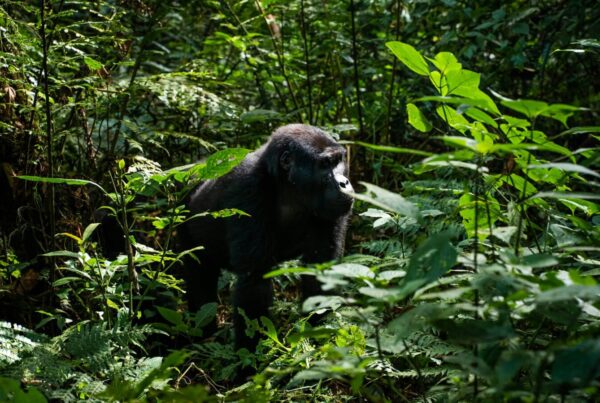
July is one of the driest and most popular months for gorilla trekking in Uganda. Trails in Bwindi are at their firmest, mornings are cool and often clear, and the savanna parks are at their best for game viewing. It is also peak season: the permit costs US$800, and permits for popular sectors and the best lodges can sell out months ahead, so book four to six months in advance, or earlier for groups. Bwindi is a rainforest, so brief showers are still possible.
Weather in July
July is in the middle of the main dry season. At Bwindi’s altitude, early mornings are around 10–15°C and can feel cold, especially in Ruhija and the southern sectors, while afternoons reach the low 20s°C. Rain is less frequent than in most months, though the forest can still produce a shower. Dust replaces mud on some roads. See our guide to weather at Bwindi.
Why July is popular
Firmer, drier trails make treks easier and safer, which suits older travellers and those less confident on steep ground. Roads to the parks are in better condition, and small aircraft to Kihihi and Kisoro are less likely to be delayed. In the savanna parks, short grass and animals gathering near water make game drives excellent, so July is ideal for combining gorillas with Queen Elizabeth, Murchison Falls and Kibale’s chimpanzees. See our 12-day safari itinerary.
Booking for July
School holidays in Europe and North America make July and August the busiest months. Book the gorilla permit first, then lodges and flights; if your preferred sector is full, Rushaga usually has the most availability. Prices for lodges and flights are at their highest. In 2027, the Africa Cup of Nations, co-hosted by Uganda, Kenya and Tanzania, is scheduled to run into mid-July, adding demand for flights and Kampala hotels. See our guides to permit availability and the Rushaga sector.
Tips for a peak-season trek
Arrive at your lodge the day before your trek, as briefing times are fixed at about 7:30 am. Carry warm layers for the cold early start, and sun protection for the savanna. Dust can be an issue on game drives, so protect cameras. Even in the dry season, a rain jacket belongs in your daypack. A porter, at about US$15–20, is still worth hiring; the slopes are steep in any month.
July or another month?
If you value easy trails and good weather, July is ideal; if you prefer quieter lodges and a cheaper permit, consider April, May or November, at US$600. September offers similar conditions with slightly less demand. Compare June and August, or read our guide to the best time for gorilla trekking.
Frequently asked questions
It is one of the best for weather and trail conditions, but also one of the busiest.
Four to six months, and earlier for groups or specific sectors.
Early mornings and nights can be cool, around 10–15°C. Bring a warm layer.
US$800 for foreign non-residents.
July: Peak Season at Its Best
July sits at the heart of Uganda’s dry season and consistently produces the most reliable trekking conditions of the year. The trails are dry, the skies are frequently clear, and the gorilla families’ daily movements are more predictable than during the rains — factors that combine to make July the month with the highest overall visitor satisfaction ratings in the UWA annual survey data. The trade-off is the highest permit demand and most competitive accommodation booking environment of the year. Visitors who accept the premium pricing and advance booking requirements of July’s peak status are rewarded with conditions that justify the effort.
Wildlife Beyond Gorillas in July
The July dry season is excellent for Uganda’s wider wildlife. Queen Elizabeth National Park’s game viewing is at its best, with the tree-climbing lions of Ishasha sector highly active and the elephant herds concentrated around permanent water. Murchison Falls National Park — a 6 to 8 hour drive from Bwindi but justifiable within a 10+ day itinerary — offers spectacular wildlife in July’s clear conditions. Birding in Bwindi’s Ruhija sector is particularly rewarding in July, with montane species at their most active in the morning hours before the dry-season heat increases.
July permits must be secured 5 to 6 months in advance for the most popular Bwindi sectors, and visitors who have not confirmed their July bookings by February should begin checking availability immediately. The combination of school holidays, the best dry-season weather, and Uganda’s growing global profile as a gorilla trekking destination means that July availability at preferred sectors and lodges is the most constrained of any month in the calendar. Early booking is the single most important practical step for a successful July gorilla trek.