Updated
Bwindi forest micro-climate rain weather Uganda is one of the highlights of travelling through Uganda, where the country’s rich food culture reflects its people, landscapes, and agricultural traditions. Bwindi Impenetrable National Park generates its own weather — not metaphorically but literally: the forest’s mass transpiration releases sufficient moisture into the atmosphere to create persistent local cloud cover that keeps Bwindi wetter than the surrounding agricultural land, and the park’s altitude gradient from the valley floors at approximately 1,160m to the Ruhija ridge at 2,607m creates temperature and moisture micro-climates that are more distinct from each other than either is from many different countries at the same latitude — so that a visit to Bwindi’s Buhoma sector and a visit to Ruhija can feel like being in entirely different forests despite being within the same national park boundary. Understanding Bwindi’s micro-climates helps visitors prepare correctly for their gorilla trek regardless of season. See Uganda safari packages.
- Altitude range: 1,160m (valley floor) to 2,607m (Ruhija ridge) — over 1,400m of vertical relief within one park
- Temperature at Buhoma: daytime 20-25°C; nights 15-18°C (cool but not cold)
- Temperature at Ruhija: daytime 15-20°C; nights can reach 8-12°C — bring warm layers
- Rain in dry season: Bwindi receives rain year-round; even June-August “dry season” sees afternoon convective showers in the forest interior
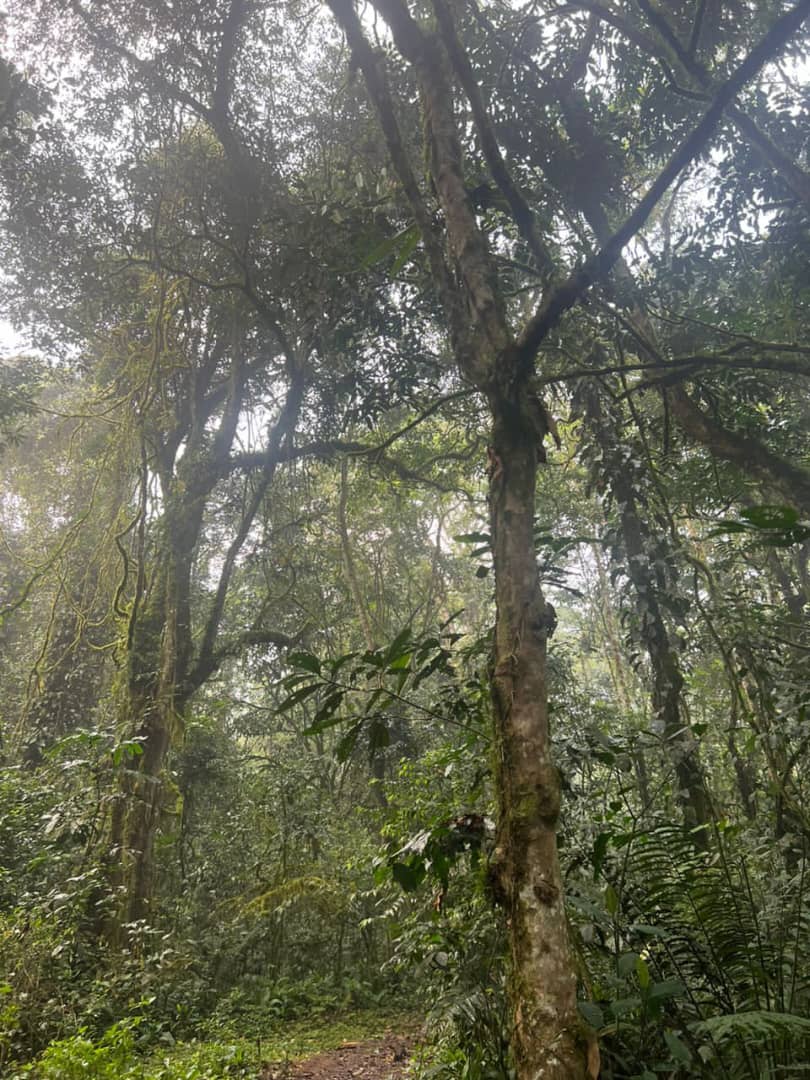
- The mist: early morning cloud and mist are characteristic of Bwindi at all seasons; the forest name “impenetrable” partly reflects this visual quality
Bwindi Impenetrable National Park creates its own weather. The dense forest canopy, the altitude gradient from valley floors to ridge crests, and the park’s position at the convergence of several air mass systems combine to produce micro-climatic conditions that can differ dramatically from conditions in cleared land just outside the park boundary, and from conditions in different parts of the forest on the same day. Understanding Bwindi’s micro-climates helps visitors plan appropriately, interpret weather forecasts intelligently, and manage expectations for what conditions on any given trek day are likely to be.
Micro-climates of Bwindi: why it rains in the forest and what to expect
Why the forest generates its own rainfall
Large forests like Bwindi are not merely influenced by climate — they actively shape it. The canopy transpires enormous quantities of water into the atmosphere, producing a continuous moisture flux that contributes to cloud formation above the forest. This moisture recycling means that Bwindi receives more rainfall than surrounding cleared areas of equivalent altitude, because the forest generates the atmospheric moisture that precipitation requires rather than simply receiving whatever rainfall arrives from external weather systems. Deforestation studies in comparable forest systems have documented rainfall reductions of 20 to 30 percent in areas that have lost significant forest cover, confirming that the forest-rainfall feedback is quantitatively significant.
Within the park, the forest canopy intercepts rainfall before it reaches the ground, distributing it through a complex of leaf surfaces, branches, and trunks that delay its arrival and alter its character. Heavy rain that would beat directly on exposed soil in cleared areas arrives at the forest floor as a gentler drip from saturated vegetation rather than as direct impact, reducing erosion and maintaining the soil porosity that water infiltration requires. This interception effect also means that rain begins and ends at the forest floor later than at canopy level, and that forest rain can continue for minutes after the canopy rain has stopped as stored water drains from the vegetation.
Temperature variation within the forest
The forest canopy acts as an insulating layer that moderates temperature extremes at ground level. In cleared areas at equivalent altitude, daytime solar heating produces temperature peaks in the early afternoon, while clear nights allow rapid radiative cooling that produces low minimum temperatures in the hours before dawn. Under closed forest canopy, these extremes are dampened: daytime temperatures stay cooler because solar radiation does not directly reach the ground, and nighttime temperatures stay warmer because the canopy traps long-wave radiation that would otherwise escape to the atmosphere.
The practical consequence for trekkers is that forest temperatures feel cooler during the heat of the day and warmer at night than cleared-area temperatures at the same altitude. But the forest’s moderating effect does not eliminate the altitude effect: mornings at Bwindi’s elevation — 1,600 to 2,400 metres for most trek starting points — begin cold regardless of forest cover, typically between 10 and 15 degrees Celsius in the warmest months. The transition from the cool forest interior to open clearings or ridges with direct sun exposure can produce temperature swings of 8 to 10 degrees within minutes, making layered clothing essential for managing comfort across these transitions.
The altitudinal gradient within a single trek
A gorilla trek in Bwindi frequently involves ascending from a valley floor starting point to ridge-top forest and back, covering several hundred metres of altitude change in a single day. This altitude change traverses distinct micro-climatic zones. At valley level, the forest is typically warmer, more humid, and receives more shelter from wind than ridge positions. At the ridge, exposure to air movement and direct insolation when the sun is above the canopy produces drying and warming effects that contrast with the valley’s damp, still conditions. Gorilla groups that range across this altitudinal gradient experience different conditions throughout the day and tend to concentrate at different elevations depending on season and time of day.
The cloud base in Bwindi varies with weather systems and season, but when it sits below ridge level the upper forest zones are wrapped in mist that reduces visibility to a few metres and drips continuously from vegetation even when no rain is falling. Trekking in mist-wrapped forest has a distinctive atmospheric quality — intimate, mysterious, reduced to a small radius of visibility — that many visitors find more beautiful and memorable than clear conditions, though it presents photographic challenges and requires waterproof clothing as a precaution against the continual moisture.
Rain prediction and the limits of forecasting
Weather forecasting at the micro-climatic scale of individual forest sectors within Bwindi is beyond the capability of regional weather services, which report conditions for broad areas rather than the specific topographic and vegetation contexts that determine local conditions. Standard weather forecast services for the Kigezi highlands area provide useful general guidance about whether major rain events are expected, but they cannot reliably predict whether a specific morning at a specific sector will be dry, misty, or heavily raining.
The most reliable predictive information comes from experienced local guides and lodge staff who have accumulated years of observation about how conditions in specific parts of the forest behave under different synoptic weather patterns. A guide who has trekked the Nkuringo trails every week for five years has pattern recognition for what a specific cloud formation or wind direction means for afternoon rain probability that no weather service can replicate. Asking guides for their assessment of conditions before a trek is a worthwhile investment in realistic expectation-setting, and their local knowledge consistently outperforms app-based weather prediction for the specific conditions that matter to a forest trekker.
Practical weather management for the gorilla trek
The practical lesson from Bwindi’s micro-climatic complexity is simple: prepare for rain regardless of forecasts. A high-quality waterproof jacket, waterproof trousers or gaiters, and equipment protected in dry bags are not optional precautions to be deployed only when rain is predicted but standard equipment for every trek regardless of morning conditions. Rain in Bwindi can arrive in minutes without meaningful warning, and conditions that are clear at the trek starting point can be wet an hour later when the group is in the forest interior far from shelter.
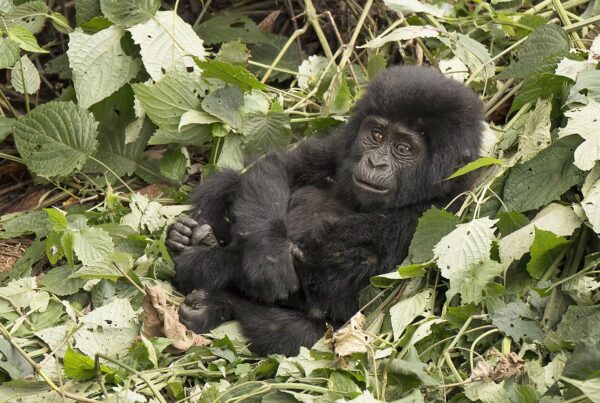
The attitude adjustment that Bwindi’s weather requires is equally important. Visitors who define a successful trek day as one without rain will sometimes have disappointing days for reasons outside anyone’s control. Visitors who define success as a gorilla encounter — which is almost certain for groups tracking habituated families — and who accept rain as part of the forest experience rather than an obstacle to it will consistently have satisfying days regardless of weather. The gorillas are active and visible in the rain, often more active as the cooler conditions following a shower provide relief from the humidity of dry periods. Wet-weather gorilla photographs, with mist and moisture visible in the frame, are often among the most atmospheric and distinctive images visitors return with.
Why does Bwindi create its own rainfall?
Tropical forests generate significant rainfall through a process called transpiration — the movement of water through plants from roots to leaves, where it is released as water vapour into the atmosphere. In a forest as extensive and dense as Bwindi (330 km² of continuous old-growth forest), the combined transpiration of millions of trees and understorey plants releases enormous quantities of water vapour. This moisture rises, cools at altitude, and condenses into cloud — cloud that produces rainfall. The effect is measurable: Bwindi receives significantly more annual rainfall than the surrounding deforested agricultural land at the same altitude and latitude. The forest literally irrigates itself. This self-sustaining rainfall mechanism is one reason why protecting the forest prevents a vicious cycle: deforestation would reduce the transpiration that creates local rainfall, which would further stress remaining vegetation, which would reduce transpiration further. The “impenetrable” quality of Bwindi’s forest canopy — the reason the name was applied — is partly a function of this persistent moisture: the canopy is always growing, the undergrowth is always dense, because rainfall is consistent year-round regardless of regional seasonal patterns.
How different are the conditions at Ruhija versus Buhoma?
Ruhija (approximately 2,300m) and Buhoma (approximately 1,900m) are 400 metres apart in altitude — a difference that produces measurably different conditions. Ruhija is significantly cooler: daytime temperatures of 15-20°C versus Buhoma’s 20-25°C; nights at Ruhija can reach 8-12°C, which requires warm sleeping layers that Buhoma visitors may not need. Ruhija is cloudier and mistier: the high ridge sits in cloud for longer periods each day, and the early morning mist that clears quickly at lower Bwindi elevations may persist at Ruhija until mid-morning. The vegetation reflects the altitude difference: Ruhija has more high-altitude Afromontane forest elements — different tree species, different understorey composition — and the distinctive Albertine Rift endemic birds that make Ruhija famous for birding are altitude-specific. For gorilla trekking, both sectors provide comparable encounter quality, but the physical experience is different: Ruhija’s treks at high altitude feel harder even at equivalent terrain steepness because of the reduced oxygen availability. Pack for Ruhija as if it were mountain hiking rather than tropical forest walking.
Will it rain during my gorilla trek even in the dry season?
Rain is possible during a Bwindi gorilla trek on any day of the year, including in the middle of the June-August dry season. Bwindi’s own moisture generation creates convective rainfall that follows a pattern largely independent of the regional dry season: clear mornings that produce convective cloud development through the morning, with afternoon showers a regular occurrence even in months that are nominally dry. The characteristic pattern is: cold, often misty morning; clearing mid-morning; warm, bright midday; cloud building through the early afternoon; showers from 2-4pm. Gorilla treks begin at dawn (around 7-7:30am briefing) and encounter timing varies, but many encounters happen in the morning before the afternoon showers develop. Rain gear is not optional equipment for a gorilla trek at any season: a waterproof jacket, waterproof cover for camera equipment, and the understanding that you will be wet if it rains — which it might, and which will not stop the trek or the gorilla encounter — are standard preparation regardless of the month.
What causes the early morning mist at Bwindi and how long does it last?
The early morning mist at Bwindi is radiative fog produced when the forest floor and vegetation radiates heat overnight, the air cools to the dew point, and water vapour condenses as visible mist in the valley bottoms and forest understorey. At high forest density and humidity, this mist persists from before dawn until the sun is high enough to warm the ground and begin evaporating the condensation — typically 8-10am at Buhoma, sometimes until noon at Ruhija. The visual quality of Bwindi in morning mist is extraordinary and is one of the elements that the park’s name evokes: the forest is literally impenetrable visually at 50 metres when the mist is thick, with individual trees emerging and disappearing as the mist moves. For photographers, the mist period produces some of the most atmospheric forest images — the diffused light and the layered disappearance of the forest into white are specific to this morning hour and cannot be replicated in clear conditions. Gorilla treks begin in this mist period, and the experience of moving into the forest in near-zero visibility before it clears is part of the approach experience that many visitors describe as unexpectedly affecting.
How should I dress for a Bwindi gorilla trek given the micro-climate?
The standard gorilla trek clothing recommendation reflects Bwindi’s specific micro-climate: long trousers (not shorts — stinging nettles, thorns, and forest insects make bare legs a poor choice regardless of temperature); long-sleeved shirt (same reasons, plus sun protection on open ridges); waterproof jacket that can be removed and packed when not raining; good ankle-supporting boots with grip soles (the forest floor can be steep and slippery even when dry, and is significantly harder when wet); hat for sun protection on open sections; garden gloves for grasping vegetation on steep slopes. The layering principle applies specifically at Ruhija: start with a base layer and light mid-layer that can be removed as you warm up on the approach. At all sectors, the starting temperature at 7am briefing is cool enough that most visitors are initially grateful for their warm layer; by the time the approach has produced significant exertion, that layer will come off. The return from a long trek as temperature drops in the late afternoon is the context most likely to produce genuine cold discomfort for underprepared visitors. Bring the layer; you may not use it, but you will be glad you have it if you need it.
- Weather at Bwindi Impenetrable Forest: temperature, rainfall and what to expect
- Bwindi Impenetrable Forest – Gorilla Trekking in Uganda’s UNESCO Jungle
- Chimpanzees Confirmed in Bwindi Forest
- Bwindi Forest: What Happened to the White-Bellied Duiker?
- Bwindi Forest Gorilla Trekking: An Unforgettable Journey
- Uganda Gorilla Trekking Bwindi Impenetrable Forest: The Complete Guide
- Internet and Wi-Fi in Bwindi: What to Expect on Safari
- The History of Bwindi Impenetrable National Park: From Forest to World Heritage Site
- Where Exactly Is Bwindi Impenetrable Forest? Location, Geography, and How to Get There
- Are There Other Animals on the Gorilla Trek in Bwindi? Forest Wildlife Beyond the Gorillas