Southwest Uganda’s altitude and topographic complexity create weather conditions that occasionally surprise visitors expecting straightforward tropical heat. While Bwindi’s climate is broadly warm and wet, the specific combination of elevation, proximity to the Albertine Rift escarpment and the convective processes that drive afternoon rainfall can produce weather events — hailstorms, cold fronts, dense fog — that visitors from lowland tropical regions and from temperate climates with different rainfall patterns may not anticipate. Understanding the range of weather possible in the Bwindi area is useful preparation for any season.
Why hail occurs at Bwindi’s elevation
Hail forms when ice crystals in the upper atmosphere accumulate and fall without fully melting before reaching the ground. At sea level or low elevations, the ambient temperature is warm enough to melt hailstones to rain before they arrive. At Bwindi’s elevation — lodges sit between 1,600 and 2,400 metres — the temperature differential is small enough that hailstones occasionally reach the ground intact, sometimes as pellets of ice 5–20 mm in diameter. This is not rare at these elevations; lodge staff at Ruhija and Buhoma report hailstorms several times a year, typically during the peak of the rainy seasons when convective storms reach maximum intensity. For visitors in the forest during a hailstorm, the canopy provides significant shelter, but open ridgelines are fully exposed.
Cold snaps and temperature drops
The perception of Uganda as uniformly hot is accurate at lower elevations — Kampala and Entebbe rarely drop below 18°C at night. The Bwindi area operates in a different thermal regime. Night temperatures at Ruhija can drop to 8–12°C in cold weather episodes, and the combination of altitude, wind and rain can create an effective temperature that feels significantly colder. Cold fronts associated with Congolese weather systems occasionally push east across the Albertine Rift, producing sustained cold and cloud cover that lasts several days. Visitors arriving with only light tropical clothing — appropriate for Kampala and the national parks at lower elevation — can be genuinely uncomfortable in these conditions. Layering capability is not optional at Bwindi’s higher sectors.
Dense fog and its impact on trekking
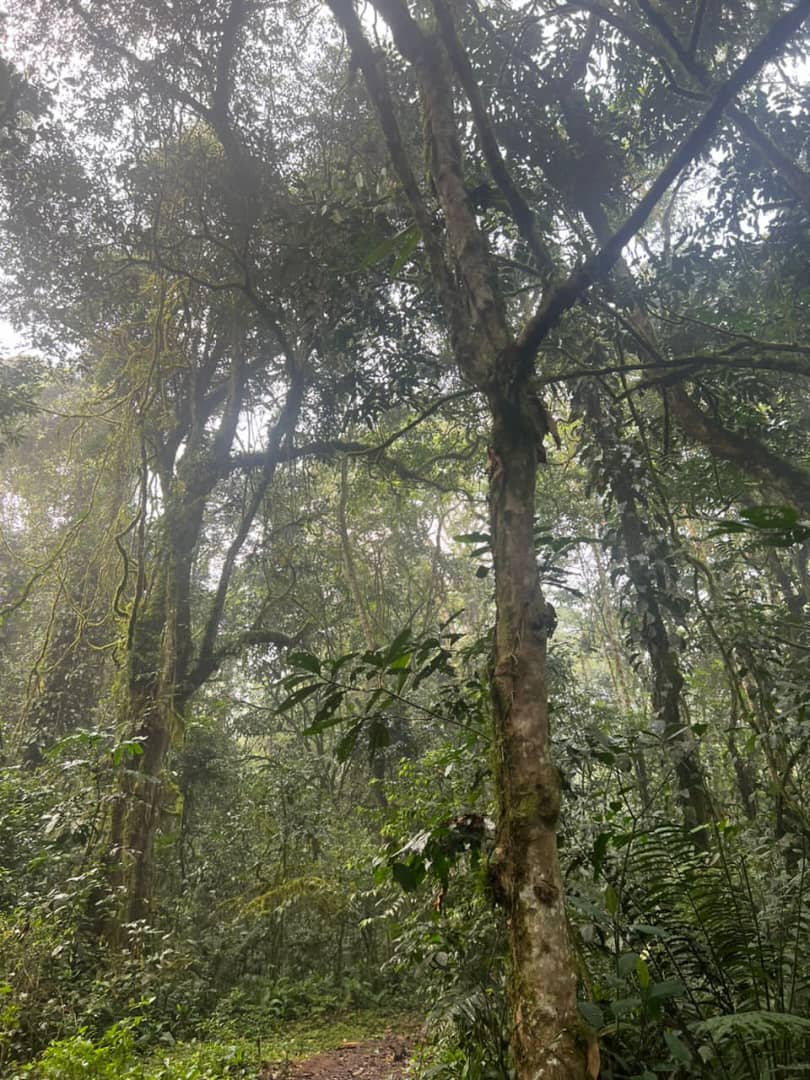
Bwindi’s valleys fill with dense fog on many mornings, particularly after wet nights. The fog typically lifts by mid-morning as the sun warms the valley floors, but on overcast days it may persist through the trekking hours. Trekking in fog is atmospherically extraordinary — the forest appears in fragments, visibility drops to thirty or forty metres and familiar landmarks disappear. It also makes photography more challenging and navigation more demanding. Gorilla trackers operate confidently in fog conditions because their knowledge is based on sign-following rather than visual landscape orientation, but the experience is distinctly different from a clear-day trek. Some visitors find foggy Bwindi their favourite condition; others find it disorienting.
Lightning and storm safety in the forest
Afternoon thunderstorms in the rainy seasons produce lightning strikes in the Bwindi area, as they do throughout the highlands. In the forest, the risk from lightning is reduced compared to open terrain — the canopy distributes electrical discharge and the presence of many tall trees makes any single tree statistically less likely to be struck. However, standing under isolated large trees in forest clearings during a storm is inadvisable, and ridgeline positions should be abandoned quickly if an electrical storm is approaching. Uganda Wildlife Authority and lodge guides are trained in storm safety protocols; following their guidance during sudden weather changes is the appropriate response.
What to pack for Bwindi’s full weather range
Practical packing for Bwindi’s weather range means being prepared for conditions spanning a wider thermal and precipitation range than most single-destination trips require. A waterproof jacket that actually blocks rain (not a showerproof layer designed for light drizzle), a mid-layer fleece or down jacket for cold evenings at Ruhija, thermal base layers for overnight comfort at the highest lodges, and waterproof trouser covers for wet trekking days address the realistic weather range. Gaiters — lower-leg coverings that keep mud and debris out of boots — are worth packing for wet-season trekking. The gorilla trek briefing notes that trekking in rain is normal and that the trek proceeds in all weather; arriving prepared for rain rather than hoping for dry conditions is the realistic planning approach.
- Uganda’s landslide risk near Bwindi: what travellers should know
- Uganda Gorilla Trekking Near Kanungu: The Least Known Gateway
- Gorilla Trekking Refund Policy: What You Should Know Before You Book
- Best Gorilla Trekking Lodges in Uganda: Where to Stay Near Bwindi
- What to Do After Gorilla Trekking: Top Activities Near Bwindi
- Luxury Lodges near Bwindi: Uganda’s Finest Gorilla Accommodation
- The Gorilla Sanctuary That Just Opened Near Bwindi: What It Offers
- Amsterdam to Bwindi Gorilla Trek: Dutch Travellers Price Guide
- What to Do the Day After Your Gorilla Trek: Activities Near Bwindi
- Gorilla Trekking Uganda for Pensioners and Senior Travellers: What to Know