Updated
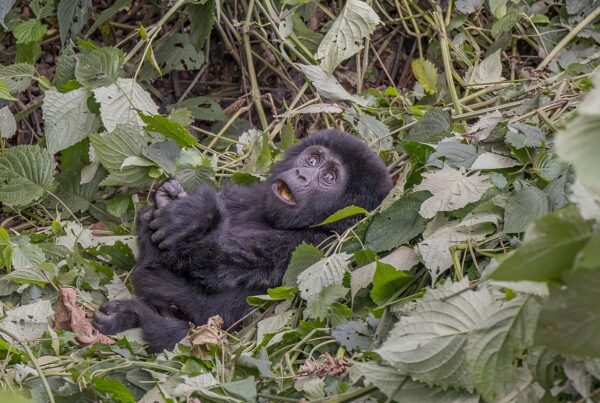
gorilla trekking children family education is one of Africa’s most extraordinary wildlife experiences, connecting travellers with mountain gorillas in their natural forest habitat. A child who watches a gorilla mother nurse her infant, observes a juvenile practise climbing a vine, or locks eyes — briefly, carefully — with an enormous silverback has received an education that no classroom can replicate: a direct, unmediated encounter with a non-human great ape whose family structure, social bonds, play behaviour, and emotional expressiveness are close enough to human experience to register immediately, and different enough to raise real questions about what the differences and similarities mean for how we understand animals and our own responsibilities toward them. Uganda Wildlife Authority sets the minimum age for Bwindi gorilla trekking at 15 years. See Uganda safari packages for family-friendly itineraries.
- Minimum age for gorilla trekking: 15 years (UWA rule); strictly enforced
- Chimpanzee trekking minimum age: 12 years (Kibale Forest) — a good alternative for children below the gorilla trekking age limit
- What younger children can do at Bwindi: Batwa Cultural Trail, nature walks, birding, Lodge-based activities while older family members trek
- Family permit tip: book permits for all eligible family members well in advance; gorilla permits cannot be transferred between individuals
A child who watches a gorilla mother nurse her infant, observes a juvenile practise climbing a vine, or locks eyes — briefly, carefully — with an enormous silverback has received an education that no classroom can replicate. The gorilla trekking experience in Uganda is one of the most powerful tools available for fostering a child’s understanding of wildlife, conservation, and humanity’s relationship with the natural world. This guide is for parents and guardians thinking about how to maximise that educational opportunity before, during, and after the visit.
What children learn from watching gorillas: a guide for families with young wildlife lovers
What children actually understand when they see gorillas
Children, especially those under 10, often grasp the emotional reality of a gorilla encounter more immediately than adults. Where adults process the experience through layers of prior knowledge, camera management, and conscious reflection, children tend to respond directly: they watch, they feel, and they remember. A five-year-old who watches a gorilla infant playing may not have the vocabulary to articulate what they are observing, but they understand it — the parallel with their own experience of play is immediate and wordless.
This direct emotional response is educationally valuable precisely because it precedes abstraction. The feeling of connection — the recognition that this animal is like me in ways that matter — is the foundation from which all conservation understanding grows. Children who have felt that connection are more likely to care about habitat protection, to engage with conservation messaging, and to carry an active concern for wildlife into adulthood. The feeling comes first; the understanding follows.
Age and the trekking experience
Uganda Wildlife Authority requires that trekkers be at least 15 years old for the standard gorilla permit. This rule exists because of the physical demands of the trek and the behavioural requirements during the gorilla encounter — children who cannot reliably follow instructions about distance, noise, and movement could compromise both the safety of the group and the welfare of the gorillas.
For families with younger children, the gorilla habituation experience — a full-day activity that involves spending up to four hours with a gorilla family during the habituation process — has a minimum age of 15 as well. However, the broader Uganda wildlife circuit offers extraordinary wildlife experiences appropriate for younger children: chimpanzee tracking at Kibale (minimum age 12), game drives at Queen Elizabeth National Park (no age minimum), boat trips on the Kazinga Channel, and cultural community visits are all well-suited to children under 15.
For children aged 15 and above who meet the requirements, the gorilla trek itself is an ideal family activity. The physical challenge is appropriate for fit teenagers. The encounter’s emotional intensity — manageable for adults — is often described by older teenagers as the most powerful wildlife experience of their lives.
Pre-visit preparation for children
The educational value of the gorilla encounter is significantly enhanced by preparation. Children who arrive at Bwindi knowing something about mountain gorillas — their social structure, their diet, the conservation challenges they face — will observe the encounter with much greater depth and come away with more durable understanding.
Age-appropriate preparation might include: reading children’s books about gorillas or Dian Fossey’s work; watching age-appropriate documentary footage (BBC Natural World has produced excellent mountain gorilla content); looking at maps of Uganda and Bwindi together, discussing why the forest needs protection; and talking about what conservation means in practical terms — the rangers, the permits, the community benefit-sharing programmes.
For older children and teenagers, the story of mountain gorilla conservation is a genuinely gripping narrative of scientific dedication, political risk, and hard-won success. The population was down to approximately 250 individuals in the 1980s; it now exceeds 1,100. This recovery — achieved through active conservation effort rather than simply leaving nature alone — is a powerful story about what human intervention, when applied correctly, can achieve for wildlife. It is also honest about the ongoing challenges and the fragility of the recovery.
During the trek: helping children engage
The walk to find the gorillas is itself educational if children are prepared to engage with it. The forest they are walking through is not simply the backdrop for the gorilla encounter — it is the ecosystem that sustains the gorillas, the community around it, and much of Uganda’s biodiversity. Pointing out medicinal plants, identifying bird calls, noticing the different layers of the forest canopy, and discussing what the forest provides for the gorillas along the trail turns a potentially long hike into a learning experience.
When the gorilla family is reached, encourage children to observe quietly and attentively rather than reaching immediately for a camera. The first few minutes of the encounter should be experienced directly — the camera can follow. Guide children’s attention to specific behaviours: What is the mother doing? Is the infant feeding or playing? How close is the silverback and what is his body language communicating? Active, guided observation deepens the experience and creates the specific memories that last.
The ranger guide will be explaining what is happening during the encounter. Encourage children to ask questions — guides are generally delighted by genuine curiosity from young visitors and often provide more detailed explanations in response to a child’s question than they would offer spontaneously.
After the trek: consolidating the learning
The evening after the gorilla trek is an ideal time to talk through what children observed and what it meant to them. Open questions — What surprised you? What did you notice that you hadn’t expected? What do you want to know more about? — generate more valuable conversation than evaluative ones. Let children lead the reflection rather than directing them toward predetermined conclusions.
Practical follow-up actions — adopting a gorilla through the Wildlife Conservation Society or similar programmes, writing a school report on mountain gorilla conservation, creating a fundraising page for a conservation organisation — translate the emotional experience into active engagement. Children who do something with the feeling that the gorilla encounter produces are more likely to sustain their connection to wildlife conservation over time.
The gorilla trek is expensive. For families who can make it happen, it is arguably the most powerful conservation education a child can receive. The mountain gorillas of Bwindi have converted more people to active conservation concern than any documentary, any book, or any classroom lesson. The encounter is the argument — no further words are needed.
What do children specifically learn from observing gorilla families?
The learning that gorilla trekking produces in children (and adults) operates in several distinct registers. Social structure: watching a gorilla family — the dominant silverback’s calm authority, the females’ relationships with each other and with their infants, the juveniles’ play dynamics, and the blackbacks’ position between full adult and juvenile — makes immediately visible the kind of complex social organisation that children learn about abstract animals in books but rarely see in the direct, real-time detail that a one-hour gorilla encounter provides. Maternal care: a gorilla mother holding her infant is recognisable to any child who has observed human maternal behaviour, and the similarity is precisely the learning moment — the difference between knowing abstractly that gorillas have mother-infant bonds and watching a specific mother look at, hold, and respond to a specific infant produces a different kind of understanding. Conservation cause-and-effect: children who see habituated gorillas in Bwindi and then learn that this forest would not exist without the tourism revenue from their own permit acquire a direct personal sense of conservation impact that lectures and fundraising campaigns cannot produce. The conservation lesson lands differently when it is personal rather than abstract.
Why is the minimum gorilla trekking age 15 and what can younger children do?
The 15-year minimum age for gorilla trekking exists for two distinct reasons. Disease risk: children under 15 are statistically more likely to carry the respiratory viruses (influenza, RSV, rhinovirus) that pose the greatest disease transmission risk to gorillas, whose immune systems have limited resistance to human respiratory pathogens. The younger the child, the more likely they are to carry an active respiratory infection asymptomatically. Physical demands: a gorilla trek in Bwindi can last 2-8 hours on steep, muddy terrain at altitude; younger children lack the physical and attentional stamina for a trek of this demand while also maintaining the behavioural requirements of the encounter (stillness, quiet, maintained distance). For children under 15 who are part of a family group: chimpanzee trekking at Kibale Forest (minimum age 12) is the most comparable great ape experience available to them. The Batwa Cultural Trail at Bwindi Buhoma is appropriate for all ages and provides genuine cultural learning. Lodge-based guided nature walks at most Bwindi lodges are available without age restrictions. Child-focused activities at Buhoma community centre and similar community tourism facilities are worth checking with your operator.
How should I prepare a teenager for the gorilla trekking experience?
A teenager who arrives at the Bwindi briefing with some preparation produces a qualitatively richer experience than one who arrives knowing nothing about what they are about to see. Useful preparation: watch Dian Fossey’s story either through “Gorillas in the Mist” (1988, available on streaming platforms) or through documentary material about the Mountain Gorilla Veterinary Project; read a simplified version of gorilla family structure so they know what a silverback, blackback, and female are before the briefing; look at specific gorilla family profiles for the Bwindi sector they will be visiting (available through the Bwindi Impenetrable Conservation Trust or the Dian Fossey Fund’s public resources). The preparation makes the one-hour encounter specific rather than generic: instead of “watching gorillas,” the teenager is watching a known family, knowing approximately who is who and what the relationships mean. This specificity — “that’s the dominant silverback, the females near him are his family, the younger male staying at the edge is a blackback building his own future” — produces the kind of memory that lasts decades rather than years.
How does the gorilla encounter affect children’s environmental values?
The research on how wildlife encounters affect conservation values in young visitors is not extensive but consistently points in the same direction: direct encounter with a charismatic, cognitively complex wild animal produces stronger and more durable conservation motivation than indirect encounter through media. The mountain gorilla is particularly effective as a conservation motivator for children because the combination of physical similarity to humans (the face, the hands, the social behaviour, the mother-infant relationship) and the setting in a visibly threatened forest creates an immediate sense of connection and concern. Children who have seen a gorilla family in Bwindi consistently describe the encounter as one of the most significant experiences of their lives in retrospective accounts gathered at lodges and in post-visit surveys. Whether this translates into adult conservation behaviour is unknown — the longitudinal research does not exist for gorilla tourism specifically — but the short-term attitudinal effect is well-documented. Families who discuss the conservation context explicitly during and after the trek, rather than treating it as a pure wildlife experience, likely maximise the educational and attitudinal impact.
What if my child is 15 but looks younger — will they be turned away?
UWA rangers check age at the trailhead briefing based on the documentation presented, not based on physical appearance. Bring your child’s passport (the standard travel document for an international safari) and ensure the birth date is visible. A 15-year-old with a passport showing their date of birth will not be turned away based on looking younger. If for any reason passport documentation is not available, a birth certificate or school identity card can serve as supporting documentation. The ranger-guides are not in the business of challenging passport entries — they check that the document is present and that it confirms the minimum age, then proceed. What is enforced strictly: the age limit itself. A 14-year-old with an accurate passport showing their real birth date will be refused regardless of maturity level. There is no exception for “mature for their age” or for parents’ assessment of their child’s readiness. If your family has a child who is 14 on the trek date, plan the trip for after their 15th birthday, or arrange chimpanzee trekking at Kibale as the alternative activity for that trip.
- How children learn conservation values through wildlife encounters in Uganda
- Gorilla Trekking for Families: Can Children Trek?
- Gorilla Trekking and Birdwatching: Uganda’s Premier Wildlife Combination
- Gorilla Trekking Uganda for Food Lovers: Cuisine and Wildlife Combined
- Best Wildlife Watching Spots in Uganda: Ranked by Species Richness
- Wildlife journals for children: how to keep field notes on a Uganda safari
- Teaching children about gorilla conservation: how young visitors understand the forest
- Gorilla conservation stories for children: books, films, and ways to engage young minds
- What children learn from seeing a mother gorilla with her infant: lessons in nurture and care
- Best Day Trips From Kampala for Wildlife Lovers