Updated
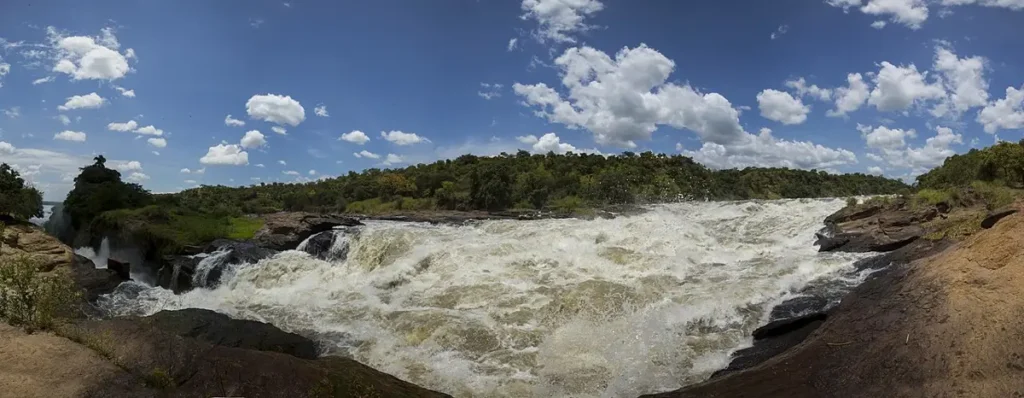
Murchison Falls National Park, Uganda’s largest national park, is where the entire Victoria Nile forces its way through a rock gap about 7 m wide and plunges roughly 43 m — one of the most powerful waterfalls in the world. Around the falls, the park offers boat trips on the Nile past hippos and crocodiles, game drives with Rothschild’s giraffes, elephants and lions, and one of Uganda’s best chances to see the shoebill.
It is about 4–6 hours by road north-west of Kampala, so it works best at the start or end of a longer safari that includes gorillas in Bwindi.
Here is what to see, how the main activities work and how to combine Murchison with gorilla trekking in the far south-west.
Murchison Falls at a glance
| Experience | What it involves | Best time |
|---|---|---|
| Top of the falls | Short walk to viewpoints above the gorge | Morning, fewer people |
| Launch trip to the base of the falls | Boat from Paraa upstream; hippos, crocodiles, elephants, birds | Morning or afternoon |
| Delta boat trip | Downstream to where the Nile meets Lake Albert; shoebill chances | Early morning |
| Game drives on the northern bank | Giraffes, elephants, buffalo, Uganda kob, lions | Early morning and late afternoon |
| Chimpanzee tracking | Budongo Forest, in the south of the conservation area | Morning |
The falls
The best way to experience the falls is twice: from the river and from the top. The launch trip from Paraa heads upstream for around three hours return, stopping short of the base of the falls, where the spray and roar fill the gorge. Along the way, the riverbanks are crowded with hippos and Nile crocodiles, and elephants and buffalo often come down to drink.
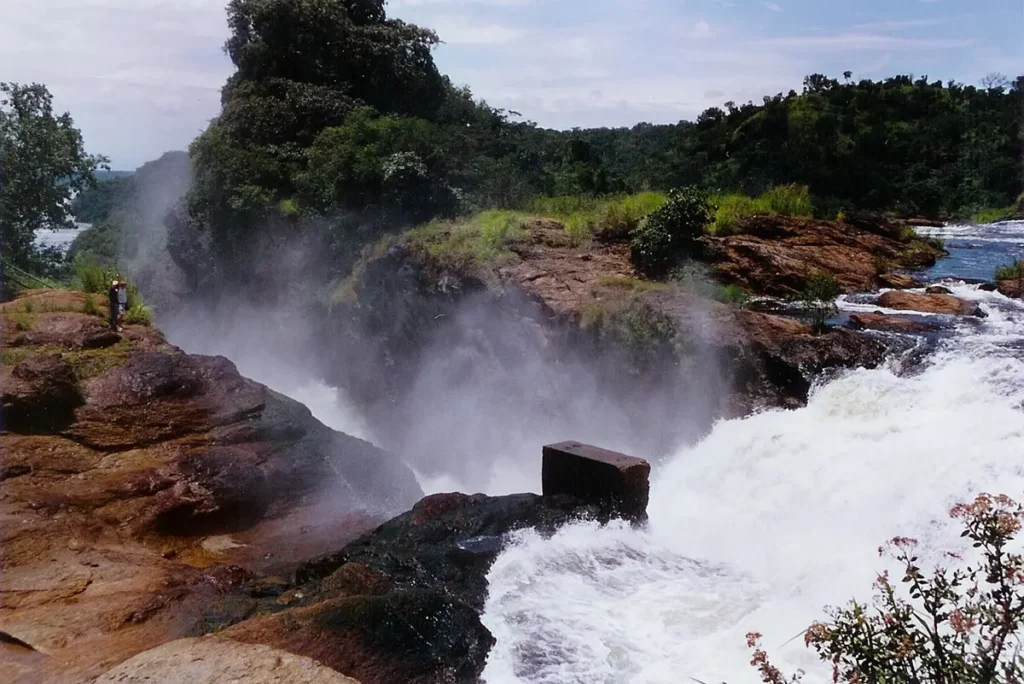
Then drive or hike to the top, where you stand beside the narrow chasm and feel the force of the water thundering through. Some boat trips drop hikers at the base for a walk up to the top, a memorable way to see both sides.
Game drives and the shoebill
Across the Nile by ferry from Paraa, the northern bank’s grassland and borassus palm savannah has the park’s best game viewing. Herds of Rothschild’s giraffes, elephants and buffalo graze among Uganda kob, Jackson’s hartebeest and oribi, and lions are seen regularly, with leopards and hyenas less often. Early morning drives through the Buligi area are the most productive. See photography spots in Uganda.
For birders, the delta trip is the highlight. A boat heads downstream to the papyrus swamps where the Nile flows into Lake Albert, home to the shoebill, a huge grey stork with a clog-shaped bill. Sightings are not guaranteed but are frequent with an early start. If you cannot get to Murchison, Mabamba Swamp near Entebbe is the other easy place to look; see wildlife day trips from Kampala.
Getting there and where to stay
By road from Kampala, allow 4–6 hours depending on route and stops. Many itineraries stop at Ziwa Rhino Sanctuary on the way, about three hours north of Kampala, to track white rhinos on foot — a good way to break the drive. Charter and some scheduled flights serve airstrips in the park.
Lodges range from riverside lodges near Paraa, with views of the Nile, to camps on the northern bank and lodges near the southern gates and Budongo Forest. Two or three nights let you see the falls, take a boat trip and do at least two game drives.
Combining Murchison with gorilla trekking
Murchison is in the north-west and Bwindi is in the far south-west, so combining them needs either a longer road circuit or flights. The classic 10-day circuit runs Entebbe – Ziwa – Murchison Falls – Kibale – Queen Elizabeth – Bwindi, with each day a manageable drive. If you are short of time, fly between Murchison and Bwindi on a charter, or end the trip at Murchison after flying back from Bwindi to Entebbe. See Uganda safari costs by trip length and Queen Elizabeth National Park.
When to go
Murchison can be visited all year. The drier months, December to February and June to September, make game drives easier as animals gather near water and tracks are firmer. The wetter months bring green landscapes and good birding, but some tracks on the northern bank can become muddy. The falls themselves are spectacular in any season. For seasonal planning across Uganda, see the best time for gorilla trekking.
Frequently asked questions
Yes. A short path leads to viewpoints at the top, and some boat trips drop hikers at the base for a guided walk up.
Two or three nights: one for the falls and boat trip, and one or two for game drives and the delta.
Not in the park itself. Ziwa Rhino Sanctuary, on the road from Kampala, is where you can track white rhinos on foot.
If you have 9–10 days or more, yes. It adds the Nile, giraffes and a dramatic waterfall that contrast well with Bwindi’s forest.