

Updated
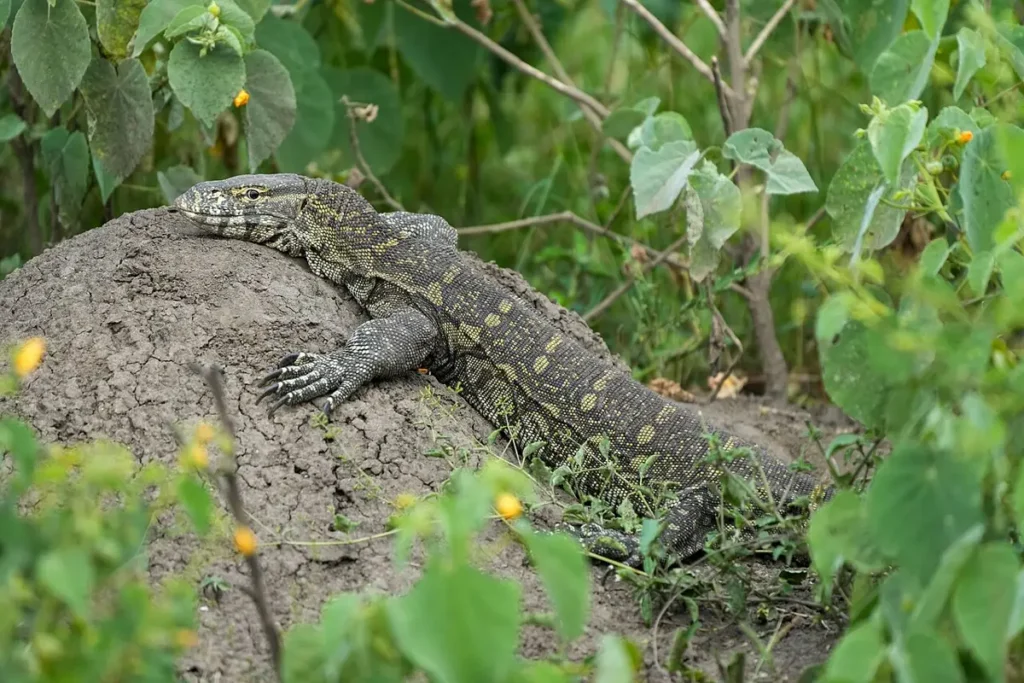
The Nile monitor is Africa’s longest lizard, growing to about 2 m including its long tail, with olive-grey skin marked by yellow bands and spots. It is not Uganda’s largest reptile, as the Nile crocodile and African rock python are bigger, but it is the largest lizard. Nile monitors are common around lakes and rivers across Uganda and are often seen basking along the Kazinga Channel, the Nile and the Lake Victoria shore at Entebbe.
Habits
Monitors are strong swimmers and climbers. They eat crabs, snails, fish, frogs, birds, rodents and eggs, including crocodile eggs they dig out of nests, and they scavenge. Females often lay eggs inside active termite mounds, where the termites seal the hole and the eggs incubate in stable warmth until the young dig out months later.

Around people
Nile monitors usually run or swim away from people, but they can bite, scratch and lash with the tail if cornered. Around lakeside lodges they sometimes take eggs and scraps. In some areas they are hunted for meat and skins.
Where to see it
Look along riverbanks and rocks on the Kazinga Channel and Murchison boat trips, and on the shore at Entebbe. The gorilla permit costs US$800, or US$600 in April, May and November. See our guides to the Nile crocodile, chameleons, the Uganda Reptile Village and Queen Elizabeth.
Frequently asked questions
No. It is the largest lizard; crocodiles and rock pythons are bigger.
Up to about 2 m including the tail.
Often inside active termite mounds.
They avoid people but can bite or lash if cornered.










