

Updated
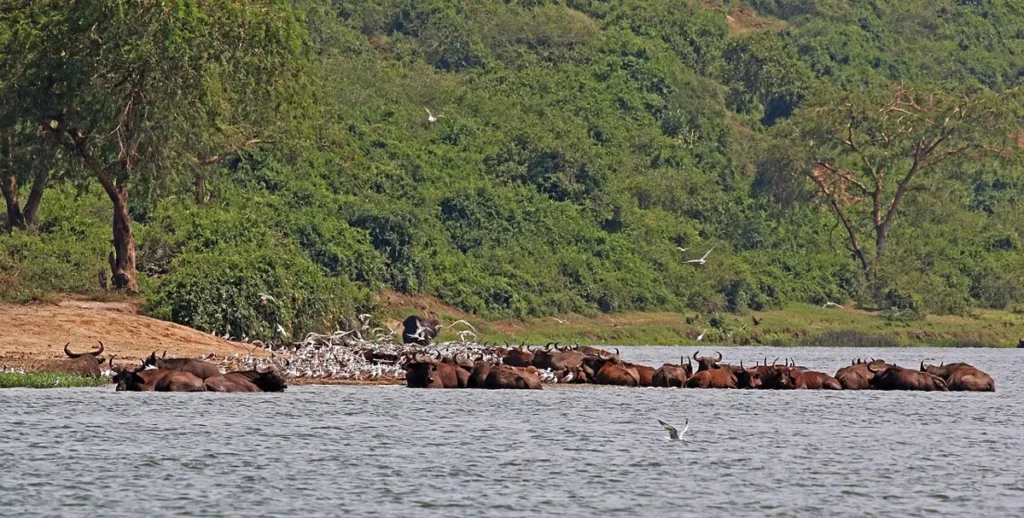
African buffaloes live in herds that can number hundreds of animals, made up mainly of females, calves and young bulls, while older bulls often live in small bachelor groups. Herds move, graze and defend themselves together. In Uganda you can see big herds in Murchison Falls, Queen Elizabeth and Kidepo Valley, and smaller groups in Lake Mburo and even in forests such as Bwindi.
How a herd decides where to go
Research on African buffaloes found that before moving off to graze, adult females stand up, look in a particular direction and lie down again. The herd then tends to move in the direction most of them faced, a kind of group vote. During the day, herds rest and chew the cud together, and in the dry season they walk long distances to water.
Defence
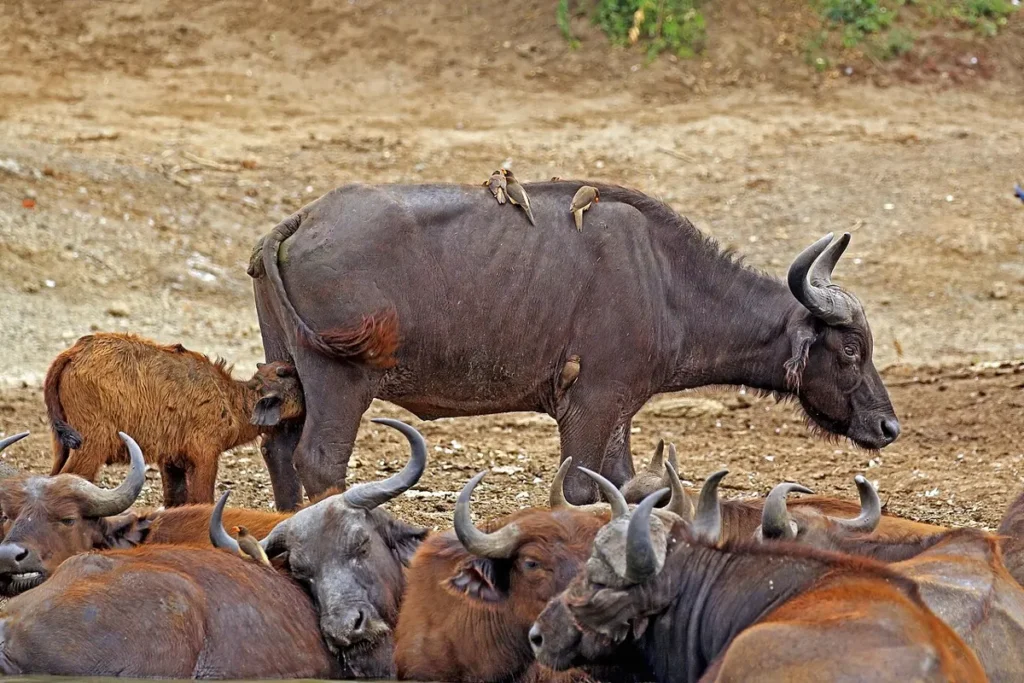
Buffaloes protect calves and weak animals by bunching together, with adults facing outwards. They respond to calves’ distress calls and will mob lions, sometimes chasing them off a kill or injuring them. Lions often target old bulls that live alone or in small groups, which is why these bulls, called dagga boys, are wary and can be aggressive towards people.
Where to see herds
Large herds gather on the northern bank of Murchison, along the Kazinga Channel in Queen Elizabeth and in Kidepo’s Narus Valley. The gorilla permit costs US$800, or US$600 in April, May and November. See our guides to the African buffalo, Murchison Falls animals, Queen Elizabeth and Kidepo game drives.
Frequently asked questions
From a few dozen to several hundred, and occasionally more.
Females appear to vote by facing the way they prefer before the herd moves.
An old bull living alone or in a small bachelor group.
Murchison Falls, Queen Elizabeth and Kidepo Valley.










