

Updated
The African buffalo is one of the Big Five, a heavy, black or dark brown animal with massive horns that join in a boss across the forehead in older bulls. Rangers and guides treat it with great respect because lone bulls can charge without warning and are hard to stop. In Uganda, buffaloes are common in Queen Elizabeth, Murchison Falls, Kidepo Valley and Lake Mburo, and smaller, redder forest-type buffaloes live in forests such as Bwindi and Semuliki.
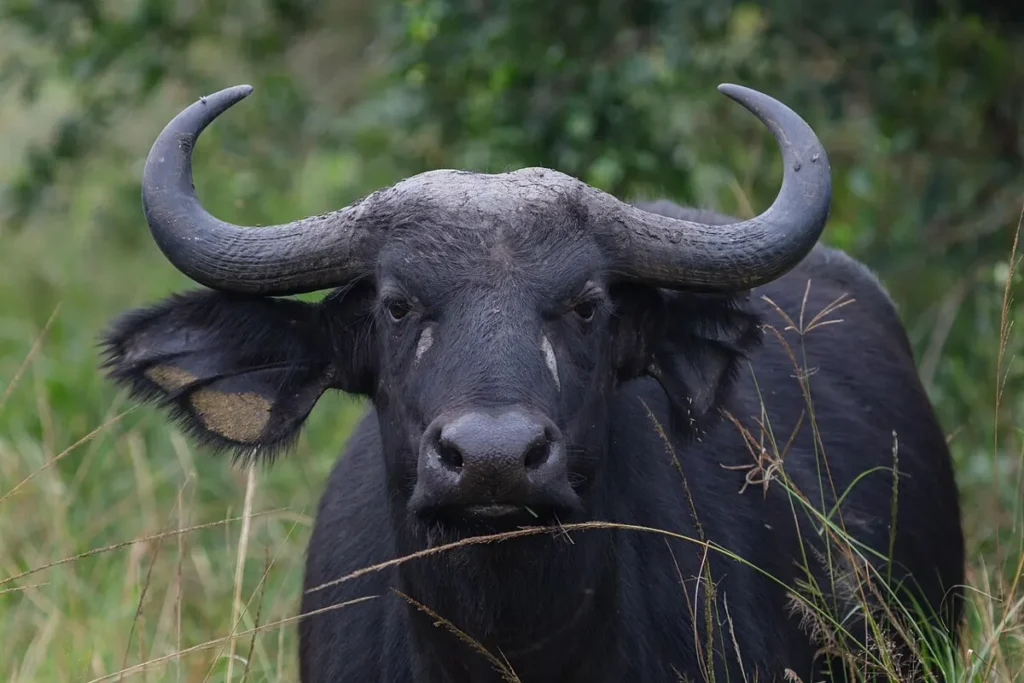
Why buffaloes are dangerous
Most buffaloes in a herd are not aggressive, but old bulls living alone or in small groups are wary and quick to defend themselves, especially if wounded, surprised in thick cover or cornered. They are fast, heavy and tough, and an injured buffalo may circle back on whoever disturbed it. This is why walking safaris always have an armed ranger and keep well away from thickets.
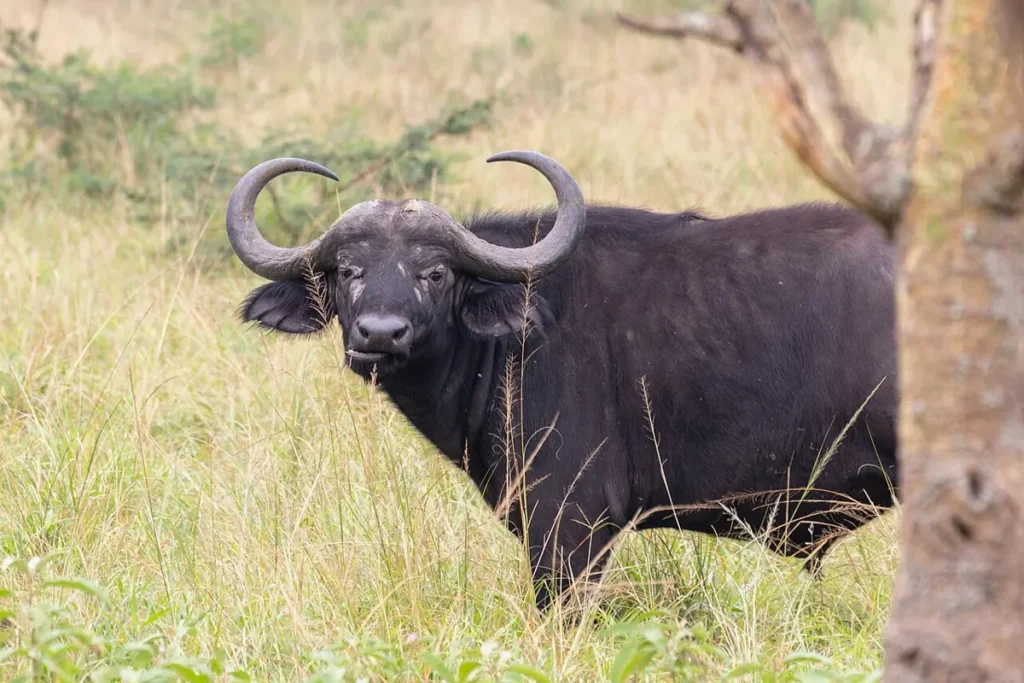
Buffaloes in the forest
Buffaloes also live in Bwindi and other forests, and trekkers occasionally meet them on trails. Ranger guides watch for fresh signs and keep the group back. Forest buffaloes are smaller and more reddish than savannah ones, and many in western Uganda show a mix of both forms.
Where to see it
Big herds are easy to see on game drives and the Kazinga Channel boat trip. The gorilla permit costs US$800, or US$600 in April, May and November. See our guides to buffalo herd behaviour, Uganda’s most dangerous animals, Queen Elizabeth and the Big Five in Uganda.
Frequently asked questions
Lone bulls can charge without warning, especially when surprised or wounded.
In Queen Elizabeth, Murchison Falls, Kidepo Valley and Lake Mburo.
Yes, a smaller forest type lives in the forest.
Herds usually move away; lone bulls are the main risk.










