

Updated
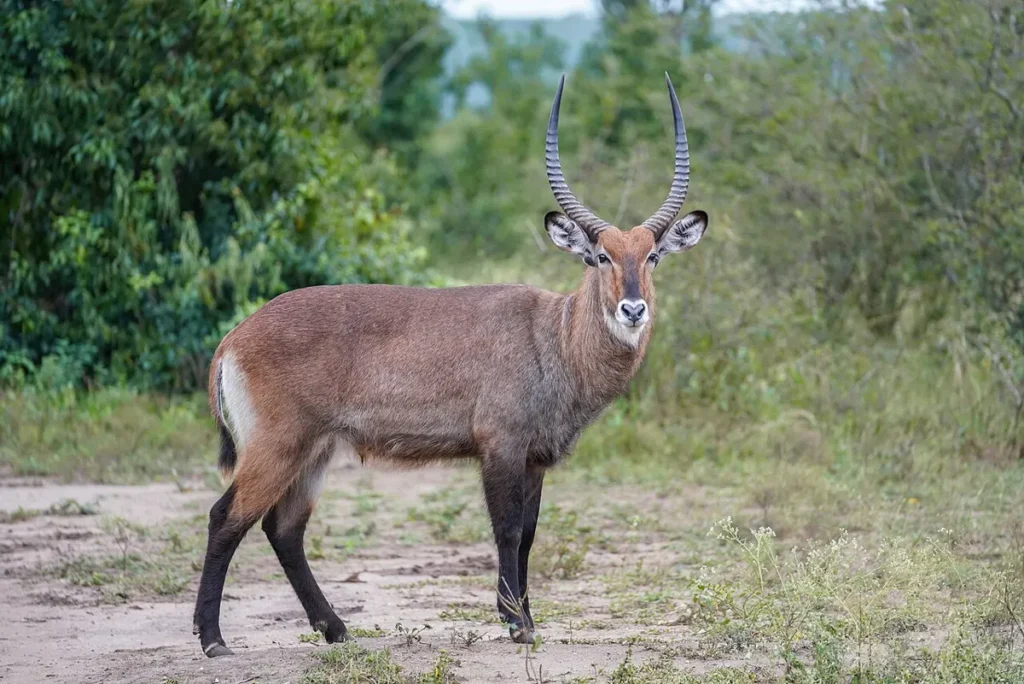
The waterbuck is a large, shaggy antelope with a thick grey-brown coat, and males carry long, ridged horns that sweep back and up. Uganda’s waterbucks are the Defassa type, which has a solid white patch on the rump rather than the white ring of the common waterbuck. They live near rivers, lakes and swamps in Queen Elizabeth, Murchison Falls, Lake Mburo and Kidepo Valley and are among the easiest antelopes to see.
Habits
Waterbucks graze mainly on grasses and need to drink often, so they never stray far from water. Their coat gives off a greasy secretion with a musky smell, which may help waterproof it and is said to make the meat unpleasant to eat. Males hold territories near water, while females and young form small herds. When chased by predators they may run into water to escape.

Predators
Lions, leopards, hyenas and Nile crocodiles all take waterbucks. Healthy adults are strong and their horns can injure predators, so calves and older animals are most at risk. Waterbucks are common on the Kazinga Channel boat trip and along the Nile in Murchison.
Where to see it
Waterbucks are seen on most game drives and boat trips near water. The gorilla permit costs US$800, or US$600 in April, May and November. See our guides to Queen Elizabeth, Murchison Falls animals, Lake Mburo and the sitatunga.
Frequently asked questions
The Defassa waterbuck, with a solid white rump patch.
Near water in Queen Elizabeth, Murchison, Lake Mburo and Kidepo.
Their coat produces a greasy, musky secretion.
No, only males have horns.










