Kabwoya Wildlife Reserve is an 87 km² protected area on the western Uganda Rift Valley escarpment overlooking Lake Albert — one of the most visually dramatic reserve settings in the country, where savannah grassland at the cliff edge drops toward the lake’s shimmering surface and the distant DRC highlands visible on clear days create a panoramic backdrop for game drives that no larger, more famous Ugandan park can replicate in quite this form. The reserve’s modest size and limited visitor infrastructure place it firmly in the category of exploratory add-on rather than headline destination — wildlife densities are lower than Murchison Falls or Queen Elizabeth, accommodation options near the reserve are limited, and access from the main safari route requires a deliberate detour. But for the specific category of visitor who values panoramic Rift Valley landscape combined with quiet game drives, minimal vehicle traffic, and the genuine sense of being somewhere that most Uganda safari circuits omit, Kabwoya delivers that experience more authentically than any well-trafficked park can. This guide covers Kabwoya’s wildlife, landscape, access, and how it fits within a western Uganda itinerary built around the Bwindi gorilla trekking circuit and the gorilla permit.
Kabwoya Wildlife Reserve: Quick Facts
- Size: 87 km² — one of Uganda’s smaller protected areas
- Location: Western Uganda, Kibaale district; escarpment above Lake Albert in the Albertine Rift
- Landscape: Savannah grassland, woodland, papyrus marsh; dramatic Rift Valley escarpment views
- Key wildlife: Uganda kob, oribi, reedbuck, waterbuck, bushbuck, olive baboon; hippo in lake margin
- Best visiting format: Half-day from a Kibale or Semuliki area base — no major lodges on reserve
- Nearest town: Hoima — road access via Kibaale, 4WD recommended on reserve tracks
A Remote Beauty by the Albertine Rift
Perched between the towering cliffs of the western Rift Valley escarpment and the shimmering shores of Lake Albert lies one of Uganda’s most visually captivating but least-known protected areas—Kabwoya Wildlife Reserve. Located in western Uganda, this pristine sanctuary unfolds across 87 square kilometers of savannah grasslands, woodland, and lowland tropical vegetation. Though modest in size compared to other parks, Kabwoya’s charm lies in its panoramic views, quiet atmosphere, and undisturbed wildlife—offering visitors a tranquil safari alternative along Uganda’s western frontier.
Kabwoya was officially gazetted in the early 1980s as part of a broader effort to protect the Albertine Rift region, a globally significant biodiversity hotspot. Overlooking the expanse of Lake Albert and bordered by the magnificent escarpments that rise sharply above the plains, Kabwoya feels like a forgotten Eden—rich in wildlife, solitude, and scenic drama.
The Landscape: Rolling Grasslands and Rift Valley Views
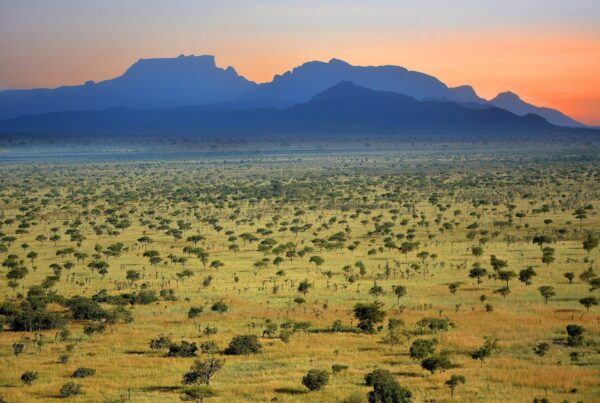
Kabwoya Wildlife Reserve lies at the intersection of multiple ecosystems. The sweeping grasslands give way to papyrus marshes along the lakeshore and merge into woodlands that climb the lower slopes of the Rift cliffs. This unique setting makes it one of the most scenic wildlife areas in the country, especially at sunrise and sunset, when golden light stretches across the savannah and the shadows of grazing antelopes flicker like moving silhouettes beneath the escarpment wall.
The reserve’s proximity to Lake Albert not only enhances its visual appeal but also plays an essential role in the local ecosystem. The lake serves as a water source and supports aquatic life that attracts various bird species and animals. The steep cliffs rising above Kabwoya add geological intrigue and make the reserve one of the few places in Uganda where one can view sweeping Rift Valley panoramas while also enjoying lowland wildlife activity below.
Wildlife in Quiet Numbers
Kabwoya may not boast the dense game concentrations found in larger reserves like Murchison Falls or Queen Elizabeth, but what it offers is a peaceful and intimate wildlife experience. Herds of Uganda kob, waterbuck, warthog, oribi, and Jackson’s hartebeest graze freely across the plains. Their presence is constant and often close, creating perfect opportunities for photography, peaceful observation, and quiet reflection in nature’s company.
The reserve is also home to bushbuck, duiker, and occasionally buffalo, all of which are well adapted to the dry savannah and wooded areas. Though large predators are rare in the area, smaller carnivores like jackals, civets, and genets may be spotted in the evening hours. Their presence underscores the reserve’s growing ecological balance and the quiet resurgence of wildlife that is slowly returning after years of relative obscurity.
Birdlife in Kabwoya is another highlight. The lakefront and marshy areas provide habitat for species like African fish eagles, grey herons, woodland kingfishers, and African jacanas. Up on the cliff edges and grasslands, visitors may spot Abyssinian ground hornbills, martial eagles, and black-headed gonoleks. The diverse mix of habitats makes it a delightful destination for birdwatchers looking for off-the-beaten-path discoveries.
Activities and Exploration
Visitors to Kabwoya Wildlife Reserve are rewarded with a range of experiences that blend relaxation with exploration. Game drives along the reserve’s open tracks provide easy access to the heart of the grasslands, where antelopes roam freely. With few visitors and no vehicle congestion, every sighting feels personal and unhurried. Wildlife viewing here emphasizes quality over quantity, and the lack of large predators allows for walking safaris, which bring guests even closer to the land’s textures, scents, and sounds.
Hiking trails along the escarpment lead to dramatic lookout points where you can view Lake Albert’s blue expanse merging with the distant hills of the Democratic Republic of Congo. The winds up here carry the cries of fish eagles and offer a cooling reprieve from the savannah heat below.
Fishing is also popular along the lakefront, especially for travelers seeking a more laid-back and immersive nature experience. Several catch-and-release opportunities exist in the shallows of Lake Albert, with local guides offering boat rides and insight into the area’s aquatic biodiversity.
Accessibility and Accommodation
Kabwoya is accessible by road from Hoima, which lies about 40 kilometers to the southeast. The reserve is strategically located between Murchison Falls National Park and Kibale Forest, making it an excellent stopover point for travelers moving through western Uganda’s tourism circuit.
Though less developed than other parks, Kabwoya has seen gradual investment in eco-friendly accommodation and safari lodges designed to blend into the landscape without disrupting its peace. Most lodges are small, locally owned, and committed to conservation principles, ensuring that guests enjoy a comfortable yet ethically grounded stay.
The best time to visit is during the dry seasons from December to February and June to August, when the roads are most passable and game viewing is at its peak due to limited water sources. However, the wet seasons bring a flush of green that transforms the landscape into a lush paradise, ideal for photography and birding.
Community and Conservation Vision
The surrounding communities have increasingly come to see Kabwoya as a valuable shared asset. Through partnerships between conservation groups and local residents, the reserve has become a platform for sustainable tourism and livelihood improvement. Many guides, rangers, and lodge staff are drawn from the local population, and there’s a growing sense of ownership and pride in the land’s revival.
Poaching, once a serious threat, has been dramatically reduced thanks to community-led patrols and awareness programs. Educational initiatives now teach young people about the reserve’s importance, creating future ambassadors for conservation. As visitor numbers grow steadily—though still modestly—Kabwoya is poised to become a model of low-impact, high-value tourism in Uganda.
The Spirit of Solitude and Stillness
In a world where so many wild spaces are bustling with vehicles and camera clicks, Kabwoya remains a place of quiet wonder. Here, the rhythm of nature moves slowly. Sunsets stretch long across the savannah. Wind rustles through tall grasses. And each animal encounter is free from hurry, staged on a landscape that feels private, even sacred.
Kabwoya Wildlife Reserve may not shout for attention, but it speaks to the heart of those who listen. It invites you not just to visit, but to pause—to stand on a cliff and watch the sun melt into Lake Albert, or to follow antelope tracks across golden plains and remember what untouched Africa still feels like.
Frequently asked questions about Kabwoya Wildlife Reserve Uganda
What wildlife can you see in Kabwoya Wildlife Reserve?
Kabwoya Wildlife Reserve supports a savannah and woodland mammal community dominated by antelopes and medium-sized herbivores: Uganda kob is the most consistently encountered species on the grassland sections; reedbuck, waterbuck, oribi, and bushbuck inhabit the grassland-woodland edge; olive baboons are common. The reserve’s Lake Albert margin supports hippopotamus in the shoreline shallows and aquatic birds in the papyrus and reed areas. Larger mammals — elephant and buffalo — move through the reserve but are not as reliably sighted as in larger neighbouring protected areas. The absence of established big predator territories (lion is not consistently present) means that game densities pattern differently from predator-dense parks, and the herbivore population’s behaviour reflects a lower predation pressure environment. Kabwoya’s wildlife is best characterised as honest and real rather than spectacular: what you see is what the ecosystem genuinely holds, in the setting that the Rift Valley escarpment provides, without the density or predictability of Uganda’s major parks.
How do you reach Kabwoya Wildlife Reserve from Kibale or Fort Portal?
Kabwoya Wildlife Reserve is located approximately 100–120 km from Fort Portal (2.5–3.5 hours depending on road conditions) via the road through Kibaale and Kagadi toward Hoima. From Kibale Forest National Park’s main visitor area at Kanyanchu, the drive to the Kabwoya reserve boundary is similarly 2–3 hours via Kibaale, making it a half-day extension from a Kibale base rather than a natural day-trip destination. From Masindi (the gateway town for Murchison Falls), the drive to Kabwoya is approximately 90–120 minutes, making it a more natural Masindi-area excursion than a Kibale extension. The road from Kibaale toward the reserve becomes increasingly rough as it descends toward the escarpment, and a 4WD vehicle is required for reserve track access. There is no bus service to the reserve; all access requires private vehicle. A licensed guide or UWA ranger should accompany any game drive into the reserve — confirm guide arrangements with UWA Kabwoya or through a Hoima-based licensed operator before departure.
Is Kabwoya Wildlife Reserve worth visiting on a Uganda safari?
Whether Kabwoya Wildlife Reserve is worth visiting depends entirely on your travel priorities and itinerary flexibility. For a visitor on a standard 7–10 day Uganda western circuit (Kibale, Queen Elizabeth, Bwindi), Kabwoya is not a logical addition — it sits off the main circuit route, adds significant driving time, and does not contribute wildlife species that are unavailable elsewhere on the same itinerary. For a visitor with specific interest in: Albertine Rift Valley landscape photography (Kabwoya’s escarpment views are genuinely exceptional); less-visited Uganda protected areas; Semuliki region exploration combined with Semuliki National Park or Semuliki Wildlife Reserve; or a longer Uganda stay of 12+ days that allows geographic exploration beyond the western circuit highways — Kabwoya adds genuine value. It is most honestly characterised as a specialist interest destination within Uganda’s broader safari landscape, worthwhile for those who seek it specifically and unnecessary for those who do not.
What makes the Kabwoya Wildlife Reserve landscape unique?
Kabwoya Wildlife Reserve’s defining landscape quality is its position on the western arm of the Albertine Rift Valley escarpment — the edge of a geological fault system that runs from the Ethiopian highlands to Mozambique and has shaped East Africa’s ecology and human history. At Kabwoya, the escarpment’s sharp western edge drops from the reserve’s plateau toward Lake Albert, which fills the valley floor at approximately 617m above sea level. From the escarpment edge, the view encompasses: the lake’s full breadth (approximately 35km wide at its widest point visible from this position); the hazy outline of the DRC’s Ituri Forest highlands on the opposite shore on clear days; and the savannah below the escarpment descending toward the lakeshore. This is one of the most distinctive Rift Valley panoramic positions available from a wildlife reserve in Uganda — it is the kind of view that requires no wildlife at all to justify the visit for landscape-focused travellers. Sunrise and late afternoon light on the lake and escarpment are particularly striking.
Can Kabwoya Wildlife Reserve be combined with Semuliki National Park?
Kabwoya Wildlife Reserve and Semuliki National Park occupy different sections of the western Uganda Rift Valley corridor — they are in the same general geographic zone but separated by approximately 100–150 km of road around the northern end of Lake Albert. A western Uganda circuit that specifically targets the Albertine Rift Valley’s less-visited protected areas can include both: Semuliki National Park (lowland Congolian forest species, hot springs, distinct avifauna including several Congo basin species at their easternmost range limit) and Kabwoya (savannah escarpment, Rift Valley panorama, Lake Albert margin). This combination makes most sense within a longer Uganda trip — 14 days or more — where the standard western circuit (Kibale, Queen Elizabeth, Bwindi) has already been completed and the traveller wants to extend into the more specialist Albertine Rift destinations. For most Uganda visitors on standard itinerary lengths, choosing either Semuliki or Kabwoya as a single specialist addition rather than both is more practical.
Plan your western Uganda circuit including Kabwoya
- Gorilla Permit Guide — the Bwindi trekking that anchors the western Uganda circuit of which Kabwoya is an extension
- Uganda Gorilla Families — what you will see at the Bwindi end of the western circuit
- Bwindi Sector Guide — Bwindi planning for the western Uganda circuit
- Full Safari Cost Guide — extended western Uganda circuit budget
- Safari Itineraries — itineraries incorporating the Albertine Rift Valley reserves