Updated
Many visitors find themselves in tears when they first see mountain gorillas, and rangers in Bwindi are used to it. The reasons are a mix of things: the physical exhaustion and adrenaline of the trek, the sudden calm of being a few metres from a huge wild animal, the startling familiarity of gorilla faces, hands and family behaviour, and the knowledge that only about a thousand of them are left. It is a normal reaction, and there is nothing embarrassing about it, as long as you stay quiet and keep your distance.
A long build-up
Most visitors have planned for months and spent a lot of money on the trip. On the day, they rise before dawn, walk for anywhere from one to six hours or more through steep, wet forest, and then, often suddenly, the trackers signal that the gorillas are just ahead. That combination of anticipation, fatigue and relief makes emotions run high, much as people often cry at the end of a marathon or a long climb.
Recognition
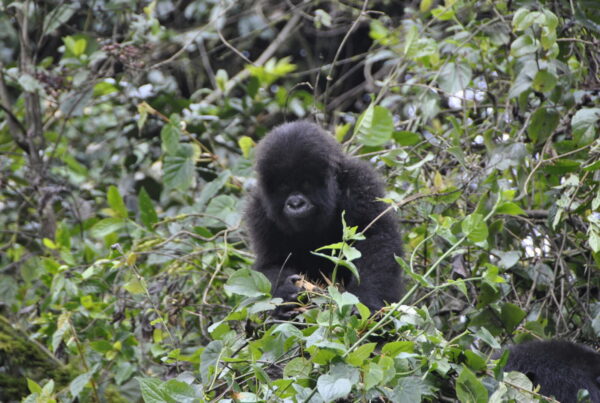
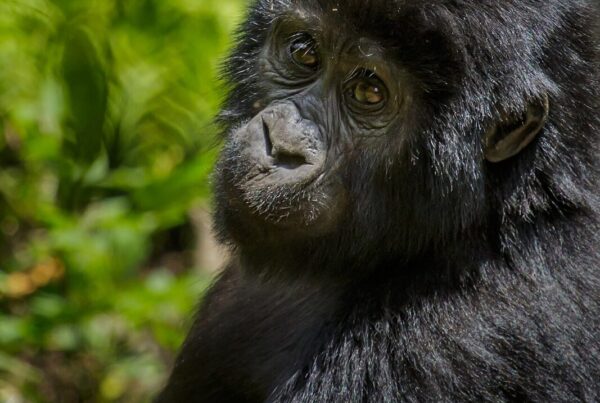
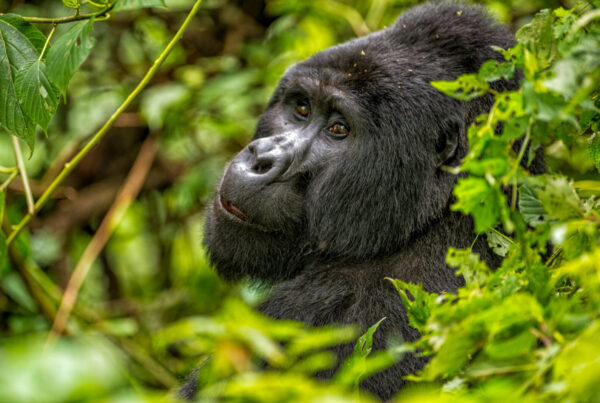
Gorillas are among our closest living relatives. Their expressive faces, the way a mother cradles her infant, juveniles playing, and a silverback calmly watching over the group look very familiar. Many people describe a feeling of being looked at by another mind when a gorilla meets their gaze for a moment. Watching infants is often the trigger, as is seeing how relaxed the family is in the presence of people. See our guide to gorilla social behaviour.
Rarity and fragility
Knowing that mountain gorillas came close to extinction, that just over 1,000 survive in only two places, and that their future depends on people adds weight to the moment. Some visitors feel grief, others hope, at seeing a species that has recovered thanks to rangers, communities and tourism. See our guide to how many mountain gorillas are left.
Preparing yourself
There is no need to suppress emotion, but try to stay quiet and still; sobbing or sudden movement can unsettle the gorillas. Decide in advance to spend part of the hour without a camera, simply watching. Many people say they wish they had looked more and photographed less. The permit costs US$800, or US$600 in April, May and November. See our guides to emotionally preparing for the gorillas and meeting a silverback.
Frequently asked questions
Yes, it is common, and rangers are used to it.
A mix of exhaustion, anticipation, recognition of familiar behaviour and awareness of their rarity.
Quiet tears will not, but stay still and avoid loud sobbing or sudden movements.
Spend some of it without your camera, just watching.
The Emotional Processing After the Encounter
The emotional response to the gorilla encounter — reported by approximately 15 to 20% of visitors as including tears during or immediately after — is generated by a combination of factors that researchers who study awe and peak experience identify as distinct from ordinary emotional responses to wildlife. The encounter’s conditions create what psychologists call ‘species recognition’ — a cognitive-emotional event in which the human observer’s nervous system registers the gorilla’s physical and behavioural similarity to itself at a depth that bypasses the usual distance maintained between observer and observed in wildlife contexts. The great ape’s eyes — in which the white sclera that distinguishes human eyes from most primates’ eyes is partially visible — are the most commonly cited trigger for this recognition event.
The post-trek emotional processing typically happens in two phases: an immediate period of quiet in the first 30 minutes after leaving the family’s presence, during which visitors often find themselves speaking in low voices or not at all, and a more articulate phase over the following hours in which the experience begins to be converted into language. The difficulty of describing the encounter to people who were not there — identified by most visitors as the most unexpected aspect of the experience — reflects the encounter’s resistance to the narrative frameworks that most travel experiences fit into. The guides who are most highly rated by their groups are often those who give the immediate post-encounter quiet its proper space rather than filling it immediately with interpretive commentary.
The psychological literature on awe — defined as the emotional state produced by encountering something that is both vast and unexpected — identifies the gorilla encounter’s specific structure as a near-optimal awe generator. The encounter combines scale (the animal’s physical magnitude and the ecological depth of its evolutionary history), unexpectedness (the emotional surprise of the encounter regardless of intellectual preparation), and what researchers call accommodation demand (the need to update one’s mental models of what the world contains to incorporate the new experience). The combination of these three elements, in a concentrated one-hour window, produces the specific variety of emotional response — tears, silence, a felt difficulty in describing what happened — that the encounter consistently generates.