Why gorillas do not need to be vaccinated against the diseases that humans carry is a question that seems counterintuitive at first — if gorillas are so closely related to humans that they can catch our diseases, why not vaccinate them against the most dangerous ones? The answer is technically complex, practically important, and illuminates both the conservation challenges of managing a wild population with no barriers between them and their human visitors and the impressive lengths to which the conservation community goes to protect these animals from the inevitable risks of the proximity that makes gorilla trekking possible.
The Core Problem: Shared Susceptibility
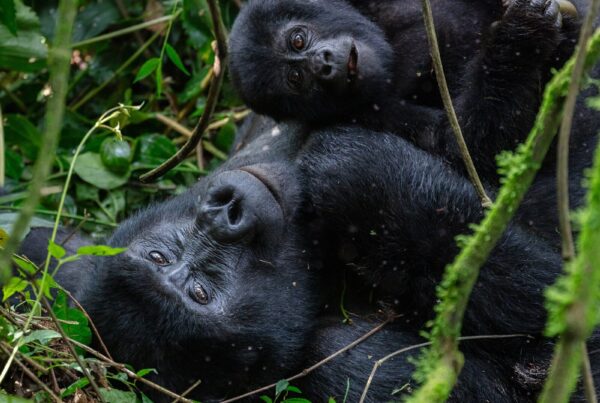
Mountain gorillas and humans share 98.3% of their DNA, and this genetic similarity creates shared susceptibility to a range of pathogens — particularly respiratory viruses. Common human respiratory illnesses — colds caused by rhinoviruses, influenza, respiratory syncytial virus (RSV), and the coronavirus family — can all infect mountain gorillas. Because gorilla populations have no prior exposure to many of these pathogens, they have limited or no acquired immunity, making infections potentially more severe than the same infections would be in a human population with existing immune experience.
Gorilla deaths from respiratory disease have been documented in Bwindi and the Virungas. In 2009, a respiratory disease outbreak killed multiple gorillas in Bwindi — one of the most significant single events in mountain gorilla conservation in recent memory. The responsible pathogen was not definitively identified, but the evidence pointed to a human-origin respiratory virus.
Why Vaccination Is Not the Answer
If gorillas are susceptible to human diseases, the obvious conservation response would be to vaccinate them against the most dangerous ones. This reasoning is understandable but faces several serious obstacles.
Wild Animal Logistics
Vaccinating a wild gorilla requires either sedation (which carries its own risks, particularly respiratory) or injection without sedation — the latter essentially impossible with a species that is not domesticated and that has the physical capability to prevent any unwanted physical contact. Sedation requires the presence of veterinary teams, carries a small but real risk of complications, and cannot be repeated frequently enough to maintain vaccine-level immunity against pathogens that change rapidly (influenza, in particular, requires annual updates to the vaccine).
Vaccine Safety in Gorillas
The safety and efficacy of human vaccines in gorillas has not been systematically established for most pathogens. Vaccines developed and tested in humans may produce different immune responses, different side effect profiles, and different durations of protection in gorillas. Using unvalidated vaccines in a critically endangered population carries risks that the conservation community is reluctant to take without substantially more evidence than currently exists.
Which Diseases to Target
Even if vaccination were logistically and medically straightforward, the decision about which diseases to vaccinate against would be difficult. The spectrum of human respiratory viruses is enormous and constantly changing. Vaccinating against current seasonal influenza strains would provide no protection against novel influenza strains or against the rhinoviruses, RSV, or other respiratory pathogens that also pose risk. The problem does not resolve to “vaccinate and the risk is managed.”
What Is Done Instead
In the absence of practical vaccination, mountain gorilla conservation manages disease transmission risk through a combination of visitor-side and management-side interventions.
Visitor Health Screening
The most direct intervention is requiring visitors to not trek if they have cold or flu symptoms. This is strictly enforced — visitors who report symptoms at the briefing will not be allowed to proceed, and permits are typically transferable to allow symptomatic visitors to trek on a different day. The seven-metre minimum distance requirement during the trek reduces airborne transmission even from asymptomatic visitors who may be shedding pathogens.
Guide and Ranger Health Protocols
The guides, rangers, and trackers who spend far more time in proximity to gorilla families than any tourist group are subject to more stringent health monitoring and protocols. Sick workers are excluded from gorilla contact. Health screening for ranger and guide teams is more frequent and more detailed than the simple symptom-checking applied to visitors.
Research and Monitoring
Ongoing health monitoring of gorilla families — through fecal sample analysis, observation of health indicators during daily tracking, and veterinary examination when indicated — allows early detection of disease spread within groups. Early detection enables rapid veterinary response when treatment is indicated, and enables management decisions about suspending tourist activities in affected groups during acute outbreaks.
The Research Frontier: Limited Vaccination Programs
While general vaccination is not currently feasible, there is ongoing research into targeted vaccination for specific high-priority diseases. Canine distemper virus, which has killed thousands of lions in Tanzania and thousands of other African carnivores, poses a risk to mountain gorillas from the dogs kept by communities adjacent to the park. A targeted canine distemper vaccination program in community dogs near the park boundary has been piloted as a way to reduce transmission risk without directly vaccinating gorillas.
There is also active research into whether oral vaccines — delivered through food — could be used to provide protection against specific pathogens in ways that avoid the logistical and safety issues of injectable vaccines in wild animals. This research is in early stages.
What This Means for Trekkers
The practical implication for visitors is clear: the health screening requirement is not bureaucratic inconvenience. It is the primary tool available for managing the disease transmission risk that your visit creates. If you have a cold, do not trek. The loss of your permit day is genuinely less important than the potential loss of a gorilla to a respiratory infection you could have prevented by staying in your lodge.
Uganda gorilla trekking permits are $800 per person. Contact Uganda Gorilla Trekking to book your permit. Come healthy. The gorillas need you to.