Updated
Bwindi Forest tribute memorial gorilla trekking Uganda is one of Africa’s most extraordinary wildlife experiences, connecting travellers with mountain gorillas in their natural forest habitat. We scattered my father’s ashes in Bwindi Impenetrable Forest, and he would have wanted it exactly that way. My father was a naturalist, a birder, a man who spent fifty years of his life trying to be in the presence of wild things. He never made it to Uganda. He planned to. He had the permit booked, the lodge reserved, the itinerary laid out on his desk. Then he became ill, and then he died, and the permit expired unused. The least we could do was bring him to the forest he had planned for.
We Scattered My Father’s Ashes in Bwindi Forest: A Tribute
Who My Father Was
My father’s name was Thomas. He was a secondary school biology teacher for thirty years and then, in retirement, the most serious amateur naturalist I have ever known. He spent the last fifteen years of his life birding with an intensity that his former students would have recognised as the same quality he brought to teaching — total, committed, joyful attention to the subject at hand.
Africa was always in his plans. He had been to Kenya twice and Botswana once, both before my sister and I were old enough to remember. He spoke of those trips with a specific reverence. When the mountain gorilla documentaries came out in the late 1990s and early 2000s, he watched them all. When the gorilla population began its recovery, he followed the conservation news with the attention of someone invested in the outcome.
He booked Uganda for his seventy-fifth birthday. He died at seventy-four, seven months before the trip.
The Decision
My sister Rachel and I had our father’s ashes and no clear instruction about what to do with them. He had not specified. He was not the kind of man who made a fuss about practical matters, and what happened to his body after death ranked among the least of his concerns. What he cared about was living things, living forests, the specific electricity of being in the presence of the wild.
I mentioned Uganda one evening over the phone with Rachel. She said immediately: “Yes. That is right.”
We did not ask anyone’s permission. We simply booked the trip, both of us, with the permits he had not lived to use as the template. We brought his binoculars. We brought a small portion of his ashes in a wooden box that had held his bird rings, a detail that would have pleased him enormously.
Uganda: The Country He Never Reached
We arrived in Entebbe on a Thursday evening, and the first thing we did — without having planned this — was stand outside the airport terminal and look at the sky over Lake Victoria and say: “Here we are, Dad.” This is not the kind of thing either of us would normally do. We are his children and we have inherited his practicality. But the country he had planned for and not reached was there around us, warm and dark and smelling of the lake, and some acknowledgement seemed necessary.
Uganda received us as it receives everyone — with warmth that is not performative, generosity that is not commercial, a quality of being genuinely glad you have come. We spent two days in Kampala, where Rachel identified twelve bird species from the hotel garden on the first morning using our father’s binoculars. We spent a night at Lake Mburo, where she identified thirty more.
“He would have been insufferable here,” she said, meaning: he would have been completely happy.
Arriving at Bwindi
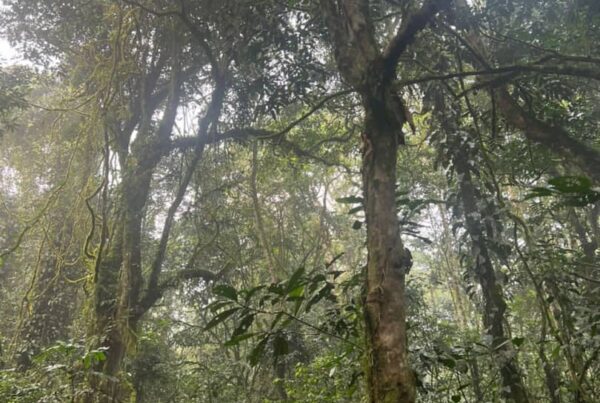
The approach to Bwindi from the east takes you through landscape that changes entirely in the last twenty kilometres — the terrain rises, the air cools, the vegetation becomes denser and darker and older. The forest arrives at the park boundary with the finality of a door closing on the world outside.
We stayed at a small lodge above Buhoma, with a veranda overlooking the forest below. On the first evening, we sat on the veranda with our father’s binoculars and watched the forest birds in the last of the light — African hill babbler, mountain yellow warbler, Rwenzori batis. Rachel named them. I wrote them down. Our father had always done both.
“He would have stayed up all night on this veranda,” she said.
“He would have,” I agreed.
The Gorilla Trek
We were assigned to the Habinyanja family. Our guide was Patrick, who had been working with this family for ten years. We told him, before setting off, about our father — about who he was and why we were there and what we were carrying in Rachel’s pack. He listened carefully and then said: “We will find a good place.”
The walk in took ninety minutes. Patrick pointed out birds along the path — dusky crimsonwing, purple-breasted sunbird, Shelley’s greenbottle — and we identified each one in the way our father had taught us, writing them down in the small notebook Rachel always carries for exactly this purpose. Patrick watched this and nodded. “Your father taught you well,” he said.
Finding the Family
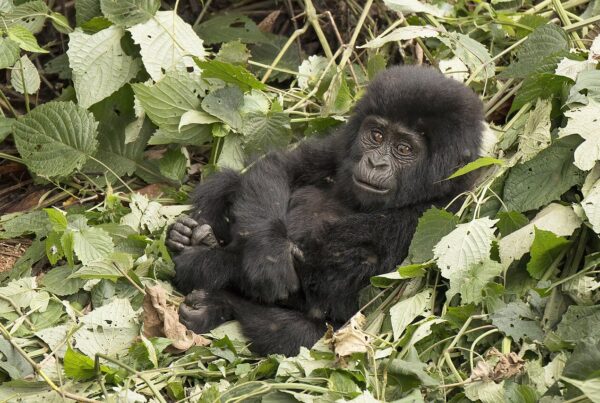
The Habinyanja family was in a valley below the ridge, settled and feeding in the soft morning light. The silverback, Rwigema, was visible at the far edge of the clearing. An infant was visible, and a group of adolescents, and adult females moving through the vegetation with the easy authority of the completely at home.
We watched for an hour. What we saw was exactly what our father had planned to see — the mountain gorillas of Bwindi in their forest, doing what they have always done, unaware of and indifferent to the decades of human love and human work and human conservation effort that had kept them here. Indifferent, but present. Alive, and present.
The Tribute
Patrick had identified a place on the walk back — a spot above the valley where the forest opened slightly and you could see the gorilla family’s territory below. He stopped us there and said: “Here. This is a good place.”
Rachel opened the wooden box. We said what we had to say — not much, not aloud, the way our family manages grief. She scattered the ashes into the vegetation, into the dark wet soil of a forest that has been running since before recorded history, that will continue running after everything currently alive has been replaced by everything that comes next.
Patrick stood slightly apart, giving us space. When it was done, he came forward and said, in the simple directness that had characterised everything he said: “He is in a good forest.”
He is.
What My Father Would Have Said
My father would not have found this sentimental. He would have found it accurate. He understood that human beings are material, that they return to the earth from which they came, that the return has no mystical component but that choosing the right earth is not nothing. He chose classrooms for thirty years. He would have chosen this forest without hesitation.
He would also have spent the entire trek identifying birds and would have been slightly annoyed that we did not photograph the dusky crimsonwing more carefully. We identified sixteen species on the walk in and out, which Rachel entered in the notebook. We brought the list home as part of what we were carrying back from Uganda.
For Anyone Who Has Lost Someone
I am not suggesting a formula. Grief does not have formulas and the right place for someone’s ashes is specific to that person and that family. But if you are holding the ashes of someone who loved wild things and never reached the places they most wanted to reach, this is a thing that can be done. Uganda Gorilla Trekking can speak to the practicalities — what is permitted within the park, what is appropriate, what can be arranged.
The forest will receive whatever you bring to it with the indifference of something that has been living for millions of years and will continue living after your grief has resolved into whatever grief resolves into. That indifference is not cold. It is the indifference of something so large and so old that your loss fits inside it with room to spare.
My father is in a good forest. That is enough.
Contact Uganda Gorilla Trekking to plan your visit to Bwindi. The forest is there. The gorillas are there. Whatever you need to bring, it has space for.