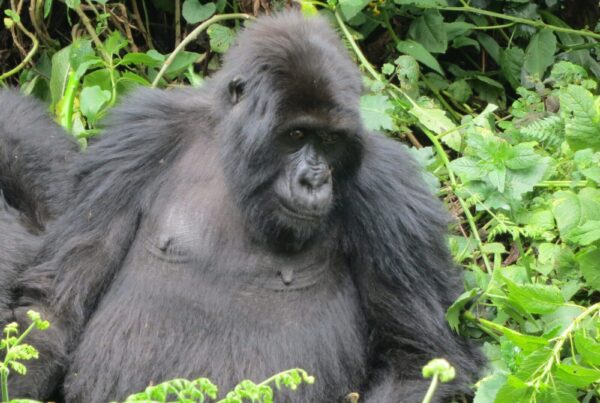
The question “how far will I walk on a gorilla trek?” has an honest answer that most trip planning resources avoid giving: the distance is genuinely variable, ranging from approximately 2km to 12km depending on where the gorilla family is ranging on the morning of your trek, and no booking process, sector selection, or family preference can eliminate this variability — it is structural to what gorilla trekking is. The gorillas move through their home range every day following food availability, social dynamics, and the silverback’s decisions, and the distance from the sector gate to wherever they are that morning is determined by their behaviour, not by the visitor’s preference. What gorilla trekking permit holders and itinerary planners can do is understand the factors that influence the probable distance range for different sectors and families, prepare physically for the realistic range rather than the best-case scenario, and make informed decisions about porter hire and sector selection that reduce the impact of a long-day trek on the overall experience. This guide covers the distance and time reality of gorilla trekking with the specificity that Bwindi sector planning requires. For the permit process, see the permit guide.
Gorilla Trek Distance and Duration: What to Expect
- Shortest possible trek: ~1-2km each way, 1-2 hours total — family at low altitude near the gate on a good day
- Average trek: ~3-5km each way, 3-5 hours total including the 60-minute encounter
- Longest possible trek: ~6-10km, 6-8 hours total — family at high altitude or far from gate
- Trek speed: Slower than typical hiking — off-trail terrain, vegetation to push through, altitude effects
- Porter hire: ~USD 15 — provides physical assistance on steep sections and removes pack weight
- Most demanding sector: Ruhija (highest altitude, steepest terrain, smallest families) — plan for a hard day
“How far will I have to walk?” It’s the most common question rangers hear during gorilla trekking briefings, and the most honest answer is: it depends. The distance and duration of your gorilla trek in Uganda vary dramatically based on which gorilla family you’re assigned, where that family is feeding on the day, which trekking sector you’re in, and the physical condition of the trails after recent rains.
This guide provides realistic expectations based on actual trekking data from Bwindi Impenetrable National Park and Mgahinga Gorilla National Park. We’ll explore typical distances, timeframes, factors that affect trek length, and what those hours on the trail actually feel like.
Typical Trekking Distances and Durations
The Range
Based on UWA tracking data and trekker reports, gorilla treks typically fall within these ranges:
| Measure | Minimum | Average | Maximum |
|---|---|---|---|
| Walking distance (one way) | 1 km | 3-5 km | 10+ km |
| Trekking time (one way) | 30 minutes | 2-3 hours | 5-6 hours |
| Time with gorillas | 1 hour | 1 hour | 1 hour |
| Return hike | 30 minutes | 1.5-2 hours | 3-4 hours |
| Total experience time | 3 hours | 5-7 hours | 8-10 hours |
These figures represent actual walking time. Total experience time includes the briefing, hiking to the gorillas, the one-hour observation, hiking back, and the debrief.
What “Average” Actually Means
The average trek of 3-5 kilometres each way covers challenging terrain. In Bwindi’s dense forest, 3 kilometres can feel like 10 on a paved path. Elevation changes, mud, vegetation, and the need for careful footing make every metre more demanding than distance alone suggests.
Sector-Specific Trekking Profiles
Buhoma Sector (Northern Bwindi)
Buhoma is the original gorilla trekking area and generally offers the most accessible terrain:
- Typical distance: 2-4 km each way
- Typical duration: 1.5-3 hours each way
- Terrain: Moderate slopes, established trails, some steep sections
- Advantage: Lower altitude, better-developed trail network
- Best for: Moderate fitness levels, first-time trekkers
Ruhija Sector (Eastern Bwindi)
Ruhija sits at higher altitude and offers more challenging trekking:
- Typical distance: 3-6 km each way
- Typical duration: 2-4 hours each way
- Terrain: Steeper gradients, higher altitude (up to 2,600m)
- Advantage: Excellent birding, less crowded
- Best for: Good fitness levels, those seeking a more adventurous trek
Rushaga Sector (Southern Bwindi)
Rushaga has the highest concentration of gorilla families:
- Typical distance: 2-5 km each way
- Typical duration: 1.5-3.5 hours each way
- Terrain: Variable; some families are close, others require long hikes
- Advantage: Most family options, habituation experience available
- Best for: All fitness levels (families matched to ability)
Nkuringo Sector (Southern Bwindi)
Nkuringo is known for challenging treks:
- Typical distance: 3-7 km each way
- Typical duration: 2-5 hours each way
- Terrain: Steep, demanding, spectacular views
- Advantage: Dramatic scenery, challenging adventure
- Best for: Fit trekkers seeking a physical challenge
Mgahinga Gorilla National Park
Mgahinga’s single habituated family is found on volcanic slopes:
- Typical distance: 3-5 km each way
- Typical duration: 2-4 hours each way
- Terrain: Volcanic slopes, bamboo forest, altitude up to 3,000m+
- Advantage: Unique volcanic scenery, different ecosystem
- Best for: Adventure seekers, those wanting to combine with volcano hiking
Factors That Affect Trek Distance
Gorilla Family Location
The single biggest variable is where your assigned gorilla family is on trekking day. Gorillas are wild animals that move constantly:
- Close to trailhead: Families feeding near park boundaries require short hikes
- Deep forest: Families in remote areas require long, strenuous hikes
- Moving families: If gorillas are travelling when trackers locate them, your hike may be longer as you pursue their movement
Trackers head out at dawn to locate families. By the time your briefing concludes, trackers know roughly where the gorillas are and radio this information to your guide. However, gorillas may move during your approach, extending the hike.
Season and Weather
Dry season (June-September, December-February): Trails are firmer, allowing faster walking. Trek times may be shorter as you can maintain better pace.
Wet season (March-May, October-November): Mud slows progress dramatically. What takes 2 hours in dry season might take 3.5 hours in wet conditions. Trails become slippery, and guides prioritise safety over speed.
Trail Conditions
Bwindi’s “trails” are not manicured paths. They’re routes created by repeated use, often narrow, sometimes overgrown, and constantly changing:
- Recent trail clearing makes hiking faster
- Overgrown sections require bushwhacking, slowing progress
- Fallen trees or landslides may force detours
- New trails may be cut if families move to previously unvisited areas
Fitness and Pace
Your group’s fitness level affects trek duration. Groups with slower members naturally take longer. UWA rangers set a sustainable pace, building in rest stops. Attempting to rush increases fatigue and injury risk without significantly reducing total time.
The Hike to the Gorillas: What It Feels Like
The First Hour
Most treks begin with a relatively gentle walk from the briefing point to the park boundary. This section serves as a warm-up, allowing your body to adjust to the altitude and activity. Guides set a conversational pace, and the group chatters with anticipation.
The Forest Entry
Crossing into Bwindi’s forest proper is dramatic. The temperature drops, light dims under the canopy, and sounds change. The trail narrows, and you begin climbing in earnest. This is where fitness becomes noticeable. Your breathing deepens, and you may start sweating despite the cool air.
The Middle Section
For most trekkers, the middle section is the hardest. The novelty has worn off, fatigue accumulates, and the gorillas still feel distant. Guides build in rest stops where you can catch your breath, drink water, and snack. Trackers radio updates, building suspense.
The Final Approach
When trackers confirm the gorillas are near, energy returns. Adrenaline masks fatigue. The guide signals for silence, and you approach with controlled excitement. The final 100 metres are often the most challenging technically, requiring careful footing while your heart pounds with anticipation.
The Return Hike
After your hour with the gorillas, you must hike back. Paradoxically, many trekkers find the return harder despite walking downhill:
- Adrenaline has worn off, revealing accumulated fatigue
- Downhill walking strains different muscles, particularly quadriceps and knees
- Emotional intensity of the encounter leaves you drained
- Excitement of anticipation is replaced by satisfied exhaustion
Guides understand this and build in additional rest stops on the return. Porters assist those who are struggling.
What Trekkers Actually Report
Based on thousands of trekker accounts:
- 70% of treks last between 2-4 hours of actual walking each way
- 20% of treks are shorter (under 2 hours each way)
- 10% of treks exceed 4 hours each way, occasionally reaching 6+ hours
The vast majority of trekkers complete their hike without serious difficulty, even those who worried about their fitness beforehand. The key is honest communication with rangers during the briefing so they can match you to an appropriate family.
How to Prepare for the Distance
Physical Preparation
See our dedicated fitness guide, but the essentials are:
- Build hiking stamina with regular walks on varied terrain
- Include hills and stairs in your training
- Practice walking with a loaded daypack
- Allow altitude acclimatisation by arriving in Bwindi 2+ days before your trek
Mental Preparation
- Accept that you cannot predict your exact trek distance
- Embrace the hike as part of the experience, not just a means to an end
- Trust your guide’s pace and rest stops
- Focus on the extraordinary reward awaiting you
Practical Preparation
- Hire a porter ($15-20) to carry your pack and assist on difficult sections
- Bring more water than you think you need
- Pack energy snacks for rest stops
- Wear broken-in hiking boots with good ankle support
Safety and Time Limits
UWA does not enforce a maximum trek distance, but guides monitor group welfare:
- If a group is struggling significantly, guides may adjust the route or request additional porter support
- Trackers sometimes move gorillas toward the trail if families are extremely remote and groups are exhausted (though this is rare and not guaranteed)
- In genuine emergencies, evacuation protocols exist, but they’re rarely needed
Comparing Uganda to Rwanda and DRC
| Factor | Uganda (Bwindi) | Rwanda (Volcanoes) | DRC (Virunga) |
|---|---|---|---|
| Typical trek distance | 3-5 km each way | 2-4 km each way | 2-5 km each way |
| Typical trek time | 2-3 hours each way | 1.5-2.5 hours each way | 1.5-3 hours each way |
| Terrain difficulty | Moderate to hard | Moderate | Moderate to hard |
| Maximum altitude | 2,600m | 3,000m+ | 3,000m+ |
Uganda’s treks are generally longer and more physically demanding than Rwanda’s, reflecting Bwindi’s dense forest versus Volcanoes National Park’s more open bamboo zones. This is one reason Uganda’s permit costs $800 compared to Rwanda’s $1,500; the experience is more adventurous and less sanitised.
Conclusion
How far you walk on a gorilla trek is ultimately less important than the fact that you walk at all. Every metre through Bwindi’s magnificent forest brings you closer to one of the planet’s most extraordinary wildlife encounters. Whether your trek is a gentle 2-kilometre stroll or a challenging 8-kilometre expedition, the reward is the same: an hour with mountain gorillas that will transform how you see the natural world.
Prepare for the worst-case scenario, hope for the best, and trust your guides. The distance doesn’t matter once you’re sitting in the forest, metres from a silverback, watching his family interact in ways that defy description. That moment is worth every step, however many there are.
Frequently Asked Questions
The primary determinant of gorilla trek distance is the location of the assigned gorilla family’s ranging position on the morning of the trek — a variable that is not predictable in advance with any reliability. Each habituated gorilla family occupies a home range of several square kilometres within the park; they sleep in a nest site each night and begin moving in the morning; the trackers locate them by following the previous night’s nest site and then tracking the family’s morning movement. The distance from the sector gate to the family on a given day depends entirely on where they have moved. Additional factors that affect total trek time: the terrain difficulty of the specific route to the family (some families range in terrain that requires off-trail movement through dense vegetation; others are more often accessible via maintained trail); the physical fitness pace of the slowest person in the group (the ranger guide sets pace for the group, not the fastest person); altitude (Ruhija sector at 1,800-2,200m produces altitude-related fatigue that slows progress for lowland visitors); and wet versus dry season trail conditions (wet season mud slows progress significantly on steep sections). The practical preparation approach: assume a 4-6 hour total day and prepare your fitness and packing accordingly; be genuinely pleasantly surprised by a 2-hour easy trek rather than genuinely disappointed by a 6-hour hard one. Which Bwindi sector has the shortest gorilla treks? Buhoma sector in northern Bwindi is consistently described as having the most accessible terrain and the lowest probability of a very long trek — a combination of the sector’s relatively lower altitude (1,600-1,800m versus Ruhija’s 1,800-2,200m), the valley-based trail system that avoids the steep ridge ascents of the higher sectors, and the Mubare and Habinyanja families that range closer to the gate on a higher percentage of days than families in more remote sectors. However, “shorter trek” at Buhoma is a probability assessment, not a guarantee — the families range throughout the sector and can require a 5-6 hour day at Buhoma as well, particularly in the wet season when movement through muddy terrain is slower. Rushaga sector (southern Bwindi) has the largest number of families and the most family assignment options, which means the morning assignment can often select a family at closer range for visitors with expressed fitness concerns — the ranger’s family assignment process considers visitor fitness explicitly. Nkuringo sector has the steepest overall terrain of the four sectors (ridge descents to valley bottoms are consistently demanding) and is recommended only for fit, confident trekkers. The honest summary: choose Buhoma if minimising the probability of a hard trek is the priority; choose Rushaga if maximising permit availability flexibility is the priority; avoid Nkuringo and Ruhija if fitness is genuinely limited. Is hiring a porter worth it for a gorilla trek? Porter hire for a gorilla trek at Bwindi is worth it for most visitors — the typical cost of approximately USD 15 (plus tip, typically USD 5-10) is the best value expenditure on the trek day after the permit itself. What the porter provides: they carry your daypack for the entire trek, removing the 3-5kg pack weight from your back for the approach and return; they provide physical assistance on steep sections (an arm to hold, a push from behind on slippery ascents, a steadying hold on steep descents); they know the trail and can help navigate the route in sections where it is unclear; and they are typically very fit local community members for whom the work provides meaningful income from the tourism system they live adjacent to. The case against porter hire: it is an additional cost; some fit and experienced hikers prefer to carry their own pack; and on a genuinely easy short trek, the assistance is not needed. The practical recommendation: if there is any uncertainty about your fitness level, the terrain difficulty, or the likely trek length, hire a porter. The USD 15 is negligible relative to the total trip cost and the marginal improvement in experience on a harder-than-expected trek day is significant. Porter hire also directly supports the local community employment that the border community economic model depends on — it is money that goes to the right people for the right reason. What fitness level is needed for a gorilla trek? The gorilla trek requires a fitness level that most relatively active adults can achieve with modest preparation, though it does exceed casual walk fitness and the distinction matters for planning. The minimum functional fitness level: you should be able to walk continuously for 3-4 hours on uneven hilly terrain without stopping for extended rest breaks, at moderate altitude (1,600-2,200m, which reduces aerobic capacity by approximately 10-20% compared to sea level). If you can walk 8-10km on hilly terrain at home without significant distress, you have the baseline fitness for a moderate Bwindi trek. Specific fitness preparation for the 4-6 weeks before the trek: daily walking of 5-7km including significant uphill (hill walking, staircase climbing, treadmill at incline); focus on sustained aerobic effort rather than interval training — the trek is a long steady effort rather than a high-intensity event; consider a practice hill walk carrying a 4-5kg pack in the final 2 weeks before travel. Conditions that require specific assessment: knee or hip joint issues that steep descent aggravates (downhill is harder on joints than uphill at Bwindi); heart conditions that altitude or sustained aerobic effort affects; recent surgery recovery that limits physical exertion. In all these cases, a frank conversation with a travel medicine physician and the tour operator before booking is the appropriate preparation rather than hoping the trek will be within limits. What happens if you cannot complete the gorilla trek? If a visitor cannot physically complete the gorilla trek to the family location, the ranger guide will arrange for the visitor to wait at a rest point while the rest of the group continues — in some cases, the visitor misses the gorilla encounter entirely; in others, the family moves closer to the rest point during the trek and the visitor is brought to a shorter encounter. Uganda Wildlife Authority does not issue permit refunds for treks that are attempted but not completed due to fitness — the permit covers the access to the family, not the guarantee of reaching them regardless of individual physical condition. The financial consequence of an incomplete trek (loss of the USD 800 permit, which cannot be transferred or refunded once the trek has begun) is the clearest argument for honest fitness assessment before booking and genuine physical preparation in the months before travel. The partial consolation: Uganda Wildlife Authority does allow permit reschedule before the trek begins (in advance, not on the day) for verified medical reasons — if a health issue prevents trekking on the booked date and the permit holder contacts UWA before the trek begins, rescheduling is sometimes possible. For visitors with genuine fitness uncertainty: the Buhoma sector ranger team conducts a brief fitness assessment at the morning briefing and assigns families partly based on this assessment — a genuinely frank conversation about fitness at the briefing gives the ranger team the information to assign the most accessible family available on that day rather than a more remote one. Prepare for the gorilla trek distance and terrain Bwindi Sector Guide — sector terrain comparison for fitness-based sector selection Uganda Gorilla Families — family ranging habits and typical trek distances by sector Gorilla Permit Guide — the permit booking and rescheduling process Full Safari Cost Guide — complete trip budget including porter hire Safari Itineraries — Uganda itineraries with appropriate fitness preparation guidance Further Reading How Far Do You Walk on a Gorilla Trek? Distance and Time Explained Distance from Kampala to Bwindi: Drive Times and All Routes Best Time for Gorilla Trekking in Uganda – Monthly Guide to 2025 Seasons The Best Time to Climb or Hike Mount Rwenzori Uganda Travel Tips for First-Time Visitors: What You Need to Know Before You Go Uganda Is Safe for Gorilla Trekking Again: Why Now Is the Best Time to Visit Bwindi Best Time to Trek Gorillas in Uganda – UK vs USA vs Germany Travel Guide Uganda gorilla trekking explained: everything a first-timer needs Best Time for Uganda Gorilla Trekking 2026: Month-by-Month Breakdown Bwindi Lodges in Buhoma Sector 2026: Walk-to-Trailhead Stays at Every Budget <
Buhoma sector in northern Bwindi is consistently described as having the most accessible terrain and the lowest probability of a very long trek — a combination of the sector’s relatively lower altitude (1,600-1,800m versus Ruhija’s 1,800-2,200m), the valley-based trail system that avoids the steep ridge ascents of the higher sectors, and the Mubare and Habinyanja families that range closer to the gate on a higher percentage of days than families in more remote sectors. However, “shorter trek” at Buhoma is a probability assessment, not a guarantee — the families range throughout the sector and can require a 5-6 hour day at Buhoma as well, particularly in the wet season when movement through muddy terrain is slower. Rushaga sector (southern Bwindi) has the largest number of families and the most family assignment options, which means the morning assignment can often select a family at closer range for visitors with expressed fitness concerns — the ranger’s family assignment process considers visitor fitness explicitly. Nkuringo sector has the steepest overall terrain of the four sectors (ridge descents to valley bottoms are consistently demanding) and is recommended only for fit, confident trekkers. The honest summary: choose Buhoma if minimising the probability of a hard trek is the priority; choose Rushaga if maximising permit availability flexibility is the priority; avoid Nkuringo and Ruhija if fitness is genuinely limited. Is hiring a porter worth it for a gorilla trek? Porter hire for a gorilla trek at Bwindi is worth it for most visitors — the typical cost of approximately USD 15 (plus tip, typically USD 5-10) is the best value expenditure on the trek day after the permit itself. What the porter provides: they carry your daypack for the entire trek, removing the 3-5kg pack weight from your back for the approach and return; they provide physical assistance on steep sections (an arm to hold, a push from behind on slippery ascents, a steadying hold on steep descents); they know the trail and can help navigate the route in sections where it is unclear; and they are typically very fit local community members for whom the work provides meaningful income from the tourism system they live adjacent to. The case against porter hire: it is an additional cost; some fit and experienced hikers prefer to carry their own pack; and on a genuinely easy short trek, the assistance is not needed. The practical recommendation: if there is any uncertainty about your fitness level, the terrain difficulty, or the likely trek length, hire a porter. The USD 15 is negligible relative to the total trip cost and the marginal improvement in experience on a harder-than-expected trek day is significant. Porter hire also directly supports the local community employment that the border community economic model depends on — it is money that goes to the right people for the right reason. What fitness level is needed for a gorilla trek? The gorilla trek requires a fitness level that most relatively active adults can achieve with modest preparation, though it does exceed casual walk fitness and the distinction matters for planning. The minimum functional fitness level: you should be able to walk continuously for 3-4 hours on uneven hilly terrain without stopping for extended rest breaks, at moderate altitude (1,600-2,200m, which reduces aerobic capacity by approximately 10-20% compared to sea level). If you can walk 8-10km on hilly terrain at home without significant distress, you have the baseline fitness for a moderate Bwindi trek. Specific fitness preparation for the 4-6 weeks before the trek: daily walking of 5-7km including significant uphill (hill walking, staircase climbing, treadmill at incline); focus on sustained aerobic effort rather than interval training — the trek is a long steady effort rather than a high-intensity event; consider a practice hill walk carrying a 4-5kg pack in the final 2 weeks before travel. Conditions that require specific assessment: knee or hip joint issues that steep descent aggravates (downhill is harder on joints than uphill at Bwindi); heart conditions that altitude or sustained aerobic effort affects; recent surgery recovery that limits physical exertion. In all these cases, a frank conversation with a travel medicine physician and the tour operator before booking is the appropriate preparation rather than hoping the trek will be within limits. What happens if you cannot complete the gorilla trek? If a visitor cannot physically complete the gorilla trek to the family location, the ranger guide will arrange for the visitor to wait at a rest point while the rest of the group continues — in some cases, the visitor misses the gorilla encounter entirely; in others, the family moves closer to the rest point during the trek and the visitor is brought to a shorter encounter. Uganda Wildlife Authority does not issue permit refunds for treks that are attempted but not completed due to fitness — the permit covers the access to the family, not the guarantee of reaching them regardless of individual physical condition. The financial consequence of an incomplete trek (loss of the USD 800 permit, which cannot be transferred or refunded once the trek has begun) is the clearest argument for honest fitness assessment before booking and genuine physical preparation in the months before travel. The partial consolation: Uganda Wildlife Authority does allow permit reschedule before the trek begins (in advance, not on the day) for verified medical reasons — if a health issue prevents trekking on the booked date and the permit holder contacts UWA before the trek begins, rescheduling is sometimes possible. For visitors with genuine fitness uncertainty: the Buhoma sector ranger team conducts a brief fitness assessment at the morning briefing and assigns families partly based on this assessment — a genuinely frank conversation about fitness at the briefing gives the ranger team the information to assign the most accessible family available on that day rather than a more remote one. Prepare for the gorilla trek distance and terrain Bwindi Sector Guide — sector terrain comparison for fitness-based sector selection Uganda Gorilla Families — family ranging habits and typical trek distances by sector Gorilla Permit Guide — the permit booking and rescheduling process Full Safari Cost Guide — complete trip budget including porter hire Safari Itineraries — Uganda itineraries with appropriate fitness preparation guidance Further Reading How Far Do You Walk on a Gorilla Trek? Distance and Time Explained Distance from Kampala to Bwindi: Drive Times and All Routes Best Time for Gorilla Trekking in Uganda – Monthly Guide to 2025 Seasons The Best Time to Climb or Hike Mount Rwenzori Uganda Travel Tips for First-Time Visitors: What You Need to Know Before You Go Uganda Is Safe for Gorilla Trekking Again: Why Now Is the Best Time to Visit Bwindi Best Time to Trek Gorillas in Uganda – UK vs USA vs Germany Travel Guide Uganda gorilla trekking explained: everything a first-timer needs Best Time for Uganda Gorilla Trekking 2026: Month-by-Month Breakdown Bwindi Lodges in Buhoma Sector 2026: Walk-to-Trailhead Stays at Every Budget <
Porter hire for a gorilla trek at Bwindi is worth it for most visitors — the typical cost of approximately USD 15 (plus tip, typically USD 5-10) is the best value expenditure on the trek day after the permit itself. What the porter provides: they carry your daypack for the entire trek, removing the 3-5kg pack weight from your back for the approach and return; they provide physical assistance on steep sections (an arm to hold, a push from behind on slippery ascents, a steadying hold on steep descents); they know the trail and can help navigate the route in sections where it is unclear; and they are typically very fit local community members for whom the work provides meaningful income from the tourism system they live adjacent to. The case against porter hire: it is an additional cost; some fit and experienced hikers prefer to carry their own pack; and on a genuinely easy short trek, the assistance is not needed. The practical recommendation: if there is any uncertainty about your fitness level, the terrain difficulty, or the likely trek length, hire a porter. The USD 15 is negligible relative to the total trip cost and the marginal improvement in experience on a harder-than-expected trek day is significant. Porter hire also directly supports the local community employment that the border community economic model depends on — it is money that goes to the right people for the right reason. What fitness level is needed for a gorilla trek? The gorilla trek requires a fitness level that most relatively active adults can achieve with modest preparation, though it does exceed casual walk fitness and the distinction matters for planning. The minimum functional fitness level: you should be able to walk continuously for 3-4 hours on uneven hilly terrain without stopping for extended rest breaks, at moderate altitude (1,600-2,200m, which reduces aerobic capacity by approximately 10-20% compared to sea level). If you can walk 8-10km on hilly terrain at home without significant distress, you have the baseline fitness for a moderate Bwindi trek. Specific fitness preparation for the 4-6 weeks before the trek: daily walking of 5-7km including significant uphill (hill walking, staircase climbing, treadmill at incline); focus on sustained aerobic effort rather than interval training — the trek is a long steady effort rather than a high-intensity event; consider a practice hill walk carrying a 4-5kg pack in the final 2 weeks before travel. Conditions that require specific assessment: knee or hip joint issues that steep descent aggravates (downhill is harder on joints than uphill at Bwindi); heart conditions that altitude or sustained aerobic effort affects; recent surgery recovery that limits physical exertion. In all these cases, a frank conversation with a travel medicine physician and the tour operator before booking is the appropriate preparation rather than hoping the trek will be within limits. What happens if you cannot complete the gorilla trek? If a visitor cannot physically complete the gorilla trek to the family location, the ranger guide will arrange for the visitor to wait at a rest point while the rest of the group continues — in some cases, the visitor misses the gorilla encounter entirely; in others, the family moves closer to the rest point during the trek and the visitor is brought to a shorter encounter. Uganda Wildlife Authority does not issue permit refunds for treks that are attempted but not completed due to fitness — the permit covers the access to the family, not the guarantee of reaching them regardless of individual physical condition. The financial consequence of an incomplete trek (loss of the USD 800 permit, which cannot be transferred or refunded once the trek has begun) is the clearest argument for honest fitness assessment before booking and genuine physical preparation in the months before travel. The partial consolation: Uganda Wildlife Authority does allow permit reschedule before the trek begins (in advance, not on the day) for verified medical reasons — if a health issue prevents trekking on the booked date and the permit holder contacts UWA before the trek begins, rescheduling is sometimes possible. For visitors with genuine fitness uncertainty: the Buhoma sector ranger team conducts a brief fitness assessment at the morning briefing and assigns families partly based on this assessment — a genuinely frank conversation about fitness at the briefing gives the ranger team the information to assign the most accessible family available on that day rather than a more remote one. Prepare for the gorilla trek distance and terrain Bwindi Sector Guide — sector terrain comparison for fitness-based sector selection Uganda Gorilla Families — family ranging habits and typical trek distances by sector Gorilla Permit Guide — the permit booking and rescheduling process Full Safari Cost Guide — complete trip budget including porter hire Safari Itineraries — Uganda itineraries with appropriate fitness preparation guidance Further Reading How Far Do You Walk on a Gorilla Trek? Distance and Time Explained Distance from Kampala to Bwindi: Drive Times and All Routes Best Time for Gorilla Trekking in Uganda – Monthly Guide to 2025 Seasons The Best Time to Climb or Hike Mount Rwenzori Uganda Travel Tips for First-Time Visitors: What You Need to Know Before You Go Uganda Is Safe for Gorilla Trekking Again: Why Now Is the Best Time to Visit Bwindi Best Time to Trek Gorillas in Uganda – UK vs USA vs Germany Travel Guide Uganda gorilla trekking explained: everything a first-timer needs Best Time for Uganda Gorilla Trekking 2026: Month-by-Month Breakdown Bwindi Lodges in Buhoma Sector 2026: Walk-to-Trailhead Stays at Every Budget <
The gorilla trek requires a fitness level that most relatively active adults can achieve with modest preparation, though it does exceed casual walk fitness and the distinction matters for planning. The minimum functional fitness level: you should be able to walk continuously for 3-4 hours on uneven hilly terrain without stopping for extended rest breaks, at moderate altitude (1,600-2,200m, which reduces aerobic capacity by approximately 10-20% compared to sea level). If you can walk 8-10km on hilly terrain at home without significant distress, you have the baseline fitness for a moderate Bwindi trek. Specific fitness preparation for the 4-6 weeks before the trek: daily walking of 5-7km including significant uphill (hill walking, staircase climbing, treadmill at incline); focus on sustained aerobic effort rather than interval training — the trek is a long steady effort rather than a high-intensity event; consider a practice hill walk carrying a 4-5kg pack in the final 2 weeks before travel. Conditions that require specific assessment: knee or hip joint issues that steep descent aggravates (downhill is harder on joints than uphill at Bwindi); heart conditions that altitude or sustained aerobic effort affects; recent surgery recovery that limits physical exertion. In all these cases, a frank conversation with a travel medicine physician and the tour operator before booking is the appropriate preparation rather than hoping the trek will be within limits. What happens if you cannot complete the gorilla trek? If a visitor cannot physically complete the gorilla trek to the family location, the ranger guide will arrange for the visitor to wait at a rest point while the rest of the group continues — in some cases, the visitor misses the gorilla encounter entirely; in others, the family moves closer to the rest point during the trek and the visitor is brought to a shorter encounter. Uganda Wildlife Authority does not issue permit refunds for treks that are attempted but not completed due to fitness — the permit covers the access to the family, not the guarantee of reaching them regardless of individual physical condition. The financial consequence of an incomplete trek (loss of the USD 800 permit, which cannot be transferred or refunded once the trek has begun) is the clearest argument for honest fitness assessment before booking and genuine physical preparation in the months before travel. The partial consolation: Uganda Wildlife Authority does allow permit reschedule before the trek begins (in advance, not on the day) for verified medical reasons — if a health issue prevents trekking on the booked date and the permit holder contacts UWA before the trek begins, rescheduling is sometimes possible. For visitors with genuine fitness uncertainty: the Buhoma sector ranger team conducts a brief fitness assessment at the morning briefing and assigns families partly based on this assessment — a genuinely frank conversation about fitness at the briefing gives the ranger team the information to assign the most accessible family available on that day rather than a more remote one. Prepare for the gorilla trek distance and terrain Bwindi Sector Guide — sector terrain comparison for fitness-based sector selection Uganda Gorilla Families — family ranging habits and typical trek distances by sector Gorilla Permit Guide — the permit booking and rescheduling process Full Safari Cost Guide — complete trip budget including porter hire Safari Itineraries — Uganda itineraries with appropriate fitness preparation guidance Further Reading How Far Do You Walk on a Gorilla Trek? Distance and Time Explained Distance from Kampala to Bwindi: Drive Times and All Routes Best Time for Gorilla Trekking in Uganda – Monthly Guide to 2025 Seasons The Best Time to Climb or Hike Mount Rwenzori Uganda Travel Tips for First-Time Visitors: What You Need to Know Before You Go Uganda Is Safe for Gorilla Trekking Again: Why Now Is the Best Time to Visit Bwindi Best Time to Trek Gorillas in Uganda – UK vs USA vs Germany Travel Guide Uganda gorilla trekking explained: everything a first-timer needs Best Time for Uganda Gorilla Trekking 2026: Month-by-Month Breakdown Bwindi Lodges in Buhoma Sector 2026: Walk-to-Trailhead Stays at Every Budget <
If a visitor cannot physically complete the gorilla trek to the family location, the ranger guide will arrange for the visitor to wait at a rest point while the rest of the group continues — in some cases, the visitor misses the gorilla encounter entirely; in others, the family moves closer to the rest point during the trek and the visitor is brought to a shorter encounter. Uganda Wildlife Authority does not issue permit refunds for treks that are attempted but not completed due to fitness — the permit covers the access to the family, not the guarantee of reaching them regardless of individual physical condition. The financial consequence of an incomplete trek (loss of the USD 800 permit, which cannot be transferred or refunded once the trek has begun) is the clearest argument for honest fitness assessment before booking and genuine physical preparation in the months before travel. The partial consolation: Uganda Wildlife Authority does allow permit reschedule before the trek begins (in advance, not on the day) for verified medical reasons — if a health issue prevents trekking on the booked date and the permit holder contacts UWA before the trek begins, rescheduling is sometimes possible. For visitors with genuine fitness uncertainty: the Buhoma sector ranger team conducts a brief fitness assessment at the morning briefing and assigns families partly based on this assessment — a genuinely frank conversation about fitness at the briefing gives the ranger team the information to assign the most accessible family available on that day rather than a more remote one. Prepare for the gorilla trek distance and terrain Bwindi Sector Guide — sector terrain comparison for fitness-based sector selection Uganda Gorilla Families — family ranging habits and typical trek distances by sector Gorilla Permit Guide — the permit booking and rescheduling process Full Safari Cost Guide — complete trip budget including porter hire Safari Itineraries — Uganda itineraries with appropriate fitness preparation guidance Further Reading How Far Do You Walk on a Gorilla Trek? Distance and Time Explained Distance from Kampala to Bwindi: Drive Times and All Routes Best Time for Gorilla Trekking in Uganda – Monthly Guide to 2025 Seasons The Best Time to Climb or Hike Mount Rwenzori Uganda Travel Tips for First-Time Visitors: What You Need to Know Before You Go Uganda Is Safe for Gorilla Trekking Again: Why Now Is the Best Time to Visit Bwindi Best Time to Trek Gorillas in Uganda – UK vs USA vs Germany Travel Guide Uganda gorilla trekking explained: everything a first-timer needs Best Time for Uganda Gorilla Trekking 2026: Month-by-Month Breakdown Bwindi Lodges in Buhoma Sector 2026: Walk-to-Trailhead Stays at Every Budget <