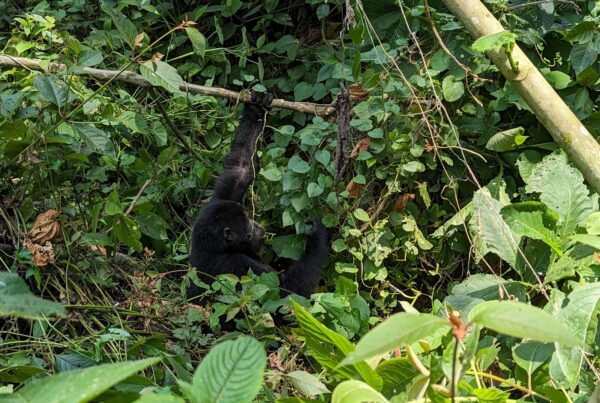
Uganda Wildlife Authority maintains a formal student discount programme for gorilla permits that reduces the cost for enrolled students from the standard foreign non-resident rate — making gorilla trekking financially accessible to a demographic that UWA explicitly wants to reach, because students who encounter mountain gorillas during formative years of their education disproportionately go on to careers in conservation biology, environmental law, and sustainable tourism management, making the discounted permit an investment in the next generation of people who will make decisions about tropical forest conservation. The discount requires current enrolment documentation and cannot be retroactively applied to permits already purchased at full price — meaning the time to claim it is before booking, not after. This guide covers exactly who qualifies, what documents UWA requires, how the discount interacts with other permit categories (East African citizen rate, residency rate), and how budget-conscious students can minimise the total Uganda trip cost beyond the permit discount. For the complete permit booking process, see the gorilla permit guide; for trip cost planning, see the cost guide.
Student Gorilla Permit Essentials
- Who qualifies: currently enrolled students at secondary, undergraduate, or postgraduate level
- Documentation needed: current student ID + official enrolment letter from institution
- Discount amount: varies by category — confirm current rate with UWA or licensed operator at time of booking
- Does NOT qualify: recent graduates, gap-year students not enrolled in any institution
- Best budget strategy: student permit + low season timing + budget lodge near Buhoma sector
- Must be booked through UWA or licensed operator — third-party agents cannot verify or apply discount
The standard Uganda gorilla permit price of eight hundred dollars for foreign non-residents places this extraordinary experience beyond the financial reach of most students. For a university student surviving on loans, part-time work, and parental support, eight hundred dollars represents months of savings or the entire budget for a longer backpacking trip through East Africa. Recognising this barrier, the Uganda Wildlife Authority maintains a student discount programme that reduces permit costs significantly for enrolled students who meet specific criteria, making gorilla trekking accessible to a demographic that might otherwise never experience it.
The student discount is not merely a charitable concession. It serves UWA’s broader conservation education mission by exposing young people to mountain gorillas at formative stages of their lives. Students who encounter gorillas during their studies often carry that experience into careers in conservation biology, wildlife management, environmental law, sustainable tourism, and related fields. The discount is an investment in the next generation of conservation advocates, and its returns extend far beyond the permit fee.
Eligibility Requirements for Student Discounts
UWA’s student discount is available to individuals enrolled in recognised educational institutions at the secondary school, undergraduate, or postgraduate level. The discount applies to both domestic and international students, though the specific rates and documentation requirements differ between these categories. International students attending Ugandan universities on study visas receive the same discounted rates as Ugandan citizens, while international students studying outside Uganda receive a discount from the standard foreign non-resident rate.
To qualify, students must be currently enrolled in full-time or substantial part-time study. Recent graduates who have completed their studies but not yet received final certificates are generally not eligible, as the discount requires active enrolment. Gap-year students who are not enrolled in any educational programme during their year off do not qualify, even if they intend to resume studies in the future.
Age restrictions apply to some categories of the student discount. Secondary school students must typically be between fourteen and twenty years old, though exceptions are made for students outside this range who provide documentation of their enrolment status. There is no upper age limit for university students; mature students and doctoral candidates in their thirties or forties qualify equally with undergraduates in their early twenties.
The student discount is available for both standard gorilla trekking permits and the Gorilla Habituation Experience, though the percentage discount may differ between these activities. For standard trekking, eligible students typically receive approximately twenty-five to thirty percent off standard rates, reducing the foreign non-resident permit cost to approximately five hundred sixty to six hundred dollars. For the habituation experience, the discount is smaller in percentage terms because the base price is higher, but the absolute saving remains substantial.
Documentation You Must Provide
Securing a student discount requires submitting proof of current enrolment that UWA reservations staff can verify. The most widely accepted document is a current student identification card issued by your educational institution. The ID must display your full name, photograph, institutional name, and current academic year or validity period. Expired ID cards are not accepted, even if you are still enrolled and awaiting replacement cards.
For students whose institutions do not issue physical ID cards, or for those who have lost their cards, alternative documentation is accepted. An official enrolment verification letter from your university registrar or student services office, printed on institutional letterhead and confirming your current full-time or part-time enrolment status, serves as acceptable proof. The letter should include your full name, student identification number, programme of study, and the current academic term dates.
International students studying outside Uganda should also provide evidence that their institution is recognised by appropriate educational authorities in their home country. This verification is rarely challenged for students from well-known universities, but students from smaller or specialised institutions may be asked for additional accreditation documentation. If you anticipate this requirement, obtain a letter from your institution confirming its recognised status before applying for the discount.
For secondary school students, a letter from the headteacher or principal confirming current enrolment is typically sufficient. The letter should be on school letterhead and include the student’s name, age, class or grade level, and the school’s contact details for verification. Parents or guardians booking on behalf of younger students should include their own identification and a note authorising the booking.
How to Apply for the Student Discount
The application process for student discounted permits mirrors the medical professional discount process in requiring direct contact with UWA reservations. Most tour operators cannot process student discounts independently because they lack access to UWA’s verification systems for educational enrolment. You must either book directly with UWA or use a tour operator who explicitly offers to handle student discount applications on your behalf.
Begin by emailing UWA reservations at reservations@ugandawildlife.org with the subject line clearly indicating a student discount request. Include your full name, nationality, intended trekking dates, preferred trekking sector if you have one, and scanned copies of your student documentation. If you are flexible with dates, mention this flexibility, as it increases your chances of securing discounted permits during busy periods when available slots are limited.
UWA typically responds within five to ten business days, longer during peak booking seasons when reservations staff are overwhelmed with standard permit enquiries. The response will either confirm your discount eligibility and provide a payment quotation, or request additional documentation if your initial submission is incomplete. Respond promptly to any requests for additional information to avoid losing your preferred trekking dates.
Payment for student discounted permits must be completed within the timeframe specified in UWA’s quotation, usually fourteen to thirty days. The same payment methods apply as for standard permits: bank transfer, mobile money for East African residents, or in-person payment at UWA headquarters in Kampala. After payment confirmation, UWA issues your discounted permit voucher, which you present at the briefing along with your original student identification for final verification.
Verification at the Trekking Briefing
Like all discounted permit categories, student discounts are verified twice: during the booking process and again on the morning of your trek. Rangers at the briefing point will ask to see your original student identification or enrolment letter alongside your permit voucher and passport. This verification is mandatory and non-negotiable.
The verification process at briefing is usually quick for students whose documentation is clear and current. Rangers see student discount holders regularly and are familiar with student ID formats from universities worldwide. However, if your student ID is written in a language other than English, or if your name on the ID differs from your passport name, be prepared to explain and provide supporting documentation.
If you cannot produce acceptable documentation at the briefing, you will be required to pay the difference between the discounted rate and the standard rate before being allowed to trek. In extreme cases where the discrepancy cannot be resolved, you may be denied participation entirely, though this outcome is rare and typically only occurs when fraud is suspected. The simple way to avoid any issues is to ensure your documentation is valid, current, and matches your passport name exactly.
Group Bookings for Student Groups
University clubs, school groups, and organised student travel programmes sometimes book gorilla trekking permits for multiple students simultaneously. UWA accommodates these group bookings and may offer additional considerations for educational groups of eight or more students, though the standard per-person discount still applies.
For organised student groups, a single group leader can coordinate the discount application on behalf of all participants. The group leader submits copies of each student’s documentation along with a covering letter explaining the educational purpose of the visit. Some educational groups supplement their trekking experience with formal learning components, such as presentations by UWA rangers on conservation science or visits to research stations near the park. While these educational components are not mandatory for receiving the discount, they strengthen the educational rationale and may facilitate smoother processing.
Student groups must still adhere to the eight-person limit per gorilla family per day. A group of sixteen students must split into two trekking groups visiting different gorilla families, just like any other large group. Coordinating these splits while ensuring all students receive the discounted rate requires careful planning and advance booking, preferably several months ahead of the intended trekking dates.
Why the Student Discount Matters for Conservation
Beyond the individual benefit of reduced cost, the student discount programme plays a meaningful role in Uganda’s conservation strategy. Students represent the demographic most likely to carry conservation messages forward into the future. A twenty-year-old biology student who spends an hour with mountain gorillas is more likely than a sixty-year-old retiree to channel that experience into a career that actively benefits gorilla conservation.
This is not speculation. Tracking studies of student visitors to Bwindi show significantly higher rates of post-visit engagement with conservation organisations, social media advocacy, and academic research related to great ape conservation compared to older demographic groups. Students are also more likely to return to Uganda for subsequent visits, volunteer with conservation programmes, and encourage peers to experience gorilla trekking.
From UWA’s perspective, the revenue foregone through student discounts is partially offset by the long-term conservation value these visitors generate. A student who pays five hundred sixty dollars today may contribute thousands of dollars in conservation support over the next decade through donations, volunteer work, research collaborations, and advocacy. The discount is not just a price reduction; it is an investment in the human capital that will sustain mountain gorilla conservation for the next generation.
Common Misconceptions About Student Permits
Several misconceptions persist about student gorilla permits that cause confusion and disappointment. One common misunderstanding is that student discounts are available on demand at the briefing point for anyone who shows a student ID. This is not the case. The discount must be applied during booking and payment, and standard-rate permits cannot be converted to student rates at the last minute.
Another misconception is that international students studying in Uganda automatically receive the East African resident rate. While international students on long-term study visas sometimes qualify for resident rates depending on their visa category, this is separate from the student discount programme. The student discount is applied to your appropriate base rate, whether foreign resident or foreign non-resident.
Some students assume that online verification systems mean they do not need physical documentation. UWA requires original documents at the briefing, not just digital records. If your institution has moved to fully digital ID systems, request a physical verification letter or temporary card for your Uganda trip.
Conclusion
The Uganda student gorilla permit discount transforms an impossibly expensive dream into an achievable goal for thousands of young people each year. At approximately five hundred sixty dollars instead of eight hundred, the reduced rate represents a saving that many students can accumulate through a few months of careful budgeting or a summer job. The documentation requirements are reasonable, the application process is straightforward, and the verification at briefing is quick for those who arrive prepared.
For students considering whether the discounted permit is worth the investment, the answer from those who have made the journey is overwhelmingly affirmative. The hour spent with mountain gorillas is not merely a wildlife encounter but an education in biodiversity, conservation, and humanity’s relationship with the natural world. These are lessons that no classroom can teach as effectively. When UWA reduces the price of admission for students, they are not just selling a cheaper permit. They are investing in the conservationists, scientists, and advocates who will determine whether mountain gorillas survive into the next century.
Frequently asked questions about student gorilla permit discounts
Do students really get cheaper gorilla permits in Uganda?
Yes — Uganda Wildlife Authority’s official tariff schedule includes a student discount category that reduces the gorilla permit cost for currently enrolled students. The discount applies to the standard 60-minute gorilla trekking permit (not the Gorilla Habituation Experience, which maintains standard pricing). The specific discount amount is documented in UWA’s published tariff, which is updated periodically — confirm the current rate with a licensed UWA operator or directly through the UWA booking portal when planning your trip. The discount requires documentation of current enrolment and is applied at the time of permit issuance — it cannot be retrospectively applied to permits already purchased at the standard rate.
What documents do students need to claim the gorilla permit discount?
The standard documentation for a student gorilla permit discount is: a valid student ID card from your enrolled institution (showing your name, institution name, and current academic year) plus an official enrolment letter from your university or school’s registrar confirming your current full-time or substantial part-time status. The enrolment letter should be dated within the current academic term and be on official institutional letterhead with a registrar’s signature or stamp. Your tour operator submits these documents to UWA when processing the permit application — allow additional lead time compared to standard bookings for UWA review. If your student ID is in a language other than English, bring a translation. Foreign students studying at Ugandan universities on study visas should bring both their student ID and their study visa documentation, which may qualify them for the Uganda resident rate rather than the foreign non-resident rate.
What is the cheapest way for a student to do gorilla trekking in Uganda?
The minimum viable budget for a gorilla trek in Uganda for a student combines: the discounted student permit (claim at booking), low season timing (March–May or October–November when lodge prices are lower and permit availability is better), budget accommodation near Buhoma sector (community bandas and guesthouses charge USD $30–60 per night versus USD $200–600 for mid-range lodges), public transport or shared transfer to Bwindi rather than private vehicle charter, and self-organised ground logistics rather than a full operator package. The non-negotiable cost is the permit itself plus the Bwindi Impenetrable National Park conservation levy. The negotiable costs are transport, accommodation, and meals. Students willing to plan independently (booking permit through UWA directly, using public buses to Kabale then local transport to Bwindi, staying at community guesthouses) can reach the gorillas at the lowest possible total cost while still experiencing the same 60-minute gorilla encounter as visitors in USD $500/night lodges.
Can a student combine gorilla trekking with volunteer work in Uganda?
Yes — many students combine gorilla trekking with volunteer placements at conservation organisations, schools, or community projects in Uganda. Organisations including Bwindi Mgahinga Conservation Trust, VOLCANOES Safaris Partnership Trust, and various NGOs operating in the Kigezi highlands accept short-term research and community volunteers from universities. A volunteer placement near Bwindi creates both a legitimate reason to be in the area and sometimes (depending on the organisation and placement length) access to discounted or subsidised gorilla permits as part of the volunteer programme. University programmes in conservation biology, ecology, and environmental science increasingly include East African field components — if your programme offers field research in Uganda, ask your programme coordinator whether group gorilla permits at discounted rates are part of the course logistics.
Does the student discount apply to gorilla trekking in Rwanda too?
Rwanda Development Board (RDB), which manages gorilla permits in Rwanda, does not publish a standard student discount equivalent to Uganda’s UWA student rate. Rwanda’s permit price (USD $1,500 for foreign non-residents) is set at a premium rate that does not have the same tiered discount structure that Uganda’s UWA tariff includes. Some Rwanda operators have historically offered informal student or group discounts on a case-by-case basis, but this is operator discretion rather than RDB policy. For student budget planning, Uganda is the more cost-effective gorilla trekking destination — the combination of lower base permit price plus the student discount makes Uganda’s gorilla encounter meaningfully more accessible to student travellers than Rwanda.
Book your student gorilla permit
- Gorilla Permit Guide — full booking process — request student rate at the first booking enquiry
- Uganda Gorilla Families — who you will visit with your discounted permit
- Bwindi Sector Guide — Buhoma sector has the most budget accommodation near the park
- Full Safari Cost Guide — full trip budget including minimum-spend student route
- Safari Itineraries — low-season itinerary shapes for student budget planning
- Uganda Gorilla Permits for Students: Discounts Available
- 2025 Uganda Gorilla Trekking Permits – Cost, Booking, Rules & More
- Discounted Gorilla Permits in Uganda for International Travelers
- Why Bwindi Gorilla Permits Sell Out for February First (And How to Get One in 2026)
- Booking Gorilla Permits Through a Tour Operator vs Direct With UWA
- How to Book Gorilla Permits in Uganda: Step-by-Step Guide
- How to Book Gorilla Permits: Step-by-Step Guide for Uganda
- How to Book Gorilla Permits in Uganda: Step-by-Step Process
- Last Minute Uganda Safari Deals: How to Find Genuine Discounts in 2026
- Are Gorilla Permits Getting More Expensive Every Year? Price Trends Explained