Updated
gorilla trekking Uganda perspective gratitude is one of Africa’s most extraordinary wildlife experiences, connecting travellers with mountain gorillas in their natural forest habitat. I am a complainer. I have been for most of my adult life, and the complaining has taken the specific form that most complaining takes in comfortable circumstances: a chronic low-level dissatisfaction with things that are not, by any objective measure, worth being dissatisfied with. The commute. The weather. The pace of the queue. The quality of the coffee. None of these things were genuinely bad. I treated them as bad as a matter of habit. Gorilla trekking in Uganda did not cure this. It gave me a specific, memorable point of reference that made the complaining feel, on return, more transparently absurd than it had before.
The Trip That Made Me Stop Complaining: A Gorilla Trekking Reflection
The Context That Makes Perspective Hard
It is difficult to maintain perspective on your own circumstances from inside them. The commute feels bad because you experience it daily and because daily experience accumulates in a way that occasional experience does not. This is not a character flaw — it is how human adaptation works. We habituate to the good and remain sensitive to the inconvenient. The mechanism that makes us functional also makes us prone to treating small inconveniences as more significant than they are. The antidote is not willpower or gratitude journaling, neither of which works as reliably as being somewhere so genuinely different from your regular environment that the contrast forces a recalibration.
Uganda as Contrast Environment
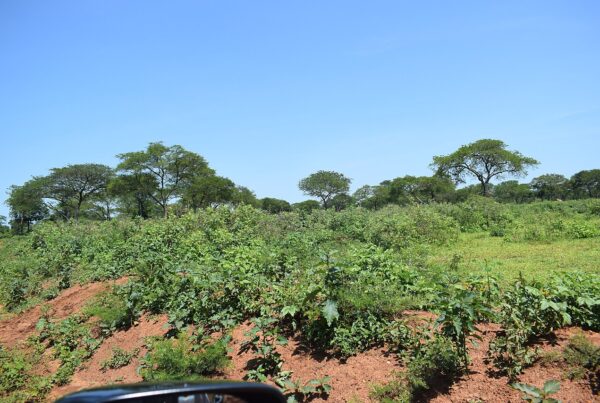
I booked gorilla trekking through a licensed Uganda Tourism Board operator, paid the $800 USD permit fee, flew into Entebbe, and transferred by charter to Kisoro airstrip. The drive from Kisoro to the Rushaga area took two hours on roads that were, at points, what I would previously have described as bad roads. By the end of the trip I had updated my definition of “bad road” significantly. The accommodation at the lodge was good. The food was good. The people I encountered — lodge staff, guides, porters, community members — were, without exception, welcoming and kind in a way that exceeded what I would typically expect from service interactions at home.
None of this is what made me stop complaining. What made me stop complaining was the porter.
The Porter
My porter’s name was Francis. He was twenty-six years old and had been working as a porter at Bwindi for four years. His daily fee for carrying my pack and supporting me through four hours of forest terrain was $15 USD — approximately one-sixtieth of the hourly rate I bill professionally. He was unfailingly cheerful, physically capable at a level that made my own performance look like a first attempt at walking, and genuinely invested in making the trek good for me. During the walk back, when the physical effort of the descent was making my legs uncooperative, he held my arm and talked to me about the birds we could hear in the canopy, identifying each one by call with a precision that I would not have achieved with field guides and years of practice.
At the end of the trek I tipped Francis $25 USD. He thanked me with what appeared to be genuine warmth for an amount that I had spent the previous week on a single dinner. I am not relating this to perform my own moral awareness. I am relating it because the contrast was so specific and so concrete that it performed the function that abstract perspective-setting has never managed for me: it actually changed how I felt about what I had, compared to what I was treating as inadequate.
The Gorilla Family
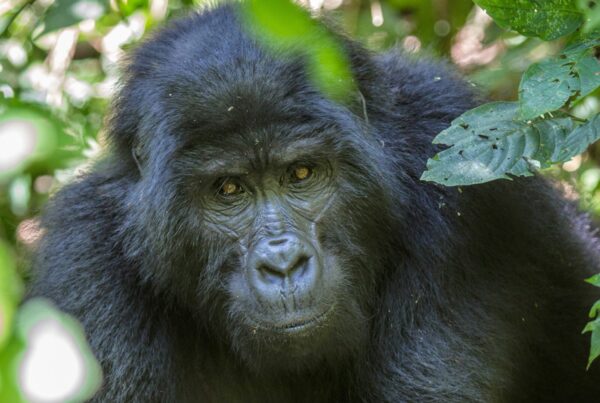
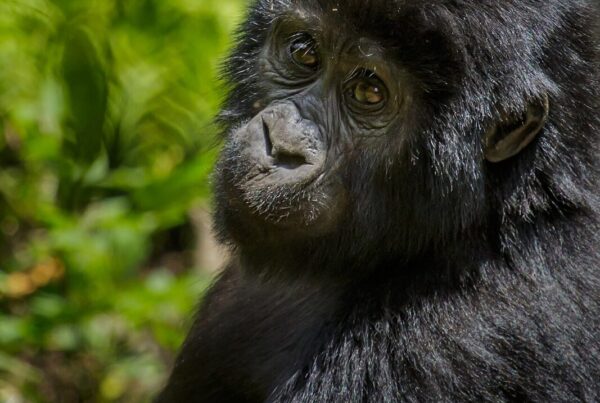
The Nshongi group was in a dense section of forest at the end of a steep descent. Twenty-three gorillas, including a silverback who was feeding methodically on a plant that Francis identified by name in Rukiga and then translated as “wild celery.” The gorillas were not complaining. The forest was not complaining. The silverback was eating wild celery in the rain — it rained briefly during our hour — with an expression of complete adequacy. He had shelter (forest canopy), food (wild celery), family (twenty-two other gorillas), and no discernible awareness of anything he was lacking. I watched him for a long time.
What I Brought Home
I still complain. I want to be honest about this. The commute still registers as annoying. The weather still produces mild dissatisfaction. But there is now a specific check on the complaining that was not there before. When I catch myself treating a small inconvenience as a significant grievance, Francis carrying my pack up a steep forest trail for $15 USD presents itself as a counterargument. The silverback eating wild celery in the rain with no apparent deficit presents itself as a counterargument. They are not arguments I win — the complaining persists — but they are arguments that make the complaining feel, increasingly, less worth making.
The gorilla permit is $800. The porter is $15 plus tip. The recalibration of perspective: yours to assess.