Updated
gorilla trekking Uganda children conservation education is one of Africa’s most extraordinary wildlife experiences, connecting travellers with mountain gorillas in their natural forest habitat. My children are nine and twelve. They did not come with me to Uganda — the minimum age for gorilla trekking is fifteen, and neither of them qualifies yet. But the trip changed how they think about animals, conservation, and the world beyond the screen in ways I had been trying and failing to achieve through more conventional means. This is the story of how I explained what I experienced, and what that explanation produced.
How I Explained Gorilla Trekking to My Children and Changed How They See Animals
What My Children Knew About Gorillas Before
They knew gorillas from the zoo and from nature documentaries. The zoo gorillas occupied an enclosure and occasionally made eye contact with the crowd. The documentary gorillas were filmed with long lenses in forests and narrated by authoritative voices. Both sources produced a relationship with gorillas that was mediated, distant, and essentially visual — gorillas as something to observe rather than something to be in the presence of. This is the relationship with wildlife that most people in wealthy countries have with most wild animals: screen-based, safe, and fundamentally thin.
What I Told Them
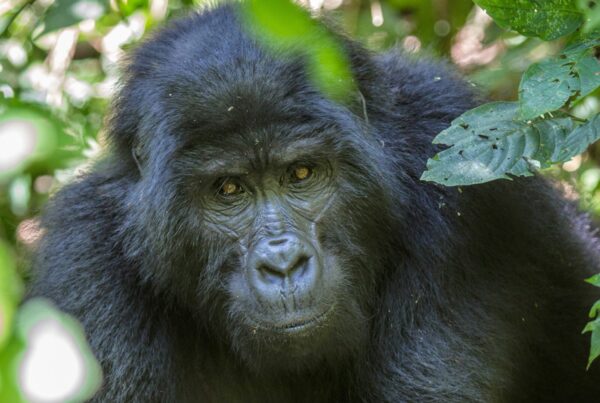
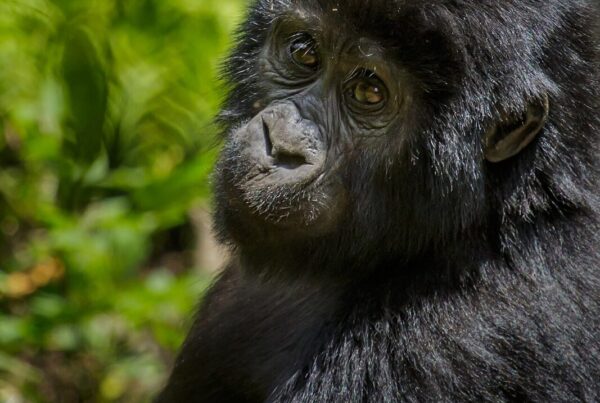
I showed them my photographs. I played them the audio I had recorded of the forest sounds during the trek. I told them about walking for three hours in a forest that was older than any building they had ever been in, following a guide who knew the gorilla family by name, arriving in a clearing and finding the Habinyanja group — thirty-two gorillas — going about their morning in the specific, purposeful way of a family that knows exactly what it needs and is simply doing it.
I told them about the silverback. I tried to describe the specific quality of physical presence that a 200kg silverback produces at close range — not threatening, not performing, simply present in a way that photographs do not convey and that requires physical proximity to fully understand. My twelve-year-old asked: “Like, actually scary or scary in a good way?” I said: “Both, at first. Then just awe.” She wrote this down. I do not know why but she did.
The Question That Changed the Conversation
My nine-year-old asked: “Do the gorillas know they could disappear?” I told him what I knew honestly — that gorillas do not have the category of awareness that would allow them to understand population decline or extinction in the abstract. What they have is the present: the family, the forest, the daily requirements of survival. Whether the population continues to exist is a question that only the humans watching them can answer.
He sat with this for a moment. Then: “So we decide?” Yes. We decide. The gorilla permit I paid ($800 USD) funds the rangers and the research and the community programmes that make the decision to keep the gorillas alive economically viable for the communities who live alongside them. He understood this better than most adults I have explained it to. Children are capable of understanding that decisions have consequences and that the consequences of conservation decisions are specific living animals in specific places. They simply need the connection made concrete rather than abstract.
What Changed in How They See Animals
Both children started asking different questions about animals after our conversations. Not just about gorillas — about animals in general. Where does this animal actually live? What does it actually eat? What would happen if it disappeared? These are questions about reality rather than about appearance, which is a different relationship with wildlife than the one they had before. The zoo visits became less about looking at animals and more about asking what the animal’s life was actually like and what would need to be true about the world for that life to continue.
My twelve-year-old told a teacher at school about the gorilla population recovery — the fact that mountain gorillas numbered 254 in 1981 and number over 1,060 in 2027, and that this increase happened specifically because of conservation decisions made and funded by tourism. The teacher asked how she knew this. She said her mother had been there and had explained it. I found out about this third-hand and was disproportionately moved by it.
When They Are Old Enough
My twelve-year-old will be fifteen in three years. We have already discussed going together. The minimum age rule means the nine-year-old will wait six more years. He knows this and has accepted it with the kind of patient planning that children apply to things they have decided they genuinely want. He has a photograph of the silverback on his wall. It is a photograph I took, from seven metres, in a forest in Uganda where we both decided together that some things are worth protecting.
The gorilla trekking permit is $800 per person. When my children are old enough to trek, it will be one of the first trips we take together.