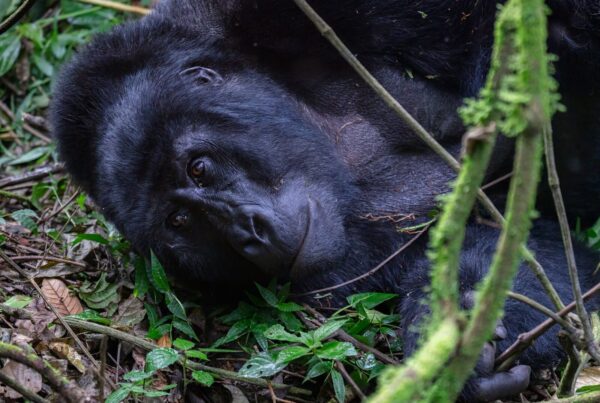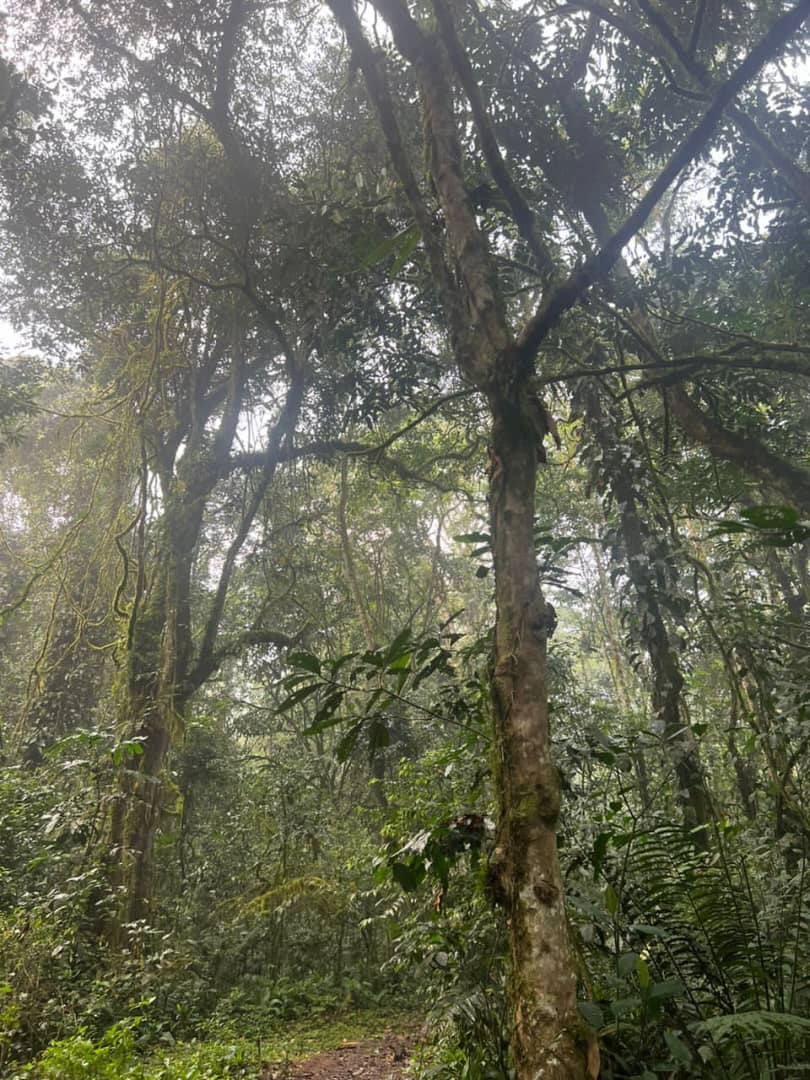
Conservation that does not reach the next generation of children living at the forest edge is conservation that runs out of defenders when the current generation retires — and the schools that have built gorilla ecology, forest botany, and wildlife management into their curriculum in Bwindi’s surrounding communities are addressing this reality directly. A child who learns the name of the tree species that feeds the Mubare gorilla family, in the same classroom where their parent earns a living through tourism, grows up with a fundamentally different relationship to the park than one who was never taught why the forest at the end of their village exists. See the Bwindi conservation model and the families these children will one day protect.
- Revenue sharing: 20% of Uganda park entry fees fund community development including schools near Bwindi
- Organisations active in education: CTPH, Dian Fossey Gorilla Fund, WCS, community-based NGOs
- Programme approach: integrating local ecology and conservation into primary and secondary school curricula
- Long-term goal: building the next generation of rangers, guides, and conservation advocates from within surrounding communities
- Children of rangers: often grow up with direct knowledge of gorilla families as a result of their parents’ work
There is a classroom in Buhoma, at the northern edge of Bwindi Impenetrable National Park, where the lesson plan for any given Tuesday might include identifying bird calls by sound, learning the names of medicinal plants in both Rukiga and English, understanding why a particular tree species is important to mountain gorilla nutrition, and calculating the economic value of gorilla trekking permits for community revenue sharing. The classroom is not unusual in Uganda. What is unusual is that the children in it grow up to be among Bwindi’s most effective advocates — not because they have been lectured about conservation, but because they have been educated to understand a world that includes, as a natural and inseparable part of it, the forest on their doorstep.
Education as Conservation Tool
The relationship between education and conservation is well-established in theory and poorly implemented in practice. It is easy to say that teaching children to love nature will produce adults who protect it; it is much harder to design educational programmes that actually achieve this outcome rather than simply producing students who can correctly answer exam questions about biodiversity.
The schools around Bwindi — several primary and secondary schools serving communities in Buhoma, Ruhija, Nkuringo, and Rushaga — have been sites of sustained experimentation in conservation education over the past two decades. The programmes that have worked are those that connect the abstract fact of conservation to the immediate, lived reality of growing up next to one of Africa’s most extraordinary forests.
The Gorilla Guardian Programme
The Gorilla Guardian Youth Programme, run through partnerships between conservation NGOs, the Uganda Wildlife Authority, and local schools, has been operating in various forms since the early 2000s. Its core approach is direct environmental education — not through textbooks, but through regular supervised visits to the park boundary, meetings with park rangers and researchers, and structured observation exercises that build genuine ecological literacy rather than rote knowledge.
Students in the programme learn to identify the tracks of different animals, understand the structure of the forest’s vegetation zones, and follow the logic of conservation biology — why corridors matter, why edge effects weaken forest quality, why the gorillas move as they do through the landscape. They also learn economics: the connection between the $800 gorilla permits paid by international tourists in 2027 and the school bursaries, healthcare subsidies, and community infrastructure that flow back to their villages through the revenue-sharing programme.
The Forest Is Not Abstract
The most powerful education that happens around Bwindi is not delivered by any programme. It is delivered by the forest itself, which is visible and audible from most homes and farms in the surrounding communities. Children who grow up hearing chimpanzees calling in the evening, who watch mountain hornbills fly overhead on the way to school, who find gorilla dung in their family’s banana garden after a nighttime visit — these children do not need to be persuaded that the forest is real. They need to be given frameworks for understanding what they already know.
This is the insight that distinguishes the most effective conservation education programmes around Bwindi from those that have failed. The children of these communities are not blank slates on which conservation values must be inscribed. They are observers with rich experiential knowledge who need intellectual tools to make sense of what they already experience. The best conservation teachers around Bwindi are those who understand this and build education on existing knowledge rather than trying to replace it.
Language and Ecological Knowledge
The Rukiga and Rufumbira languages spoken in communities around Bwindi contain detailed ecological vocabularies developed over generations of intimate relationship with the forest. There are specific words for different states of forest growth, different qualities of soil, different behaviours of forest animals at different seasons. This vocabulary encodes knowledge that is genuinely useful for conservation — and is at risk of being lost as formal education in English and Luganda becomes the norm.
Several conservation education programmes around Bwindi have explicitly incorporated traditional ecological knowledge and local language alongside formal science. Students who learn to identify a forest plant first by its Rukiga name, then by its scientific name, develop a relationship with the knowledge that differs from students who encounter only the Linnaean taxonomy. The local name connects the plant to its cultural and practical context; the scientific name connects it to a global body of knowledge. Both connections matter.
The Teachers Who Make It Possible
Conservation education around Bwindi depends on teachers who are committed to it and competent to deliver it, and this is where many programmes have struggled. The Ugandan education system trains teachers primarily for examination performance — the ability to prepare students for national curriculum tests in standardised subjects. Conservation education, with its emphasis on field observation, interdisciplinary thinking, and integration of local knowledge, sits awkwardly within this framework.
The most successful conservation schools around Bwindi have typically had one or two exceptional individual teachers who drove the programmes through personal commitment and creativity. These teachers — often themselves products of conservation education initiatives who returned to their home communities — create learning environments that the formal curriculum does not mandate and assessment systems cannot measure. Their impact is real and well-documented in the conservation outcomes of the communities where they work. It is also entirely dependent on them as individuals, which makes it fragile.
The Bwindi Environmental Education Centre
The Bwindi Environmental Education Centre in Buhoma was established specifically to address the gap between formal education and conservation need. The centre works with primary and secondary school students from surrounding communities, offering programmes that complement rather than replace the formal curriculum. It has a small forest trail, a native plant garden, and a wildlife display that provides context for the ecosystems students learn about in textbooks but encounter daily without conceptual frameworks.
The centre also trains teachers from community schools in environmental education methods — multiplying the impact of limited resources by building capacity within the formal school system rather than operating entirely alongside it. Teachers who complete the centre’s professional development programmes take methods and resources back to their classrooms that persist long after the initial training.
What Children Learn That Adults Cannot Teach Them
There are things that children learn about conservation that adults — particularly adult scientists and conservationists — cannot teach them, because these things can only be learned by growing up in a place. Children who have watched the forest at the edge of their family’s farm every day of their lives know things about what the forest does and where it goes that no research programme has documented. They know where the gorillas come to feed in dry season, which path through the park the elephants prefer when moving between sectors, where the rivers run cold and clear and where they warm and discolour after rain.
This embodied, emplaced knowledge is what conservation education programmes are trying to connect to scientific frameworks without destroying in the process. The best programmes succeed at this. The worst turn children into repositories of information who have lost the relationship with the living world that made the information meaningful in the first place.
The Alumni Who Returned
The most compelling evidence for the effectiveness of conservation education around Bwindi is not found in survey data or biodiversity metrics. It is found in the stories of individuals who grew up in these programmes and returned to their communities as adults to work in conservation. Several of Bwindi’s current park rangers, community guides, and wildlife monitoring specialists are graduates of conservation education initiatives that began in the primary schools of Buhoma and Rushaga twenty years ago.
These individuals combine formal conservation knowledge with the deep local knowledge that only comes from having grown up in a particular place. They speak the local languages fluently, understand the social dynamics of their communities, and carry the trust of community members who remember them as children. They are, in practical terms, irreplaceable — the product of an educational investment that took twenty years to mature and cannot be shortcut.
For visitors arriving to trek gorillas in Bwindi in 2027, the educational infrastructure that surrounds the park is invisible. The school where children learn bird calls sounds like any rural Ugandan school. The ranger who guides you through the forest went to that school thirty years ago. The connection between education and the hour you spend with the gorillas is real, but it requires knowing where to look.
Why is conservation education important for communities near Bwindi?
The communities surrounding Bwindi Impenetrable National Park are the park’s most immediate neighbours and its most effective long-term defenders — when they support conservation, poaching intelligence improves, boundary encroachment decreases, and gorilla safety increases. Conservation education in schools builds the connection between children’s daily lives and the gorilla tourism economy that funds community development. A child who understands that the school they attend was built from revenue sharing funds — linked directly to gorilla permit income — relates to the park differently than one who sees it only as a boundary restricting land use.
What do conservation education programmes teach children near Bwindi?
Programme content varies by organisation and school, but typically includes: identification of local plant and animal species (both the gorillas’ food plants and the birds visible from the school grounds), understanding of why the forest regulates water supply for surrounding farmland, the economic connection between healthy gorilla populations and community income, and career pathways in conservation and tourism. Some programmes take children on guided walks inside the park — often their first time entering the forest — which creates a direct experiential connection that classroom learning reinforces.
Can gorilla trekking visitors support conservation education in Bwindi?
Yes — in several ways. Staying at community-owned lodges and hiring local porters and guides puts money directly into community households where children’s school fees are paid. Some operators contribute a portion of bookings to community development funds, including school support programmes. CTPH (Conservation Through Public Health) and the Fossey Fund accept direct donations that fund education programmes. The most consistent long-term support comes from maintaining the gorilla tourism economy at healthy levels — every permit purchased contributes to the revenue sharing pool that funds community infrastructure including schools.
Are children from Bwindi communities becoming gorilla rangers and guides?
Yes — and this is an intentional outcome of the community conservation model. Uganda Wildlife Authority has increased recruitment from the communities surrounding Bwindi, and children of rangers who grew up with daily gorilla conversation at the dinner table are entering the field with practical knowledge and genuine passion. The progression from community school to UWA ranger training to working with the gorilla families whose family trees they learned in childhood is a documented pathway now, where a generation ago it essentially did not exist for community members.
How does gorilla conservation help pay for schools near Bwindi?
Uganda’s National Environment Act requires that 20% of national park entry revenues be distributed to district local governments of districts in which the park falls — for Bwindi, this is Kanungu and Rubanda districts. These governments use the funds for community development projects, which by law include education, health, and infrastructure. When gorilla tourism revenues are high, the community development fund grows. Schools near Bwindi have been built and maintained partly from this revenue stream for over two decades. The direct connection between a gorilla permit purchased in 2026 and a teacher’s salary in a village school near Rushaga is real, if indirect.
- Bwindi Impenetrable Forest – Gorilla Trekking in Uganda’s UNESCO Jungle
- Chimpanzees Confirmed in Bwindi Forest
- Bwindi Forest: What Happened to the White-Bellied Duiker?
- Bwindi Forest Gorilla Trekking: An Unforgettable Journey
- Uganda Gorilla Trekking Bwindi Impenetrable Forest: The Complete Guide
- The History of Bwindi Impenetrable National Park: From Forest to World Heritage Site
- Where Exactly Is Bwindi Impenetrable Forest? Location, Geography, and How to Get There
- Are There Other Animals on the Gorilla Trek in Bwindi? Forest Wildlife Beyond the Gorillas
- How Old Is the Bwindi Impenetrable Forest? Age and History
- Bwindi Impenetrable National Park: Uganda’s Gorilla Forest