Updated
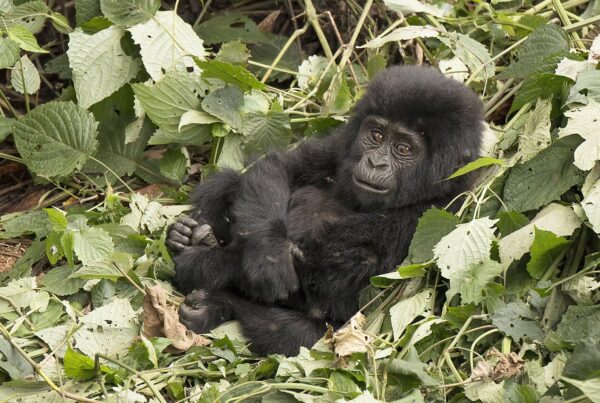
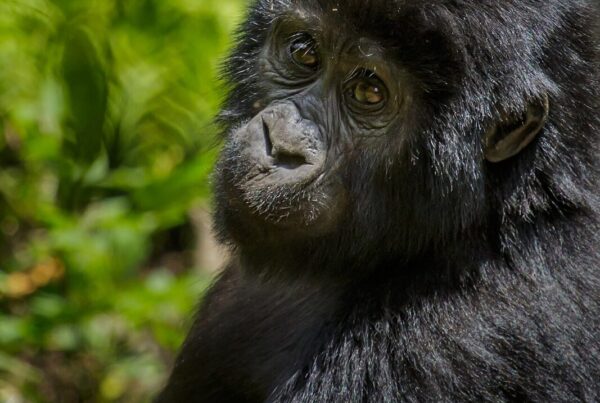
book gorilla trekking Uganda inquiry is one of Africa’s most extraordinary wildlife experiences, connecting travellers with mountain gorillas in their natural forest habitat. You have done the research — you know what gorilla trekking in Uganda involves, you know the permit costs USD 800 in 2027, that the hike can take one to five hours depending on where the gorillas have moved, that the encounter lasts one hour and is described by nearly every person who has done it as one of the defining experiences of their life — and you have not booked it yet for a reason that is usually not the stated reason. The actual barrier is rarely money or timing or information. Contact an accredited operator and check availability for your dates at Bwindi’s sectors.
- Money: USD 800 permit is fixed and cannot be discounted; total trip USD 2,200-4,000 per person; this is real money but often not the actual barrier for people who have researched this far; see cost breakdown
- Timing: Uganda gorilla trekking is available every month; peak season is June-September and December-February; shoulder months (Oct-Nov, Mar-May) are cheaper, quieter, and just as good
- Fitness: the trek requires moderate fitness — 1-5 hours walking on steep terrain; porter support available (USD 15-20); ages 15-80+ complete treks regularly
- Safety: Bwindi and the main Uganda tourist circuit are considered safe for visitors; check your government travel advisory for current status
You have done the research. You know what gorilla trekking in Uganda involves. You know the permit costs $800 in 2027, that the hike can take one to five hours depending on where the gorillas have moved, that the encounter lasts one hour and is described by nearly everyone who does it as the most extraordinary experience of their lives. You know all of this. And you have not yet booked. So what is actually stopping you?
The Only Thing Standing Between You and Gorilla Trekking Is the Booking Form
Identifying the Real Barrier
When people examine why they have not yet booked a trip they clearly want to take, the reasons often fall into categories. Cost. Timing. Logistics. Uncertainty. Sometimes a vague sense that the trip needs more thought, more preparation, more something — even when the research is essentially complete.
These barriers are real, but they are rarely as solid as they feel. Cost is a genuine constraint, but it can usually be planned around with a clear timeline. Timing is a genuine constraint, but most people have more flexibility than they initially acknowledge. Logistics is rarely a real barrier for gorilla trekking — it is one of the most well-organized nature tourism experiences on Earth. And the need for more thought is, often, a proxy for something simpler: the small discomfort of committing to a large decision.
What the Booking Form Actually Is
The booking form is not a contract with the universe. It is a conversation opener. It says: I am interested, here are my dates, here is my group size, what does this look like for me specifically. A good tour operator responds with availability, itinerary options, and a quote that lets you make a fully informed decision. Nothing is locked in at the inquiry stage. You are simply finding out what is actually possible, which is information you cannot have without asking.
The distance between “thinking about it” and “knowing what it would actually cost and when it could actually happen” is one form submission. Most people find that filling in the form makes the trip feel real in a way that research cannot — and that making it feel real is exactly what moves it from “someday” to “here is my itinerary.”
What Happens After You Inquire
After you send an inquiry, you receive a response that lays out your options clearly. Which forest sector suits your preferences — the famous Buhoma area in the north, the wilder Ruhija sector, or the diverse Rushaga and Nkuringo areas in the south. Which lodges are available in your price range. Whether permits are available on your preferred dates, and what alternatives exist if not. What the full itinerary could look like — just gorilla trekking, or combined with Kibale for chimpanzees, or a Queen Elizabeth safari.
You are under no obligation to proceed. But you will have real information — dates, costs, availability — rather than estimates and approximations. And real information is what decisions are made from.
The Cost of Indefinite Delay
Every trip that lives in the “planning” phase has a carrying cost. Not a financial one — the cost of sustained wanting. Of returning to the same articles, the same photos, the same mental image of yourself in that forest, without ever getting any closer. That cost is diffuse and easy to ignore, but it accumulates. The relief that comes from actually booking — from converting the wanting into the doing — is not trivial. People describe it as one of the better feelings they associate with the trip, arriving long before they set foot on the plane.
There is also the practical cost of delay: peak-season permits disappear. Popular lodges fill up. The best dates for your specific travel window narrow. The traveler who books in January for a July departure has more choices — of date, family, sector, lodge, and itinerary — than the traveler who starts inquiring in May. The window does not close, but it narrows. Every week of delay is a week of choice lost.
The Permit Arithmetic
Uganda Wildlife Authority allocates a maximum of eight permits per habituated gorilla family per day. With approximately 20 habituated families accessible across Bwindi’s four sectors and at Mgahinga, total daily capacity across the country is around 160 trekkers. On any given peak-season date, those 160 slots are distributed across every traveler who has inquired, confirmed, and paid. The travelers who waited for more certainty before inquiring find themselves behind the travelers who acted. The permit system does not reward patience with better options. It rewards early action with more of them.
You Already Know This Is Worth Doing
Let us be honest about what is actually happening here. You have read enough about gorilla trekking in Uganda to know that it is worth doing. The experience is real. The conservation story is real. The impact of standing in the presence of a mountain gorilla family in Bwindi — the one hour that everyone who has done it describes as the most extraordinary of their lives — is real. You are not uncertain about whether this is worth it. You are uncertain about when, and whether now is the right now.
Now is always the right now for the things that matter. Not because the world is fragile and everything might disappear (though the world is fragile), but because the gap between wanting and doing only closes when you close it. It does not close on its own. It closes when you fill in the form.
One Step
The entire distance between where you are and gorilla trekking in Bwindi Forest in 2027 can be covered in one step: send the inquiry. That step costs nothing and creates everything — real dates, real costs, real availability, a real conversation with someone who can make this trip happen for you.
You have done everything else. The research is done. The wanting is clear. The only thing standing between you and this experience is the decision to stop researching and start booking. Fill in the form. Everything else follows from there.
What are the most common reasons people delay booking gorilla trekking?
The delay patterns are recognisable and specific. Budget uncertainty: the USD 800 permit is a real commitment and not a small one; but many people who delay for budget reasons spend a comparable amount on things they will not remember in 2 years in the same period; the question is not whether the money is available but whether this is what it is for; see full cost breakdown. Timing uncertainty: the search for the perfect travel window often defers to the next quarter indefinitely; Uganda’s gorilla trekking at Bwindi is accessible every month of the year; there is no bad time — only busier and quieter times. “More research”: the feeling that more information is needed before a decision can be made is often a proxy for a different kind of hesitation; gorilla trekking is one of the most documented travel experiences in Africa and the fundamentals are stable year on year. Company: waiting for the right travel companion is legitimate but solo gorilla trekking is common and well-supported at all Bwindi sectors.
Can I go gorilla trekking alone as a solo traveller?
Solo gorilla trekking in Uganda is common and well-supported. Permit booking: solo permits are booked in exactly the same way as group permits; you are placed with up to 7 other visitors assigned to the same gorilla family that day; you rarely trek entirely alone. Operator logistics: accredited Uganda operators regularly handle solo bookings; the operator manages transport, accommodation, and permit for a single person exactly as for groups. Solo travel advantages: flexibility on dates and itinerary; easier to fill last-minute permit spots (a single permit is easier to source than a group allocation); the trekking group at Bwindi is typically international and mixed — solo travellers join others from different countries naturally. Safety: solo female travellers frequently do gorilla trekking in Uganda without issue; the park environment is guided and ranger-managed throughout the trek.
How quickly can I book and travel for gorilla trekking in Uganda?
Speed of booking depends on season and flexibility. Fastest possible: in low season (November, April), a person with a flexible schedule can sometimes book and travel to Bwindi within 2-3 weeks; flights and visa are the main variables; Uganda e-visa processes in 1-5 business days. Normal off-peak: 4-6 weeks from enquiry to trek is realistic for most months outside peak. Peak season (June-September, December-February): 3-4 months ahead is the minimum for preferred sector and dates; Buhoma books fastest; Ruhija and Rushaga may have 4-6 week availability. The permit first rule: confirm the permit date before booking anything else; the permit date is the anchor of the entire itinerary; do not book flights before the permit is confirmed. See accredited operators and cost details.
Is gorilla trekking safe after recent reports about Uganda or the DRC border?
Safety concerns are legitimate and deserve a factual response. Bwindi and the main circuit: Bwindi Impenetrable Forest NP is in southwestern Uganda; it is not in the DRC; the park is inside Ugandan territory with active UWA ranger presence; the tourist infrastructure at Buhoma, Ruhija, Rushaga, and Nkuringo sectors has been operating continuously since the early 1990s. DRC border: Bwindi is adjacent to the DRC border; visitors do not cross the border as part of any standard trekking itinerary; the security situation in eastern DRC does not currently affect the Uganda side of the park. Official advice: consult UK FCDO, US State Department, or your government’s travel advisory for current Uganda ratings; the main tourism circuit is typically rated normal caution as of 2027. Operator advice: a reputable accredited Uganda operator will give accurate current information on the security situation for your specific travel dates.
What is the best way to combine gorilla trekking with other Uganda activities?
The Uganda circuit connects naturally. The primate trail: start with Kibale Forest chimp trekking; add Queen Elizabeth NP (Kazinga Channel, Ishasha tree-climbing lions); end at Bwindi for the gorilla trek; 7-10 days covers this in full comfort. The northern add: extend northward to Murchison Falls NP for the Nile boat safari, giraffe, and elephant; or fly to Kidepo Valley for the remote northern savannah. The birding add: Mabamba Bay shoebill near Entebbe (half-day from arrival), and the Uganda birding safari if birds are a primary interest. Short version: the fly-in Bwindi trek is the fastest way to reach the gorillas if time is limited.
- Gorilla Trekking Age Limit: Everything You Must Know Before Booking Your Safari
- Uganda Gorilla Trekking: Best Travel Agents and Booking Platforms 2026
- The Only Checklist You Need Before Booking Gorilla Trekking in Uganda
- Best Flight Booking Platforms for Uganda 2027: Compared
- 2025 Uganda Gorilla Trekking Permits – Cost, Booking, Rules & More
- Uganda Gorilla Trekking Permit 2025 – Cost, Booking & Availability Guide
- Gorilla Behaviour in the Wild: Understanding the Gentle Giants of Africa
- What a 3-Day Uganda Wildlife and Cycling Safari Did to My Family Was Beyond Anything We Expected
- Gorilla Group Formation and Dynamics: The Deep Bonds That Shape Life in the Forest
- Blackback Gorilla Height: Standing Tall in the Shadows of Silverbacks