A traditional African safari — game drives in the Masai Mara, the Serengeti, or Kruger National Park — is one of the world’s great travel experiences. If you have never done it, it is worth doing. But if you are planning an Africa trip and have either done the classic circuit or are looking for something that offers a different kind of depth, Uganda presents a compelling alternative case. This is not a critique of the Serengeti. It is an honest comparison of what Uganda offers that the classic safari circuit does not.
The Encounters Are Different in Kind
A traditional African safari is primarily experienced from a vehicle. You observe wildlife at distance through binoculars and telephoto lenses. The experience is spectacular — the Serengeti’s scale, the Masai Mara’s lion density, Kruger’s variety — but the fundamental relationship between observer and animal is one of distance. You are watching. The animals occasionally notice you. Mostly they do not.
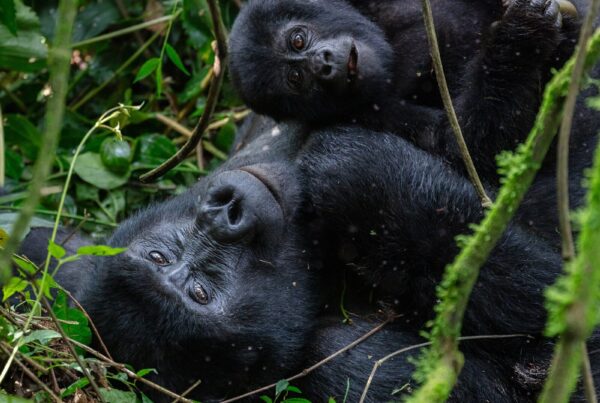
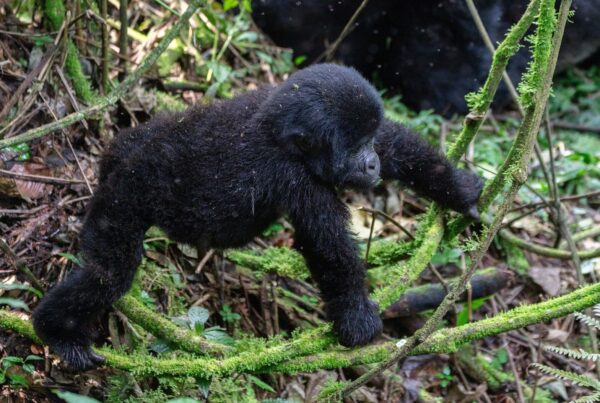
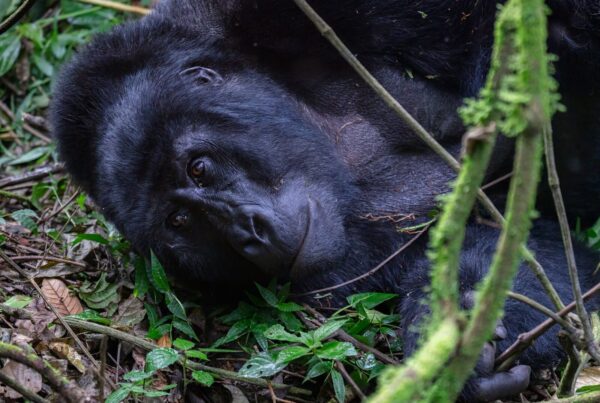
Gorilla trekking in Uganda changes this relationship entirely. You walk into the forest on foot, following rangers who are tracking wild animals. When you reach the gorillas, you crouch in the undergrowth at ten metres from animals that weigh up to 200 kilograms and share 98% of your DNA. They are aware of your presence. They sometimes look directly at you. The interaction is not observation from a safe distance. It is co-presence with a wild great ape in its natural environment — a categorically different experience from watching lions from a vehicle roof.
The Biodiversity Depth
Traditional safari destinations are extraordinary for savannah wildlife. Kenya and Tanzania offer the best big game viewing in the world. South Africa’s private reserves offer luxury and big five density in a compact area. But savannah ecosystems, for all their spectacle, are ecologically simpler than the rainforest systems that Uganda protects. Uganda’s 1,000-plus bird species, thirteen primate species, and the complexity of its forest ecosystems offer a kind of biodiversity depth that the open grasslands, however beautiful, do not match.
For travellers with a genuine interest in the natural world rather than primarily in the visual spectacle of large animals, Uganda rewards the kind of close, sustained attention that a forest demands. The forest is not obviously spectacular. It does not produce the Instagram shot of a lion with Mount Kilimanjaro in the background. What it produces is a richer, more complex, and ultimately more interesting experience for anyone willing to look carefully.
The Conservation Argument
Tourism in the Masai Mara and the Serengeti is mature, well-established, and generates significant conservation funding. But the sheer volume of tourists at peak season creates its own environmental pressures: vehicle congestion at game sightings, lodge construction in sensitive habitats, and the homogenisation of the tourist experience around the most photogenic and accessible wildlife. The conservation case for Uganda is different: a smaller visitor number, a higher per-visitor permit fee, and a more direct relationship between tourism revenue and conservation outcomes for a critically endangered species.
The $800 USD gorilla permit goes to the Uganda Wildlife Authority, which uses it to fund a ranger force that has protected the mountain gorilla population’s recovery from 620 individuals to over 1,100. This is a measurable conservation outcome with a documented funding mechanism. The conservation argument for choosing Uganda is more specific and more directly evidenced than the general case for visiting any established safari circuit.
Value and Visitor Experience
A traditional Kenya or Tanzania safari in peak season is expensive — a Masai Mara lodge in July or August costs several hundred to over a thousand dollars per person per night at quality properties. A Uganda gorilla trekking itinerary is also not cheap — the $800 permit alone represents a significant expenditure. But the comparison is between different things: the Masai Mara peak season delivers spectacular wildlife at high density with significant other-tourist presence; Uganda delivers an intimate, regulated encounter with one of the world’s rarest animals in genuine wilderness conditions.
Uganda’s lodges near Bwindi range from comfortable to genuinely luxurious, and the small guest numbers mean that even mid-range lodges offer a personalised service that larger safari camps with their higher volumes cannot match. The absence of crowds — a structural feature of Uganda’s limited permit system rather than a function of price — is something that many experienced travellers regard as one of the primary reasons to choose Uganda.
The Honest Recommendation
If you have never been on an African safari and want to understand the continent’s wildlife, start with Kenya or Tanzania. The Masai Mara migration, Amboseli’s elephants, and the Serengeti’s lions are experiences worth having as foundations for understanding Africa’s wildlife systems. But if you are returning, or if you want something that goes beyond the expected, Uganda offers an encounter with a different dimension of what Africa is. The gorillas are incomparable. The forests are irreplaceable. And the experience of standing ten metres from a wild silverback in Bwindi — in a group of eight, in ancient rainforest, with nothing between you and one of the world’s most endangered animals — is one that no traditional safari destination can provide.
Frequently Asked Questions
Uganda is home to the mountain gorilla (Gorilla beringei beringei), one of two subspecies of eastern gorilla. They live exclusively in the Virunga volcanic highlands (Uganda/Rwanda/DRC) and Bwindi Impenetrable Forest (Uganda only). Mountain gorillas are the only gorilla subspecies that cannot survive in captivity — every individual you can trek is a wild animal.
The standard gorilla trekking permit gives you exactly 1 hour with the gorilla family. This time begins when you make first contact with the family — the ranger signals the start. The Gorilla Habituation Experience gives 4 hours with a semi-wild family. The walk to find the gorillas can take 30 minutes to 5 hours depending on where the family has moved.
Stay calm, crouch down slowly, avoid direct eye contact, and remain quiet. Do not run — running triggers a chase response. Rangers accompanying your group manage close approaches. Habituated gorillas are accustomed to humans and almost never make contact, but a charging silverback is managed by staying still and following ranger instructions immediately.
A maximum of 8 visitors per habituated gorilla family per day for standard trekking. The Gorilla Habituation Experience has a maximum of 4 visitors per family per day. These limits are set by UWA to minimise stress on the gorilla families and maintain the quality of the experience.
Uganda is home to the mountain gorilla (Gorilla beringei beringei), one of two subspecies of eastern gorilla. They live exclusively in the Virunga volcanic highlands (Uganda/Rwanda/DRC) and Bwindi Impenetrable Forest (Uganda only). Mountain gorillas are the only gorilla subspecies that cannot survive in captivity — every individual you can trek is a wild animal.