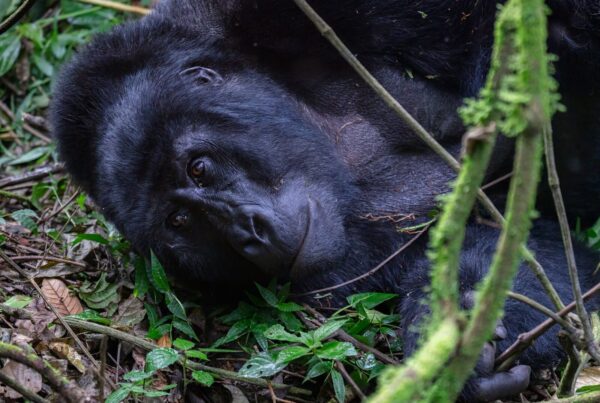
The history of gorilla conservation in Uganda is told most often through the institutional story of protected areas, permit systems, and international NGO investment — a story in which the individual Ugandan women who built the practical foundations of the community engagement model that made the conservation success possible are systematically invisible, despite the fact that it is specifically the community-level work of women’s groups, women’s savings cooperatives, women’s craft organisations, and the female community rangers and guides who carry much of the daily relational load of the border-community conservation relationship. This piece documents the role that Ugandan women have played in gorilla conservation — from the female community rangers whose local knowledge and community trust made anti-poaching more effective than patrol-based enforcement alone, to the women’s craft cooperatives whose economic model transformed the conversion calculus for households that previously faced a choice between forest access and income, to the female porters and guides whose employment in the trekking sector represents a meaningful shift in the gender economics of highland Uganda tourism. For the conservation context, see the gorilla families guide.
Ugandan Women in Gorilla Conservation: Key Roles
- Community scouts: Female community conservation scouts report forest edge activity and human-wildlife conflict to UWA
- Craft cooperatives: Women’s basket weaving and textile groups at Bwindi gate areas earn direct tourism income
- Porter sector: Female porters now employed at all Bwindi sectors — a shift from the earlier male-dominated porter workforce
- Community walk guides: Women lead the Batwa Trail and community walk programmes at Buhoma and Rushaga
- Revenue Sharing use: Women’s groups are primary beneficiaries and managers of Revenue Sharing Scheme clinic and school investments
- Research contribution: female trackers and field assistants at Karisoke and Bwindi research stations are core field research infrastructure
The history of gorilla conservation tends to be told through the stories of primatologists and park rangers, of scientific research and anti-poaching operations, of government policy and international NGO funding. These are real and important parts of the story. But there is another thread — less documented, less celebrated, but arguably more fundamental — that runs through the conservation history of Bwindi Impenetrable Forest and Mgahinga Gorilla National Park. It is the story of the women who live adjacent to the parks, who understood before anyone else what was at stake, and who built the community structures through which conservation became not merely possible but sustainable.
The Invisible Labour of Conservation
When researchers began studying the relationship between community welfare and gorilla conservation in the 1990s, they found that the communities most directly affected by park boundaries were not monolithic in their attitudes. Men and women, it turned out, had different relationships with the forest and different stakes in its protection.
Men’s relationship with Bwindi had historically centred on hunting and large-scale resource extraction — activities directly curtailed by the park’s gazettement. Women’s relationship with the forest was more complex and, in conservation terms, more ambivalent: women were the primary collectors of firewood, medicinal plants, and materials for craft production. They had intimate knowledge of the forest edge, the places where forest met farmland, the microhabitats where specific plants grew and specific animals lived. They also bore the primary costs of crop raiding — the midnight raids by gorillas, buffaloes, and elephants that destroyed fields and stored grain that represented months of household labour.
The Revenue Sharing Beginning
The Uganda Wildlife Authority’s community revenue-sharing programme, established in the late 1990s and expanded significantly in subsequent decades, began directing a portion of gorilla permit revenue — currently $800 per permit in 2027 — to communities adjacent to Bwindi and Mgahinga. In the early years of the programme, the management of these community funds was dominated by male-led local government structures, and women’s access to the benefits was limited.
What changed this was not top-down policy reform but grassroots organising. Women in communities around Bwindi began forming savings and credit groups — locally called “rounds” — that pooled small amounts of money to provide lump sums to rotating members. These groups, which had no formal legal status and no connection to any NGO, built social capital and financial literacy simultaneously. They also built negotiating power.
The Gorilla Guards: Women at the Forest Edge
In the early 2000s, a group of women in Buhoma — the community at Bwindi’s northern sector that receives the most gorilla trekking visitors — began organising voluntary patrols of the forest boundary. Their motivation was not conservation ideology but immediate practical concern: gorillas were damaging their crops with increasing frequency as the gorilla population grew and habitat pressures pushed groups toward the park boundary.
These women, working without equipment, without official recognition, and without payment, began mapping gorilla movement patterns, identifying the agricultural fields most vulnerable to raiding, and alerting park rangers when gorilla groups were approaching community areas. Their knowledge of the forest edge was more detailed than anything in the park’s official records. They knew which paths the gorillas preferred, which crops they targeted, which fields were most vulnerable in which seasons.
The Uganda Wildlife Authority eventually recognised these informal patrols and began working with them systematically, providing training and limited equipment. The women’s groups became an early warning system that significantly reduced crop damage and improved community-park relations. They had built, from nothing, a conservation infrastructure that no amount of NGO funding could have produced because no NGO would have known where to start.
Isingiro and the Craft Cooperatives
In Isingiro, on Bwindi’s southern edge, a different model emerged. Women who had previously collected plants from inside the park for traditional crafts — baskets, mats, and other woven goods — faced the prospect of losing their raw materials when the park boundary restricted access. Rather than simply absorbing this loss, a group of women organised a cooperative to cultivate the same plant species on community land outside the park.
The cooperative began selling crafts directly to tourists visiting Bwindi, cutting out the middlemen who had previously taken the majority of the commercial value. The quality of the work — which was exceptional, representing generations of accumulated craft knowledge — attracted attention from international buyers, and the cooperative eventually developed relationships with fair-trade importers in Europe and North America.
The economic success of the craft cooperative transformed its conservation significance. Women who depended on the craft income had a direct financial stake in the continued operation of gorilla tourism — and therefore in the continued protection of the gorillas. The connection between craft income and conservation was not abstract; it was the month’s school fees, the family’s medical bills, the savings that would buy a small piece of land.
Phiona’s Story: One Among Thousands
Phiona Birungi grew up in Rushaga, a community on Bwindi’s southern perimeter. Her family had farmed the slopes adjacent to the park for three generations. As a young woman in the early 2000s, she watched gorilla trekking begin in her sector and saw the economic transformation it began to bring — but saw also that the economic benefits were flowing primarily to lodge owners, national organisations, and male-led local government committees.
Phiona began organising a women’s group in Rushaga focused specifically on skills that gorilla tourism required: guiding, hospitality, cultural interpretation, and language. The women in her group learned English, developed community cultural programmes for tourists, and began operating a community-owned guesthouse that kept tourism revenue within the village. Phiona herself became one of the first female gorilla trekking guides in Rushaga — a role that had been exclusively male by custom if not by rule.
Today the Rushaga women’s tourism association is a model for community tourism enterprises across Uganda. It has been studied by researchers, replicated in other national park communities, and cited in international conservation literature. Phiona’s story is individual, but the pattern it represents is not.
Conservation Science Meets Community Knowledge
Perhaps the most significant contribution of women’s groups around Bwindi has been the integration of community knowledge into formal conservation management. The detailed ecological knowledge held by women who spend their days at the forest edge — knowledge about plant phenology, animal movement, seasonal patterns, and the subtle indicators of environmental change — was not being captured by any formal research programme.
Several conservation organisations working in the Bwindi landscape have developed systematic programmes to document and integrate this knowledge. Women’s groups participate in biodiversity monitoring, using protocols developed jointly with researchers that respect both scientific rigour and the practical realities of community life. The resulting data has enriched the park’s understanding of the forest edge ecosystem in ways that ranger patrols and remote sensing cannot replicate.
The Education Investment
One of the most consistent uses of income earned through conservation-adjacent activities — craft cooperatives, community tourism enterprises, ranger incentive programmes — by women around Bwindi has been investment in children’s education, particularly daughters’ education. This investment has a conservation dimension that is sometimes overlooked: educated women have smaller families, make different land use decisions, and are more likely to participate effectively in community conservation governance. The women who changed gorilla conservation with their bare hands have also changed it through the daughters they sent to school.
Recognition and What It Means
The contribution of women to gorilla conservation in Uganda has received increasing formal recognition over the past decade. Women now hold senior positions in Uganda Wildlife Authority community outreach programmes, lead several of the major NGOs working in the Bwindi landscape, and chair community-level governance bodies that manage revenue-sharing funds. This representation is not merely symbolic — it has changed decisions, shifted priorities, and produced conservation outcomes that male-dominated governance structures were not generating.
For visitors coming to Bwindi for gorilla trekking in 2027, the women of these communities are often the first Ugandans they encounter — at craft markets, in cultural programmes, as guides and interpreters. The encounter is usually brief, usually pleasant, and usually unaccompanied by any knowledge of the conservation history these women carry. It is worth knowing.
Frequently Asked Questions
Women in the communities adjacent to Bwindi Impenetrable Forest play a range of roles in the gorilla conservation system that extend well beyond the visible front-of-house positions in the tourism sector. The most practically significant roles: community conservation scout networks in the parishes bordering Bwindi include female members whose deep knowledge of their home landscape and trusted community relationships allow them to report poaching activity, human-gorilla crop raiding incidents, and boundary violations in ways that male ranger patrols cannot — they know who is doing what in their own village in a way that an external ranger force does not. Women’s savings and credit cooperatives (Village Savings and Loans Associations, or VSLAs) adjacent to the park have channelled Revenue Sharing Scheme income into household-level income diversification (small businesses, school fees, health costs) that reduces the economic pressure on forest resources for subsistence — the most direct mechanism by which improved women’s economic security translates to reduced forest extraction pressure. The craft cooperative sector at all Bwindi sector gates is predominantly female-run — the basket weaving, textile, and carved-item cooperatives that sell to trekking visitors are managed by women’s groups and provide an income stream specifically directed to women’s household economic authority rather than going through male-headed household income. Were women involved in the early gorilla habituation and research work in Uganda? The early gorilla research and habituation work in Uganda — carried out from the 1980s onward as the Bwindi gorilla programme was established alongside the more mature Karisoke Virunga programme — drew on both male and female field researchers, though the gender composition of the field research staff at different institutions varied by period and by funding organisation. At the Karisoke Research Centre in Rwanda (which set the methodological template for the Bwindi work), Dian Fossey herself established the model of long-term female-led field research, and the researchers who continued the Karisoke work after her death included significant female representation. At Bwindi, the Institute of Tropical Forest Conservation (ITFC) field research station at Buhoma employed Ugandan female field assistants and data collectors whose multi-year accumulation of behavioural observation data on habituating gorilla families was the empirical foundation of the habituation programme — work that was essential to the creation of the trekking programme but that rarely appears in the authored research publications generated from the data. The broader pattern in African field conservation research: women have disproportionately filled field assistant, data collection, and community liaison roles relative to their representation in the lead researcher and institutional positions that generate the visible scientific outputs, a pattern that understates their contribution to the research infrastructure that conservation management depends on. How do women’s craft cooperatives at Bwindi contribute to gorilla conservation? The women’s craft cooperatives operating at Bwindi’s sector gates connect gorilla trekking visitor spending directly to household income for women in the border communities — a conservation benefit because it creates an economic stake in the continued functioning of the tourism system that the gorilla conservation model enables. The cooperatives produce primarily baskets (using traditional Bakiga weaving techniques that are themselves a cultural heritage product), woven items, and carved wooden goods that are sold at the craft markets adjacent to the sector briefing stations. The economic mechanism is direct: a visitor who buys a basket from the cooperative market at USD 15-30 contributes that amount to the women’s cooperative income pool, which is distributed to member households in proportion to production contribution. This income supplements the agricultural household income of the park-adjacent families and provides a cash-economy entry point for women who would otherwise have limited access to monetised income. The conservation connection: households with tourism-linked craft income have a reduced incentive to engage in forest extraction (firewood, medicinal plants, bushmeat) as a supplementary income source, and a direct stake in the visitor flow that the gorilla conservation model sustains. The craft cooperative model is not a large-scale income generator — the per-household income supplement is meaningful but not large — but it is specifically directed to women and specifically connected to the continued success of the conservation-tourism system. Are there female gorilla ranger guides at Bwindi? Uganda Wildlife Authority’s ranger and guide force at Bwindi has included female rangers and guides for many years, though the gender distribution within the ranger force remains male-dominated in the field patrol and tracking roles while female rangers are better represented in the visitor-facing guide and community liaison roles. Female guides at Bwindi have been specifically noted by visitors for the quality of their interpretation — the ability to communicate the ecological and conservation context of the encounter to visitor groups in a way that goes beyond the logistical management of the trek. The community walk programmes at each sector (Buhoma Community Walk, Batwa Trail, Nkuringo walks) are more gender-balanced in their guide staffing than the gorilla trek ranger force, with female guides leading the cultural and community components of the visitor experience. The porter sector at all Bwindi gates has seen increasing female participation over the past decade — female porters are employed at all four sectors and their presence in what was previously an entirely male-dominated physical labour category represents a genuine change in the gender economics of the border-community tourism employment. For visitors who specifically want to support female employment in the gorilla trekking sector, requesting a female porter (where available) and buying from the women’s cooperative craft markets are the most direct choices available. How does women’s education near Bwindi relate to gorilla conservation outcomes? The relationship between women’s education in border communities and conservation outcomes at Bwindi operates through several mechanisms that conservation economists have documented across comparable protected area contexts. The direct mechanism: educated women have lower fertility rates, which directly affects the population growth rate in the highland parishes adjacent to the park — lower population growth reduces the rate at which demand for agricultural land increases at the forest boundary, slowing the pressure on the park’s edges. The indirect mechanism: educated women manage household income more effectively, are more likely to diversify household income away from subsistence forest extraction, and are more likely to use healthcare facilities (reducing child mortality and therefore the number of children needed for household labour security). The Revenue Sharing Scheme’s investment in primary school construction adjacent to Bwindi is therefore a conservation investment as well as a community development investment — the long-term reduction in boundary pressure that comes from more educated, lower-fertility communities is part of the conservation payoff of the Revenue Sharing mechanism. The Bwindi Community Hospital, which is particularly important for maternal and child health, reduces child mortality and enables the lower-child-count household economics that are associated with reduced forest resource pressure. The connection between women’s health, women’s education, and conservation outcomes is among the strongest documented relationships in protected area conservation research — investing in women’s status in border communities is one of the highest-return conservation investments available. Support the women who make gorilla conservation work Uganda Gorilla Families — the families protected by the conservation system this guide documents Bwindi Sector Guide — sector community walk and craft cooperative options at each gate Gorilla Permit Guide — the permit whose Revenue Sharing Scheme funds the schools and clinics that support women’s community roles Full Safari Cost Guide — directing visitor spending to women-managed craft cooperatives and community activities Safari Itineraries — Uganda itineraries that include community engagement alongside the gorilla trek Further Reading The role of women in Ugandan conservation: rangers, researchers, and community leaders From Farmer to Ranger: How Conservation Changed a Community Ugandan marathon: the Kampala race for gorilla conservation How gorilla trekking changed one family’s perspective on conservation: a composite story The role of women rangers in Bwindi’s conservation workforce Meet the conservationist protecting mountain gorillas in the heart of the impenetrable forest. Exploring the Uganda Wildlife Conservation Education Centre Uganda Gorilla Trekking 2026: Permit Prices, Dates and What Changed Is Gorilla Trekking Ethical? The Conservation Argument Explained Gorilla Conservation Success Story: How Tourism Saved Mountain Gorillas <
The early gorilla research and habituation work in Uganda — carried out from the 1980s onward as the Bwindi gorilla programme was established alongside the more mature Karisoke Virunga programme — drew on both male and female field researchers, though the gender composition of the field research staff at different institutions varied by period and by funding organisation. At the Karisoke Research Centre in Rwanda (which set the methodological template for the Bwindi work), Dian Fossey herself established the model of long-term female-led field research, and the researchers who continued the Karisoke work after her death included significant female representation. At Bwindi, the Institute of Tropical Forest Conservation (ITFC) field research station at Buhoma employed Ugandan female field assistants and data collectors whose multi-year accumulation of behavioural observation data on habituating gorilla families was the empirical foundation of the habituation programme — work that was essential to the creation of the trekking programme but that rarely appears in the authored research publications generated from the data. The broader pattern in African field conservation research: women have disproportionately filled field assistant, data collection, and community liaison roles relative to their representation in the lead researcher and institutional positions that generate the visible scientific outputs, a pattern that understates their contribution to the research infrastructure that conservation management depends on. How do women’s craft cooperatives at Bwindi contribute to gorilla conservation? The women’s craft cooperatives operating at Bwindi’s sector gates connect gorilla trekking visitor spending directly to household income for women in the border communities — a conservation benefit because it creates an economic stake in the continued functioning of the tourism system that the gorilla conservation model enables. The cooperatives produce primarily baskets (using traditional Bakiga weaving techniques that are themselves a cultural heritage product), woven items, and carved wooden goods that are sold at the craft markets adjacent to the sector briefing stations. The economic mechanism is direct: a visitor who buys a basket from the cooperative market at USD 15-30 contributes that amount to the women’s cooperative income pool, which is distributed to member households in proportion to production contribution. This income supplements the agricultural household income of the park-adjacent families and provides a cash-economy entry point for women who would otherwise have limited access to monetised income. The conservation connection: households with tourism-linked craft income have a reduced incentive to engage in forest extraction (firewood, medicinal plants, bushmeat) as a supplementary income source, and a direct stake in the visitor flow that the gorilla conservation model sustains. The craft cooperative model is not a large-scale income generator — the per-household income supplement is meaningful but not large — but it is specifically directed to women and specifically connected to the continued success of the conservation-tourism system. Are there female gorilla ranger guides at Bwindi? Uganda Wildlife Authority’s ranger and guide force at Bwindi has included female rangers and guides for many years, though the gender distribution within the ranger force remains male-dominated in the field patrol and tracking roles while female rangers are better represented in the visitor-facing guide and community liaison roles. Female guides at Bwindi have been specifically noted by visitors for the quality of their interpretation — the ability to communicate the ecological and conservation context of the encounter to visitor groups in a way that goes beyond the logistical management of the trek. The community walk programmes at each sector (Buhoma Community Walk, Batwa Trail, Nkuringo walks) are more gender-balanced in their guide staffing than the gorilla trek ranger force, with female guides leading the cultural and community components of the visitor experience. The porter sector at all Bwindi gates has seen increasing female participation over the past decade — female porters are employed at all four sectors and their presence in what was previously an entirely male-dominated physical labour category represents a genuine change in the gender economics of the border-community tourism employment. For visitors who specifically want to support female employment in the gorilla trekking sector, requesting a female porter (where available) and buying from the women’s cooperative craft markets are the most direct choices available. How does women’s education near Bwindi relate to gorilla conservation outcomes? The relationship between women’s education in border communities and conservation outcomes at Bwindi operates through several mechanisms that conservation economists have documented across comparable protected area contexts. The direct mechanism: educated women have lower fertility rates, which directly affects the population growth rate in the highland parishes adjacent to the park — lower population growth reduces the rate at which demand for agricultural land increases at the forest boundary, slowing the pressure on the park’s edges. The indirect mechanism: educated women manage household income more effectively, are more likely to diversify household income away from subsistence forest extraction, and are more likely to use healthcare facilities (reducing child mortality and therefore the number of children needed for household labour security). The Revenue Sharing Scheme’s investment in primary school construction adjacent to Bwindi is therefore a conservation investment as well as a community development investment — the long-term reduction in boundary pressure that comes from more educated, lower-fertility communities is part of the conservation payoff of the Revenue Sharing mechanism. The Bwindi Community Hospital, which is particularly important for maternal and child health, reduces child mortality and enables the lower-child-count household economics that are associated with reduced forest resource pressure. The connection between women’s health, women’s education, and conservation outcomes is among the strongest documented relationships in protected area conservation research — investing in women’s status in border communities is one of the highest-return conservation investments available. Support the women who make gorilla conservation work Uganda Gorilla Families — the families protected by the conservation system this guide documents Bwindi Sector Guide — sector community walk and craft cooperative options at each gate Gorilla Permit Guide — the permit whose Revenue Sharing Scheme funds the schools and clinics that support women’s community roles Full Safari Cost Guide — directing visitor spending to women-managed craft cooperatives and community activities Safari Itineraries — Uganda itineraries that include community engagement alongside the gorilla trek Further Reading The role of women in Ugandan conservation: rangers, researchers, and community leaders From Farmer to Ranger: How Conservation Changed a Community Ugandan marathon: the Kampala race for gorilla conservation How gorilla trekking changed one family’s perspective on conservation: a composite story The role of women rangers in Bwindi’s conservation workforce Meet the conservationist protecting mountain gorillas in the heart of the impenetrable forest. Exploring the Uganda Wildlife Conservation Education Centre Uganda Gorilla Trekking 2026: Permit Prices, Dates and What Changed Is Gorilla Trekking Ethical? The Conservation Argument Explained Gorilla Conservation Success Story: How Tourism Saved Mountain Gorillas <
The women’s craft cooperatives operating at Bwindi’s sector gates connect gorilla trekking visitor spending directly to household income for women in the border communities — a conservation benefit because it creates an economic stake in the continued functioning of the tourism system that the gorilla conservation model enables. The cooperatives produce primarily baskets (using traditional Bakiga weaving techniques that are themselves a cultural heritage product), woven items, and carved wooden goods that are sold at the craft markets adjacent to the sector briefing stations. The economic mechanism is direct: a visitor who buys a basket from the cooperative market at USD 15-30 contributes that amount to the women’s cooperative income pool, which is distributed to member households in proportion to production contribution. This income supplements the agricultural household income of the park-adjacent families and provides a cash-economy entry point for women who would otherwise have limited access to monetised income. The conservation connection: households with tourism-linked craft income have a reduced incentive to engage in forest extraction (firewood, medicinal plants, bushmeat) as a supplementary income source, and a direct stake in the visitor flow that the gorilla conservation model sustains. The craft cooperative model is not a large-scale income generator — the per-household income supplement is meaningful but not large — but it is specifically directed to women and specifically connected to the continued success of the conservation-tourism system. Are there female gorilla ranger guides at Bwindi? Uganda Wildlife Authority’s ranger and guide force at Bwindi has included female rangers and guides for many years, though the gender distribution within the ranger force remains male-dominated in the field patrol and tracking roles while female rangers are better represented in the visitor-facing guide and community liaison roles. Female guides at Bwindi have been specifically noted by visitors for the quality of their interpretation — the ability to communicate the ecological and conservation context of the encounter to visitor groups in a way that goes beyond the logistical management of the trek. The community walk programmes at each sector (Buhoma Community Walk, Batwa Trail, Nkuringo walks) are more gender-balanced in their guide staffing than the gorilla trek ranger force, with female guides leading the cultural and community components of the visitor experience. The porter sector at all Bwindi gates has seen increasing female participation over the past decade — female porters are employed at all four sectors and their presence in what was previously an entirely male-dominated physical labour category represents a genuine change in the gender economics of the border-community tourism employment. For visitors who specifically want to support female employment in the gorilla trekking sector, requesting a female porter (where available) and buying from the women’s cooperative craft markets are the most direct choices available. How does women’s education near Bwindi relate to gorilla conservation outcomes? The relationship between women’s education in border communities and conservation outcomes at Bwindi operates through several mechanisms that conservation economists have documented across comparable protected area contexts. The direct mechanism: educated women have lower fertility rates, which directly affects the population growth rate in the highland parishes adjacent to the park — lower population growth reduces the rate at which demand for agricultural land increases at the forest boundary, slowing the pressure on the park’s edges. The indirect mechanism: educated women manage household income more effectively, are more likely to diversify household income away from subsistence forest extraction, and are more likely to use healthcare facilities (reducing child mortality and therefore the number of children needed for household labour security). The Revenue Sharing Scheme’s investment in primary school construction adjacent to Bwindi is therefore a conservation investment as well as a community development investment — the long-term reduction in boundary pressure that comes from more educated, lower-fertility communities is part of the conservation payoff of the Revenue Sharing mechanism. The Bwindi Community Hospital, which is particularly important for maternal and child health, reduces child mortality and enables the lower-child-count household economics that are associated with reduced forest resource pressure. The connection between women’s health, women’s education, and conservation outcomes is among the strongest documented relationships in protected area conservation research — investing in women’s status in border communities is one of the highest-return conservation investments available. Support the women who make gorilla conservation work Uganda Gorilla Families — the families protected by the conservation system this guide documents Bwindi Sector Guide — sector community walk and craft cooperative options at each gate Gorilla Permit Guide — the permit whose Revenue Sharing Scheme funds the schools and clinics that support women’s community roles Full Safari Cost Guide — directing visitor spending to women-managed craft cooperatives and community activities Safari Itineraries — Uganda itineraries that include community engagement alongside the gorilla trek Further Reading The role of women in Ugandan conservation: rangers, researchers, and community leaders From Farmer to Ranger: How Conservation Changed a Community Ugandan marathon: the Kampala race for gorilla conservation How gorilla trekking changed one family’s perspective on conservation: a composite story The role of women rangers in Bwindi’s conservation workforce Meet the conservationist protecting mountain gorillas in the heart of the impenetrable forest. Exploring the Uganda Wildlife Conservation Education Centre Uganda Gorilla Trekking 2026: Permit Prices, Dates and What Changed Is Gorilla Trekking Ethical? The Conservation Argument Explained Gorilla Conservation Success Story: How Tourism Saved Mountain Gorillas <
Uganda Wildlife Authority’s ranger and guide force at Bwindi has included female rangers and guides for many years, though the gender distribution within the ranger force remains male-dominated in the field patrol and tracking roles while female rangers are better represented in the visitor-facing guide and community liaison roles. Female guides at Bwindi have been specifically noted by visitors for the quality of their interpretation — the ability to communicate the ecological and conservation context of the encounter to visitor groups in a way that goes beyond the logistical management of the trek. The community walk programmes at each sector (Buhoma Community Walk, Batwa Trail, Nkuringo walks) are more gender-balanced in their guide staffing than the gorilla trek ranger force, with female guides leading the cultural and community components of the visitor experience. The porter sector at all Bwindi gates has seen increasing female participation over the past decade — female porters are employed at all four sectors and their presence in what was previously an entirely male-dominated physical labour category represents a genuine change in the gender economics of the border-community tourism employment. For visitors who specifically want to support female employment in the gorilla trekking sector, requesting a female porter (where available) and buying from the women’s cooperative craft markets are the most direct choices available. How does women’s education near Bwindi relate to gorilla conservation outcomes? The relationship between women’s education in border communities and conservation outcomes at Bwindi operates through several mechanisms that conservation economists have documented across comparable protected area contexts. The direct mechanism: educated women have lower fertility rates, which directly affects the population growth rate in the highland parishes adjacent to the park — lower population growth reduces the rate at which demand for agricultural land increases at the forest boundary, slowing the pressure on the park’s edges. The indirect mechanism: educated women manage household income more effectively, are more likely to diversify household income away from subsistence forest extraction, and are more likely to use healthcare facilities (reducing child mortality and therefore the number of children needed for household labour security). The Revenue Sharing Scheme’s investment in primary school construction adjacent to Bwindi is therefore a conservation investment as well as a community development investment — the long-term reduction in boundary pressure that comes from more educated, lower-fertility communities is part of the conservation payoff of the Revenue Sharing mechanism. The Bwindi Community Hospital, which is particularly important for maternal and child health, reduces child mortality and enables the lower-child-count household economics that are associated with reduced forest resource pressure. The connection between women’s health, women’s education, and conservation outcomes is among the strongest documented relationships in protected area conservation research — investing in women’s status in border communities is one of the highest-return conservation investments available. Support the women who make gorilla conservation work Uganda Gorilla Families — the families protected by the conservation system this guide documents Bwindi Sector Guide — sector community walk and craft cooperative options at each gate Gorilla Permit Guide — the permit whose Revenue Sharing Scheme funds the schools and clinics that support women’s community roles Full Safari Cost Guide — directing visitor spending to women-managed craft cooperatives and community activities Safari Itineraries — Uganda itineraries that include community engagement alongside the gorilla trek Further Reading The role of women in Ugandan conservation: rangers, researchers, and community leaders From Farmer to Ranger: How Conservation Changed a Community Ugandan marathon: the Kampala race for gorilla conservation How gorilla trekking changed one family’s perspective on conservation: a composite story The role of women rangers in Bwindi’s conservation workforce Meet the conservationist protecting mountain gorillas in the heart of the impenetrable forest. Exploring the Uganda Wildlife Conservation Education Centre Uganda Gorilla Trekking 2026: Permit Prices, Dates and What Changed Is Gorilla Trekking Ethical? The Conservation Argument Explained Gorilla Conservation Success Story: How Tourism Saved Mountain Gorillas <
The relationship between women’s education in border communities and conservation outcomes at Bwindi operates through several mechanisms that conservation economists have documented across comparable protected area contexts. The direct mechanism: educated women have lower fertility rates, which directly affects the population growth rate in the highland parishes adjacent to the park — lower population growth reduces the rate at which demand for agricultural land increases at the forest boundary, slowing the pressure on the park’s edges. The indirect mechanism: educated women manage household income more effectively, are more likely to diversify household income away from subsistence forest extraction, and are more likely to use healthcare facilities (reducing child mortality and therefore the number of children needed for household labour security). The Revenue Sharing Scheme’s investment in primary school construction adjacent to Bwindi is therefore a conservation investment as well as a community development investment — the long-term reduction in boundary pressure that comes from more educated, lower-fertility communities is part of the conservation payoff of the Revenue Sharing mechanism. The Bwindi Community Hospital, which is particularly important for maternal and child health, reduces child mortality and enables the lower-child-count household economics that are associated with reduced forest resource pressure. The connection between women’s health, women’s education, and conservation outcomes is among the strongest documented relationships in protected area conservation research — investing in women’s status in border communities is one of the highest-return conservation investments available. Support the women who make gorilla conservation work Uganda Gorilla Families — the families protected by the conservation system this guide documents Bwindi Sector Guide — sector community walk and craft cooperative options at each gate Gorilla Permit Guide — the permit whose Revenue Sharing Scheme funds the schools and clinics that support women’s community roles Full Safari Cost Guide — directing visitor spending to women-managed craft cooperatives and community activities Safari Itineraries — Uganda itineraries that include community engagement alongside the gorilla trek Further Reading The role of women in Ugandan conservation: rangers, researchers, and community leaders From Farmer to Ranger: How Conservation Changed a Community Ugandan marathon: the Kampala race for gorilla conservation How gorilla trekking changed one family’s perspective on conservation: a composite story The role of women rangers in Bwindi’s conservation workforce Meet the conservationist protecting mountain gorillas in the heart of the impenetrable forest. Exploring the Uganda Wildlife Conservation Education Centre Uganda Gorilla Trekking 2026: Permit Prices, Dates and What Changed Is Gorilla Trekking Ethical? The Conservation Argument Explained Gorilla Conservation Success Story: How Tourism Saved Mountain Gorillas <