When a professional wildlife biologist reviews a gorilla trekking experience, the assessment is different from a general traveller’s. It draws on comparative knowledge of wildlife observation, conservation biology, and animal behaviour that most visitors do not have. We arranged for a review by a wildlife biologist with field experience in African primates, and the assessment was thorough, specific, and in several ways more illuminating than any general traveller review.
The Reviewer’s Background
Our reviewer holds a doctorate in primate behavioural ecology and has conducted field research in Uganda, Rwanda, and the DRC on mountain and eastern lowland gorillas. They have spent hundreds of hours in proximity to habituated gorilla families for research purposes and were therefore in a position to evaluate the tourist trekking experience against research-quality wildlife observation. Their perspective represents the most informed possible comparison of what the tourist hour offers versus what extended research access provides.
What the Biologist Praised
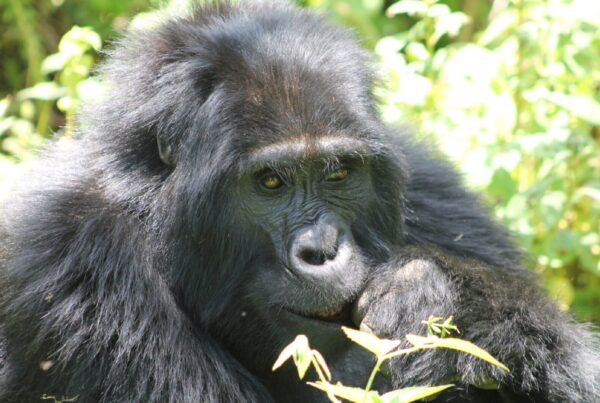
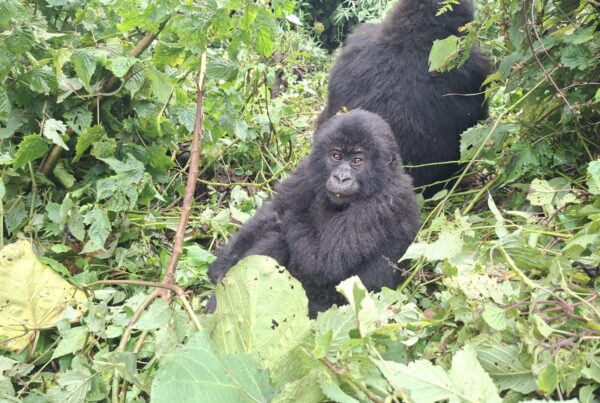
The habituation quality at Bwindi was the first specific praise. The reviewer noted that the habituated families they observed during the tourist trek were, in their assessment, exceptionally well habituated compared to some other gorilla tourism sites they had experience with. The gorillas showed no stress responses to the tourist group’s presence and continued natural behaviour throughout the hour without the displacement or altered feeding behaviour that can indicate inadequate habituation or oversized visitor groups. The ranger management during the encounter was also specifically praised: positioning, group control, and the handling of a brief display by the silverback were described as “textbook professional — the best I have seen from a tourist operation context.”
What the Biologist Noted for Improvement
The biologist’s constructive observations were specific. The pre-trek behavioural briefing given to visitors, they noted, could be richer — tourists who understand what specific behaviours to look for (display versus aggression, foraging patterns, age cohort identification) would have a deeper experience during their hour. The seven-metre rule enforcement was described as appropriate and consistent — good. The disease protocol (mask wearing, turning away symptomatic visitors) was assessed as meeting international standards for tourist-primate interaction. The overall assessment: the tourist gorilla trekking experience at Bwindi is managed to a standard that a field researcher would consider responsible, ethical, and appropriately protective of both animal welfare and visitor experience. Contact us to experience the experience that earned this assessment in 2027.
Frequently Asked Questions
Kibale Forest National Park, near Fort Portal, has the highest density of chimpanzees in Africa and is Uganda’s premier chimpanzee destination. The standard chimp trekking permit costs $300 FNR. The Chimpanzee Habituation Experience at Kibale ($400 FNR) gives 4 hours with a habituated community — Uganda’s only chimp habituation programme.
Yes — the gorilla + chimp combination is Uganda’s most popular primate itinerary. A typical 8-day route: Entebbe → Kibale Forest (2 nights, chimp trekking) → Queen Elizabeth National Park (2 nights, game drives) → Bwindi (2 nights, gorilla trekking) → Entebbe. Charter flights on any leg reduce travel time significantly.
Uganda has 13 primate species. Commonly seen: olive baboon, vervet monkey, red-tailed monkey, black-and-white colobus, L’Hoest’s monkey, grey-cheeked mangabey. Golden monkeys are found at Mgahinga. Kibale Forest has the highest primate diversity of any East African forest. A dedicated primate safari can tick 7–8 species in a single itinerary.
Uganda has over 1,060 recorded bird species — one of the highest counts of any country in Africa. Bwindi alone has 350+ species including 23 Albertine Rift endemics. Murchison Falls, Queen Elizabeth, and the wetlands around Entebbe round out a world-class birding circuit. The African green broadbill and Shelley’s crimsonwing are Bwindi specialities.
Uganda is home to the mountain gorilla (Gorilla beringei beringei), one of two subspecies of eastern gorilla. They live exclusively in the Virunga volcanic highlands (Uganda/Rwanda/DRC) and Bwindi Impenetrable Forest (Uganda only). Mountain gorillas are the only gorilla subspecies that cannot survive in captivity — every individual you can trek is a wild animal.