Emmanuel has been guiding gorilla trekking expeditions in Bwindi Impenetrable National Park since 2009. In 18 years, he has led more than 2,000 treks. His record of zero safety incidents is not luck — it is the result of deep forest knowledge, calm authority, and a philosophy of guiding that places client safety above all other considerations. This post introduces Emmanuel and explains why the quality of your guide is the single most important variable in a gorilla trekking experience.
How Emmanuel Became a Gorilla Guide
Emmanuel grew up in a village on the edge of Bwindi. As a child, the forest was part of daily life — his family farmed at its border, collected water from its streams, and lived alongside the wildlife that moved along its edge. When Uganda Wildlife Authority began recruiting local community members as ranger guides in the early 2000s, Emmanuel was one of the first from his village to apply.
He completed his initial ranger training in 2007 and began working as a junior guide under the supervision of senior trackers. By 2009 he was leading treks independently. He has since completed advanced guide training, wilderness first aid certification, and specialist gorilla behaviour courses run by the Dian Fossey Gorilla Fund and the Mountain Gorilla Veterinary Project. In 2025 he was named Uganda Guide of the Year by the Uganda Tourism Board — a recognition of 16 years of exceptional service to both clients and conservation.
What Makes Emmanuel Exceptional
Every guide can follow a trail and point at gorillas. What sets Emmanuel apart is the depth of his knowledge and the quality of his communication during a trek.
Emmanuel knows the individual gorillas in every habituated family in Bwindi by face, by name, and by personality. He knows which silverbacks are assertive and which are relaxed, which females have young infants, which juveniles are going through independence milestones. When he describes what the gorillas in front of you are doing, he is not reading from a script — he is narrating behaviour he has observed thousands of times and understands at a level that no amount of reading about gorillas can replicate.
He also manages groups with exceptional calm. Gorilla encounters can be emotionally overwhelming for trekkers — people cry, freeze, or instinctively move toward the gorillas in excitement. Emmanuel anticipates these reactions before they happen, positions clients correctly, and manages proximity to the gorilla family with quiet authority. He has never needed to raise his voice on a trek.
Safety: What Zero Incidents Actually Means
A gorilla incident is defined as any situation where a gorilla reacts defensively to human presence — a charge, a bluff charge, or aggressive vocalisation directed at the group. In 18 years and more than 2,000 treks, Emmanuel has never had a gorilla incident with a client group under his supervision. This is an extraordinary record.
Gorilla incidents are not frequent, but they do occur — typically when guides get too close, when clients make sudden movements or loud noises, or when a group has not been properly briefed on gorilla behaviour protocols. Emmanuel’s incident-free record reflects his ability to read gorilla body language in real time, position his group correctly relative to the gorillas, and intervene quietly before any situation escalates.
It also reflects the thoroughness of his pre-trek briefings. Emmanuel’s briefings cover gorilla behaviour, proximity rules, photography guidelines, and what to do if a gorilla approaches. His briefings are longer than the minimum required by UWA because he believes a well-briefed group behaves better in the forest — and his record confirms it.
Emmanuel and Conservation
Emmanuel is a conservation advocate as well as a guide. He works with local schools to educate community children about mountain gorilla ecology and the importance of Bwindi to Uganda’s biodiversity. He participates in community benefit programmes that channel tourism revenue into local infrastructure, and he mentors junior guides coming through the UWA training programme.
His view of tourism is grounded: “When clients come and spend money, that money builds schools and pays rangers. The gorillas are protected because they are valuable — not just to Uganda, but to the world. Our job as guides is to make sure every visitor leaves with a deep enough connection to these animals that they become advocates for protecting them.”
Trek With Emmanuel in 2027
If you want to experience gorilla trekking guided by one of Uganda’s most experienced and celebrated guides, contact us for your 2027 trek. We cannot guarantee Emmanuel will be your guide on every trek — he leads multiple departures each week — but we will do our best to match you with him when availability allows. His record speaks for itself.
Frequently Asked Questions
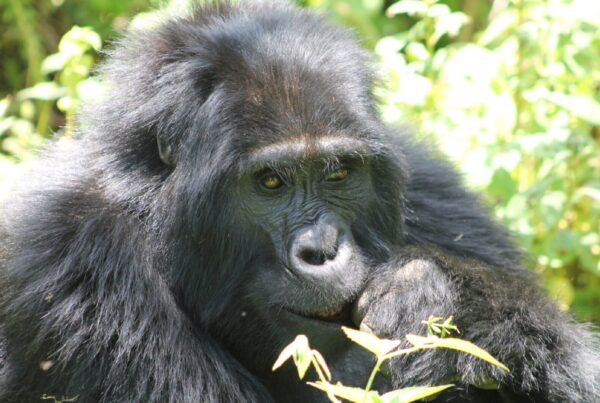
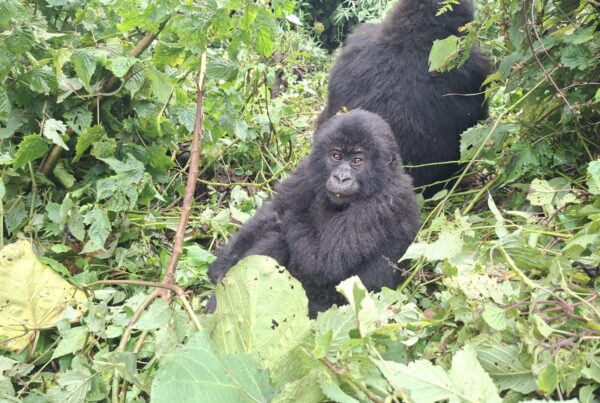
Uganda is home to the mountain gorilla (Gorilla beringei beringei), one of two subspecies of eastern gorilla. They live exclusively in the Virunga volcanic highlands (Uganda/Rwanda/DRC) and Bwindi Impenetrable Forest (Uganda only). Mountain gorillas are the only gorilla subspecies that cannot survive in captivity — every individual you can trek is a wild animal.
The standard gorilla trekking permit gives you exactly 1 hour with the gorilla family. This time begins when you make first contact with the family — the ranger signals the start. The Gorilla Habituation Experience gives 4 hours with a semi-wild family. The walk to find the gorillas can take 30 minutes to 5 hours depending on where the family has moved.
Stay calm, crouch down slowly, avoid direct eye contact, and remain quiet. Do not run — running triggers a chase response. Rangers accompanying your group manage close approaches. Habituated gorillas are accustomed to humans and almost never make contact, but a charging silverback is managed by staying still and following ranger instructions immediately.
A maximum of 8 visitors per habituated gorilla family per day for standard trekking. The Gorilla Habituation Experience has a maximum of 4 visitors per family per day. These limits are set by UWA to minimise stress on the gorilla families and maintain the quality of the experience.
Uganda is home to the mountain gorilla (Gorilla beringei beringei), one of two subspecies of eastern gorilla. They live exclusively in the Virunga volcanic highlands (Uganda/Rwanda/DRC) and Bwindi Impenetrable Forest (Uganda only). Mountain gorillas are the only gorilla subspecies that cannot survive in captivity — every individual you can trek is a wild animal.