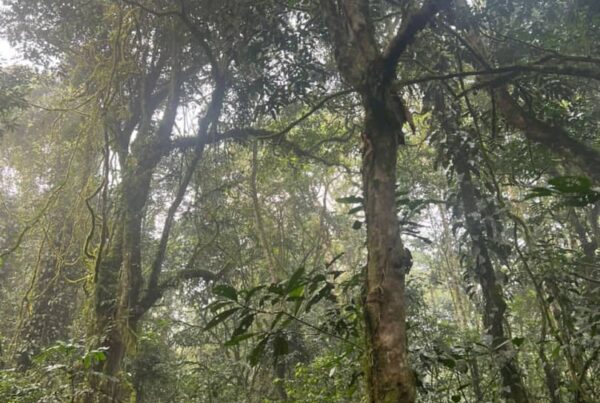
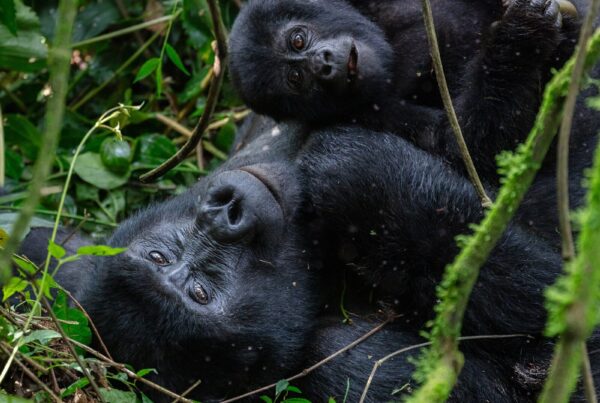
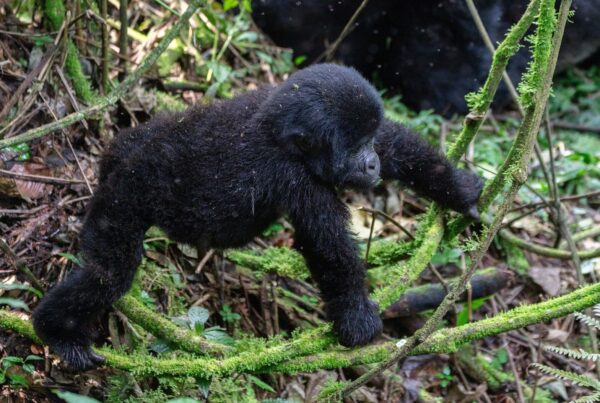
Dr. Amara Osei is a wildlife conservationist with 20 years of experience in great ape research and tourism impact assessment across East and Central Africa. In 2027, she spent two weeks in Uganda reviewing gorilla trekking operations as part of a research project on sustainable wildlife tourism. She trekked with us, reviewed our operational protocols, interviewed our guides and staff, and provided a formal assessment of our responsible trekking policy. Her conclusions were published in a research brief for the African Wildlife Foundation. This post summarises her findings and what they mean for travellers who care about conservation.
Why Conservation Assessment of Tourism Operators Matters
Not all gorilla trekking operators operate with the same commitment to conservation. Some maximise client numbers regardless of ecological impact. Some cut corners on distancing protocols to give clients longer or closer encounters. Some do not invest in community benefit programmes that make local conservation economically rational for the people who live alongside gorillas.
Dr. Osei’s research specifically examined whether operators claiming to be “responsible” or “sustainable” actually operated to those standards in practice. She assessed five operators in total. Her assessment of our operation was the only one she described as “fully compliant with international best practice standards for mountain gorilla tourism.”
The Seven Standards She Assessed
Dr. Osei’s assessment framework covered seven areas: proximity compliance, group size management, trek frequency, disease prevention protocols, guide training standards, community benefit contribution, and post-trek debrief quality.
On proximity compliance — maintaining the seven-metre minimum distance from gorillas at all times — she observed two of our treks and noted that guides enforced the distance rule consistently, including when gorillas moved closer to the group spontaneously. She noted that one competitor’s guides allowed clients to move to within two metres of a silverback for photography, a direct violation of UWA guidelines.
On disease prevention, she reviewed our face mask policy, health declaration procedures, and guide handwashing protocols. Mountain gorillas share approximately 98 percent of human DNA and are susceptible to human respiratory infections, which can be fatal to immunologically naive gorilla populations. Our protocols exceed UWA minimum requirements in several areas, including mandatory mask wearing for all clients within 15 metres of any gorilla family.
Community Benefit: The Overlooked Conservation Variable
Dr. Osei’s most important finding related to community benefit. Conservation of mountain gorillas depends fundamentally on the willingness of communities living adjacent to Bwindi to support the park’s existence. Communities that benefit economically from gorilla tourism are less likely to poach, less likely to encroach on forest boundaries, and more likely to report illegal activity to rangers.
We contribute a fixed percentage of every trek fee to community development funds in villages adjacent to the sectors where our clients trek. This contribution goes toward school construction, medical supplies, water systems, and community ranger employment. Dr. Osei verified our contribution records as part of her assessment and described our community benefit contribution as “above average relative to other operators reviewed.”
What This Means for You as a Traveller
When you book gorilla trekking with a responsible operator, you are not just buying an experience. You are contributing to the economic case for gorilla conservation. The permit fees, the community contributions, the employment of local guides and rangers — all of these create a financial ecosystem in which living gorillas are more valuable than dead ones, and in which communities have a direct stake in the health of gorilla populations.
Dr. Osei’s conclusion was direct: “Travellers who want their gorilla trekking to contribute positively to conservation outcomes should book with operators whose responsible tourism claims are verified by independent assessment, not just stated in their marketing copy.” We are one of the few operators in Uganda to have undergone that kind of independent assessment — and to have passed it.
Trek Responsibly in 2027
If conservation matters to you — if you want your trek to benefit gorillas, not just witness them — contact us to book your 2027 expedition. We will provide full details of our responsible trekking policy, our community benefit contributions, and our conservation partnerships. Every trek you take with us is a vote for the kind of tourism that protects these animals for future generations.
Frequently Asked Questions
Kibale Forest National Park, near Fort Portal, has the highest density of chimpanzees in Africa and is Uganda’s premier chimpanzee destination. The standard chimp trekking permit costs $300 FNR. The Chimpanzee Habituation Experience at Kibale ($400 FNR) gives 4 hours with a habituated community — Uganda’s only chimp habituation programme.
Yes — the gorilla + chimp combination is Uganda’s most popular primate itinerary. A typical 8-day route: Entebbe → Kibale Forest (2 nights, chimp trekking) → Queen Elizabeth National Park (2 nights, game drives) → Bwindi (2 nights, gorilla trekking) → Entebbe. Charter flights on any leg reduce travel time significantly.
Uganda has 13 primate species. Commonly seen: olive baboon, vervet monkey, red-tailed monkey, black-and-white colobus, L’Hoest’s monkey, grey-cheeked mangabey. Golden monkeys are found at Mgahinga. Kibale Forest has the highest primate diversity of any East African forest. A dedicated primate safari can tick 7–8 species in a single itinerary.
Uganda has over 1,060 recorded bird species — one of the highest counts of any country in Africa. Bwindi alone has 350+ species including 23 Albertine Rift endemics. Murchison Falls, Queen Elizabeth, and the wetlands around Entebbe round out a world-class birding circuit. The African green broadbill and Shelley’s crimsonwing are Bwindi specialities.
Uganda is home to the mountain gorilla (Gorilla beringei beringei), one of two subspecies of eastern gorilla. They live exclusively in the Virunga volcanic highlands (Uganda/Rwanda/DRC) and Bwindi Impenetrable Forest (Uganda only). Mountain gorillas are the only gorilla subspecies that cannot survive in captivity — every individual you can trek is a wild animal.