Updated
Uganda gorilla trekking emotional experience Bwindi is one of Africa’s most extraordinary wildlife experiences, connecting travellers with mountain gorillas in their natural forest habitat. My husband cried during the gorilla trek, and he never cries. In twenty-two years of marriage, I had seen him tear up twice — once at his father’s funeral and once at the end of a film about a dog. He is not a man who cries easily, or at all. But standing in Bwindi Impenetrable Forest with a female mountain gorilla sitting three metres away, holding her infant with a tenderness that was simply impossible to look at without feeling something profound, he cried. And the story of why tells you everything about what gorilla trekking in Uganda actually is.
My Husband Cried During the Gorilla Trek and He Never Cries
How We Came to Be in Uganda
It was my idea. James — my husband — was enthusiastic in the polite way he is enthusiastic about ideas that he thinks are unlikely to happen. “Yes, let’s do Uganda,” he said over dinner, in the same tone he might say “yes, let’s renovate the kitchen.” Meaning: nice idea, won’t actually occur.
But I booked it. I found Uganda Gorilla Trekking online, read everything available, called them with a list of questions that took twenty minutes to get through, and came away satisfied that the trip was manageable, worth the cost, and likely to be safe for two people in their mid-fifties with moderate fitness and strong opinions about comfortable beds.
When the departure date arrived and I was packing, James looked at the boots I had bought him and said: “We’re really doing this.” Yes, I confirmed. We really were.
Uganda Before the Trek
We spent four days in Uganda before the gorilla trek — two in Kampala and two at Lake Mburo National Park. James fell in love with Uganda in Kampala. The food, the noise, the friendliness of everyone we encountered, the boda-boda drivers navigating traffic with what looked like pure instinct. By the time we drove south toward Bwindi, he had stopped being politely enthusiastic and had become genuinely excited.
The drive to Bwindi takes eight hours from Kampala. Our driver, Godfrey, made it feel like a journey rather than a transfer — pointing out landmarks, stopping at a tea cooperative for a tour we had not expected and thoroughly enjoyed, and explaining the landscape as it changed from the flat banana-plantation country around Kampala to the cool, high forest of the southwest.
The Morning of the Trek
Briefing at seven thirty. Our ranger, a woman named Christine who had been guiding gorilla treks for twelve years, delivered the instructions with confidence and answered James’s three questions (What happens if the silverback charges? How close do we actually get? What is the terrain like?) without impatience.
We were assigned to the Nshongi family, currently located about two hours’ walk from the trailhead. We hired porters — both of us, without debate. This turned out to be one of the better decisions we made all week.
Two Hours Through the Forest
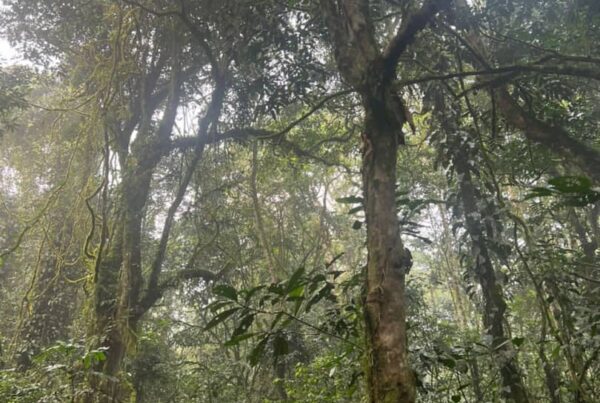
The first hour of the walk was difficult but manageable. The second hour was difficult. The terrain climbs and then drops, climbs again, and the vegetation — true impenetrable forest — does not care about human comfort. By the time Christine raised her hand, signalling that the family was nearby, both James and I were breathing heavily and the back of my shirt was thoroughly wet.
The Sound Before the Sight
We heard the gorillas before we saw them. A low rumbling — not threatening, more like the ambient sound of something large and alive going about its business. Then movement in the undergrowth to our left, and Christine said quietly: “The family is feeding. We move slowly.”
The Nshongi Family
The Nshongi family is one of the larger habituated groups in Bwindi — over twenty animals, spread through a clearing and the surrounding vegetation. We entered the perimeter of the group carefully, following Christine’s positioning, and found ourselves standing in a scene that took several seconds to fully process.
Everywhere You Looked
Gorillas in every direction — some eating, some resting, some moving slowly through the undergrowth. A juvenile was doing something that could only be described as showing off, climbing and descending the same tree repeatedly with increasing drama. Two adolescent males were engaged in a shoving match that resolved in about four seconds. The silverback, Nshongi himself, was visible at the far edge of the clearing — vast, silver-backed, currently lying on his side and eating.
The Moment That Made My Husband Cry
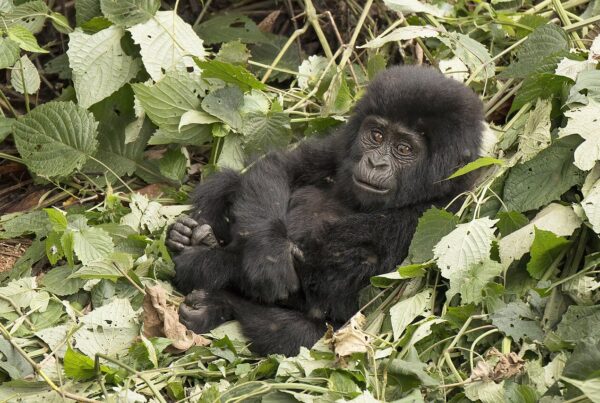
We had been in the presence of the family for about thirty minutes when Christine guided us to a position where we could see a female with a very young infant more clearly. The infant was tiny — Christine estimated about three months old — and was clinging to its mother’s chest while the mother moved slowly through the vegetation, pausing occasionally to eat.
The female settled perhaps three metres from where James was standing. She turned so that we could see the infant more clearly. The baby gorilla’s face was old and new at the same time — ancient in its features, completely new in its smallness and its dependence and the way it gripped its mother’s fur with a grip that was simultaneously fierce and trusting.
The mother looked at James. Not threateningly — with the same mild, assessing calm that habituated gorillas seem to extend to human visitors. James looked back. He told me later he was thinking about our own children when they were infants — the same grip, the same total dependence, the same quality of being utterly and wordlessly trusted by something that has no other option but to trust you.
I noticed the tears when he reached up to wipe his face. He was not making a sound. He was just crying, with the quiet efficiency of someone who has not done this in a long time and has forgotten how.
He Will Not Discuss It Much
James is not particularly interested in analysing the moment. When I have asked him to explain it, he says something practical: “The animals are just very real. And very close. It gets to you.”
I think the explanation is slightly more than that, but I have learned not to push. What I know is that he has talked about the Nshongi family more than he has talked about almost anything we have done together in twenty-two years. He has recommended Uganda gorilla trekking to four different people since we returned. He is researching flights for a return trip.
What You Should Know Before You Go
The Physical Reality
Gorilla trekking in Bwindi is physically demanding. The terrain is steep and wet. The forest is genuinely impenetrable in places. Hire a porter. Bring good boots. Start walking before you arrive if you have not been active recently. All of this is very worth it.
The Emotional Reality
People cry at gorilla treks. This is not unusual. It happens to all kinds of people — people who do not expect it, people who consider themselves unsentimental, people who have been on many wildlife trips and assumed they were past being surprised. Something about the proximity, the intelligence, the rarity of these animals gets through whatever defences people have constructed.
The Cost
Gorilla permits are $800 per person. This money contributes directly to gorilla conservation. For what you get in return — not just the experience, but the knowledge that your visit has contributed to the continued existence of the species — it is worth every dollar.
A Final Note
My husband cried during the gorilla trek, and he never cries. That is the most honest recommendation I can give you. If Bwindi Forest and the Nshongi family can do that to a man who has not cried in eight years, they can probably do something for you too.
Contact Uganda Gorilla Trekking to check permit availability and plan your visit. Some experiences are worth travelling a very long way for. This is one of them.