Mountain Gorillas Don’t Read Headlines — And Neither Should You
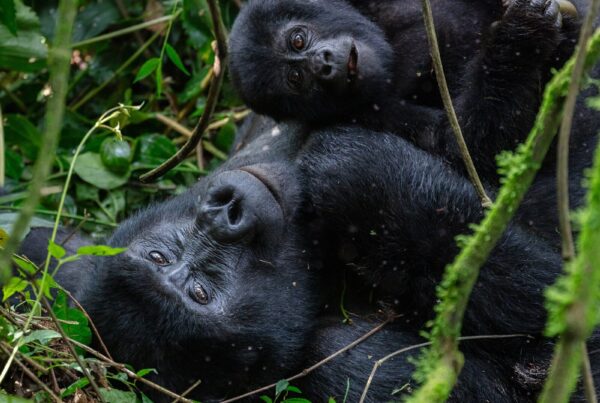
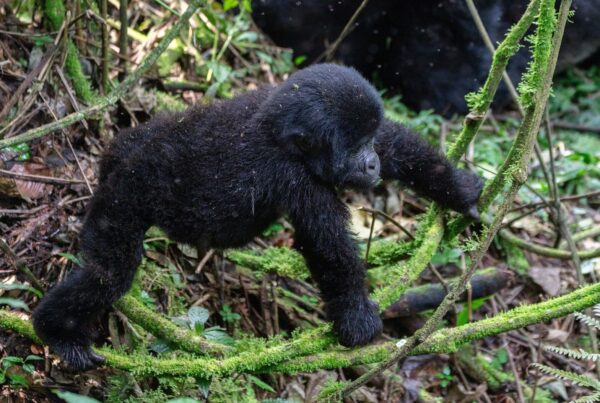
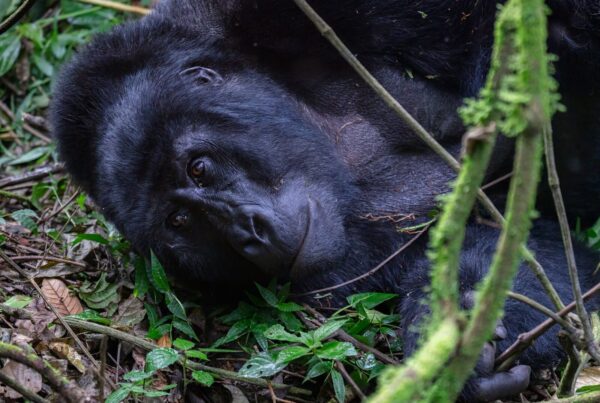
Every morning in Bwindi Impenetrable Forest, as it has been every morning for thousands of years, the mountain gorillas wake in their night nests, stretch, and begin their day. They have no awareness of what is being written about Uganda in international newspapers. They do not know that booking enquiries at nearby lodges have dropped. They are entirely indifferent to the anxiety cycle that runs from headline to social media to cancelled flights. They are doing what they have always done: feeding on wild celery and bamboo shoots, grooming each other, playing, resting, and raising their young in one of Africa’s most extraordinary forests. This morning, as you read this, somewhere in Bwindi, a silverback is sitting in the undergrowth watching his family. The forest does not care about the news cycle. Neither should you.
The News Cycle and the Travel Decision
Modern news operates on a logic that is deeply misaligned with travel decision-making. News requires novelty, urgency, and a degree of alarm to generate engagement. A story headlined “Uganda health situation contained in specific region, gorilla trekking unaffected” does not perform as well algorithmically as one headlined “Ebola in Uganda.” Both might be technically accurate. Only one of them tells you what you actually need to know to make a good travel decision. The gap between the headline and the reality is where good travel decisions get destroyed and bad ones get made.
The travellers who consistently have the best experiences are not those who react to headlines. They are those who read the small print — who check which region, who look at the map, who contact their operator, who read the actual advisory rather than the article about the advisory. These are the travellers who show up in Bwindi when others have cancelled, and they consistently describe those moments as among the greatest of their travelling lives.
What Has Not Changed About Bwindi
The forest is 25,000 years old. It survived the last ice age. It has outlasted every political conflict, every regional health crisis, every economic downturn that has swept through East Africa in the past century. The mountain gorillas of Bwindi have survived poaching, habitat loss, civil conflict, and pandemic. The population is larger today than at any point in recorded history. The habituated gorilla families that visitors trek to see have been observed and managed by researchers and rangers for decades. Their personalities are known. Their family histories are documented. Their health is monitored daily. None of that has changed.
The rangers who lead gorilla treks are the same rangers who were there last month and will be there next month. The trail conditions vary with the season, as they always do. The birds in the canopy are as numerous and spectacular as they have ever been. The Batwa guides who share their forest knowledge are still available. The community lodges still serve extraordinary food against views of valleys rolling toward the Virunga volcanoes. All of it is exactly as it was. The only thing that has changed is the number of people arriving to experience it.
The Gorilla Families Are Having Their Best Season in Years
Reduced visitor numbers have a measurable effect on gorilla behaviour. The habituated families are accustomed to their daily one-hour visitor window, but when overall visitor numbers drop, the total human presence in the forest decreases. Rangers who work with the gorilla families report that reduced visitor traffic correlates with more relaxed, natural behaviour during the visits that do occur. The silverbacks are less alert to the sounds of approaching groups. The mothers with infants are more settled. The juveniles engage in extended play sessions rather than watching warily. If you are visiting Bwindi in the current period, you may be seeing gorilla behaviour that is more natural and less influenced by the awareness of human presence than during peak season. That is not a small thing for a wildlife experience.
The Decision Is Yours, But Make It on Facts
This article is not telling you that there are zero considerations when planning a Uganda trip right now. It is telling you that the considerations need to be grounded in geographical and epidemiological reality rather than headline anxiety. Check the specific situation in the gorilla trekking region of southwestern Uganda. Read the actual travel advisory for that area. Call your operator and ask what they are seeing on the ground. Talk to recent visitors if you can find them. Look at a map and understand the distances involved. Do the work that good travel decisions require. And then, if the facts support it — and right now they do — trust those facts over the headline. The mountain gorillas don’t read the news. Make your decisions the same way they live their lives: based on what is actually in front of you, not what someone else decided was worth reporting.
Frequently Asked Questions
Uganda is home to the mountain gorilla (Gorilla beringei beringei), one of two subspecies of eastern gorilla. They live exclusively in the Virunga volcanic highlands (Uganda/Rwanda/DRC) and Bwindi Impenetrable Forest (Uganda only). Mountain gorillas are the only gorilla subspecies that cannot survive in captivity — every individual you can trek is a wild animal.
The standard gorilla trekking permit gives you exactly 1 hour with the gorilla family. This time begins when you make first contact with the family — the ranger signals the start. The Gorilla Habituation Experience gives 4 hours with a semi-wild family. The walk to find the gorillas can take 30 minutes to 5 hours depending on where the family has moved.
Stay calm, crouch down slowly, avoid direct eye contact, and remain quiet. Do not run — running triggers a chase response. Rangers accompanying your group manage close approaches. Habituated gorillas are accustomed to humans and almost never make contact, but a charging silverback is managed by staying still and following ranger instructions immediately.
A maximum of 8 visitors per habituated gorilla family per day for standard trekking. The Gorilla Habituation Experience has a maximum of 4 visitors per family per day. These limits are set by UWA to minimise stress on the gorilla families and maintain the quality of the experience.
Uganda is home to the mountain gorilla (Gorilla beringei beringei), one of two subspecies of eastern gorilla. They live exclusively in the Virunga volcanic highlands (Uganda/Rwanda/DRC) and Bwindi Impenetrable Forest (Uganda only). Mountain gorillas are the only gorilla subspecies that cannot survive in captivity — every individual you can trek is a wild animal.