Updated
mountain gorilla altitude 4000 metres cold climate Bwindi is a subject central to Uganda’s wildlife tourism, where mountain gorilla conservation and responsible visitor experiences go hand in hand. Mountain gorillas can live at altitudes up to 4,000 metres above sea level, which is colder, wetter, and more demanding than most people imagine when they picture gorillas in “jungle.” The mental image of gorillas in tropical forest — warm, humid, lush — is accurate for some gorilla populations but not for mountain gorillas, who have evolved specifically for high-altitude montane environments that can be cold, misty, and dramatically different from the lowland rainforest that most people associate with great apes. Understanding the altitude at which mountain gorillas live illuminates why they are unique among the gorilla species, why Bwindi and the Virungas are their only possible habitats, and why climate change represents a specific and serious threat to their future.
Mountain Gorillas Can Live at 4000 Metres Altitude: Colder Than You Think
The Altitude Range of Mountain Gorillas
Mountain gorillas (Gorilla beringei beringei) live at elevations between approximately 1,000 and 4,000 metres above sea level. In Bwindi Impenetrable National Park, the park itself spans elevations from 1,160 to 2,607 metres. In the Virunga massif — the other mountain gorilla habitat, across Uganda, Rwanda, and the DRC — the volcanoes reach over 4,500 metres, though gorillas do not typically range to the very highest elevations.
For comparison: Machu Picchu in Peru sits at approximately 2,400 metres. The base camp of Mount Everest is at 5,364 metres. Mountain gorilla habitat sits in the middle of this range — higher than most people’s daily experience of altitude, lower than the extreme high altitudes of the world’s biggest peaks, and characterised by the cool, moist, misty climate that the name “mountain” implies.
What 4,000 Metres Feels Like
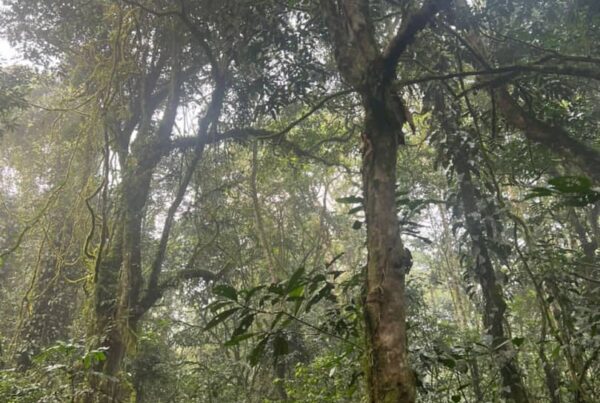
At 4,000 metres, temperatures regularly drop below 10 degrees Celsius at night, mist and rain are frequent, and the vegetation is alpine rather than tropical. Visitors who arrive at Bwindi prepared for hot jungle conditions are consistently surprised by how cool and wet the forest can be, particularly at higher elevations and in the evening. Layers are necessary. Rain gear is essential. The standard tourist idea of “African wildlife experience” — hot savannah, dry air, flat horizon — is completely inapplicable.
How Mountain Gorillas Are Adapted to Altitude
Mountain gorillas have evolved specific adaptations for cold, high-altitude life that distinguish them from their lowland cousins.
Coat Thickness
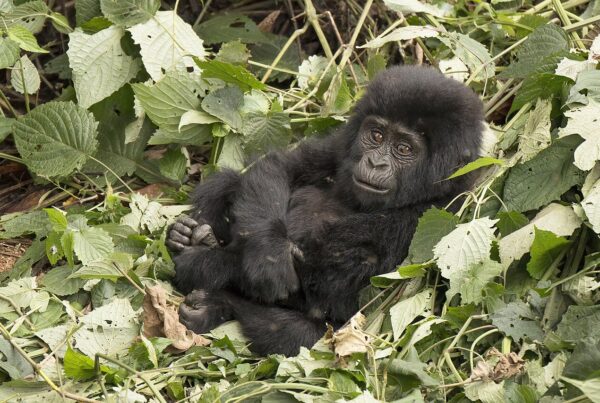
Mountain gorillas have longer, denser fur than western lowland gorillas — an adaptation for insulation against the cold of their high-altitude habitat. The coat is also darker, which may help with heat absorption from sunlight. Young mountain gorillas are sometimes seen sunbathing in open areas in the morning before the mist closes in — a behavioural thermoregulation strategy that makes sense in cold conditions.
Larger Body Size
Mountain gorillas are the largest of the gorilla subspecies, with silverbacks regularly reaching 200 kilograms or more. Larger body mass relative to surface area is an adaptation for cold environments (Bergmann’s Rule) — the same principle that explains why polar bears are larger than their more temperate relatives, and why mountain-dwelling mammals tend to be larger than their lowland counterparts. The size is both a consequence of the cold environment and an adaptation to it.
Diet Adapted to Altitude
The plant communities at different altitudes within Bwindi differ significantly, and mountain gorillas’ diet reflects this. At higher elevations, where bamboo and certain highland vegetation species dominate, gorilla diet shifts accordingly. Bamboo shoots, when available in season, are a high-priority food source and can make up a large proportion of the diet for the families that range in bamboo zones.
The Virunga Volcanoes: The Highest Gorilla Habitat
The Virunga massif contains eight volcanoes, six of which are dormant and two of which are currently active. Mountain gorilla families in the Virungas range across the slopes of these volcanoes, navigating lava fields, bamboo zones, and subalpine heath as they move through their territories. The combination of active volcanism and gorilla conservation is unusual in global wildlife terms — the gorillas of the Virungas have adapted to an environment that is geologically unstable in addition to ecologically demanding.
The highest gorilla nesting records from the Virungas are above 3,800 metres — approximately the elevation of the Cairngorms in Scotland, or considerably higher than any point in the Alps accessible without mountaineering equipment. These are not tropical animals in any conventional sense.
Climate Change and Altitude-Dependent Species
Species that live at high altitude and are adapted to cool, moist conditions face a specific climate change risk: as temperatures rise, the environmental conditions they depend on shift upward in elevation. For species whose range already extends to the maximum elevation available in their habitat — as is the case with mountain gorillas in the Virungas, where the volcanic summits represent the ceiling — there is no “move higher” option when conditions at their current range become warmer or drier.
Climate modelling for Bwindi and the Virungas suggests that significant areas of current gorilla habitat will become climatically less suitable over the next fifty years under most emissions scenarios. This adds urgency to the conservation work already ongoing — not only protecting the forests from direct human pressure but managing the broader environmental conditions that sustain them.
What This Means for Trekking Visitors
Visitors to Bwindi should come prepared for mountain weather. The temperature at Buhoma (1,500 metres) can feel tropical in the midday sun and cold enough for a jacket by evening. At higher elevations in the park, conditions can be genuinely cold and wet at any time of year. The trek itself generates body heat, but the waiting and observation period — the hour with the gorillas — can involve standing still in shade, which changes the thermal equation considerably.
Practical packing advice: light waterproof jacket, thin thermal layer, quick-dry trousers, waterproof hiking boots. The altitude means sun protection is important on clear days. The frequent mist and rain mean that anything you want to stay dry — cameras, field guides, snacks — needs to be in sealed bags or waterproof packs.
The gorillas, of course, are entirely comfortable. They have been living at this altitude for millions of years.
Planning Your Visit
Uganda gorilla trekking permits are $800 per person. Contact Uganda Gorilla Trekking to book your permit and get practical advice about what to pack for the altitude and climate of Bwindi. The forest is worth every layer you bring.
Frequently Asked Questions
The two dry seasons offer the easiest trekking: June to September (the main peak) and December to February. Trails are firmer, rain gear is less critical, and visibility in the forest is better. April, May, and November are wet but beautiful — lush, green, fewer visitors, and UWA offers discounted permits ($600 FNR) during these months.
Rain makes forest trails muddy and the ascent/descent more physical, but gorilla trekking is not cancelled due to rain. Gorillas are present year-round — in fact, wet season gorillas are often less mobile and stay lower in the forest, which can make sightings easier. Waterproof hiking boots and a rain jacket are essential regardless of season.
Bwindi sits at 1,600–2,600m altitude, giving it a cool, mist-shrouded climate year-round. Daytime temperatures during the trek: 15°C–22°C. Evening temperatures at the lodges: 8°C–14°C. It can feel cold after dark, especially at Ruhija sector (2,300m+). Pack warm layers for evenings regardless of season.
No. Bwindi’s altitude keeps temperatures comfortably cool year-round. The forest canopy provides shade throughout the trek. Heat and dehydration are not typical concerns — carrying sufficient water (1.5–2 litres) matters more for hydration than temperature management.
Uganda is home to the mountain gorilla (Gorilla beringei beringei), one of two subspecies of eastern gorilla. They live exclusively in the Virunga volcanic highlands (Uganda/Rwanda/DRC) and Bwindi Impenetrable Forest (Uganda only). Mountain gorillas are the only gorilla subspecies that cannot survive in captivity — every individual you can trek is a wild animal.