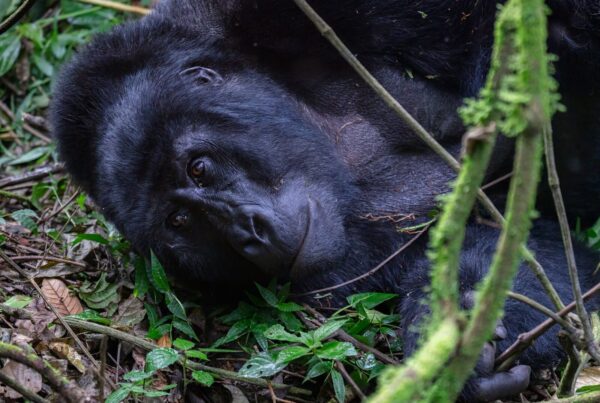
I want to be careful about how I frame this. Gorilla trekking in Uganda did not cure my depression. Depression is a medical condition and it requires appropriate medical treatment. What I can say honestly is that the trip to Uganda — the specific experience of walking in Bwindi Forest and spending an hour with a mountain gorilla family — contributed to a shift in my relationship with my depression that I had not been able to produce by other means at the time. This is an honest account of what happened.
Where I Was Before
I had been managing depression for three years. I was medicated and in therapy, both of which helped. I was functional. What I was struggling with was something my therapist described as anhedonia — the inability to experience pleasure or meaning from activities that previously produced them. The treatment was working at the level of the worst symptoms. It was not, at the time, restoring the quality of engagement with life that I had before the depression began.
My therapist suggested that doing something significantly outside my comfort zone — not reckless, but genuinely unfamiliar — might help break the pattern of low engagement. My psychiatrist cleared the travel from a medication and logistics perspective. I researched options that met the “significantly outside my comfort zone” criterion and landed on gorilla trekking in Uganda. I had no particular relationship with Africa or wildlife. That was part of the point.
The Journey to Bwindi
I flew into Entebbe and transferred by charter to Kisoro airstrip, then drove to a lodge near Rushaga sector. I had booked everything through a licensed Uganda Tourism Board operator who handled the permit ($800 USD per person, the standard price for international visitors), the accommodation, and the transfers. The practical organisation was entirely handled for me, which was important — my capacity for complex planning was limited at the time and having a single point of contact for all logistics removed a significant barrier to going.
The lodge was at altitude, on a hillside overlooking valleys of tea estates and forest. The first evening I sat outside and watched the light change over the hills for two hours without doing anything else. I had not been able to do nothing for two hours without restlessness for a very long time. The environment was doing something I could not yet articulate.
Trek Day
I was assigned to the Nshongi group, one of the largest habituated families in Rushaga. The trek was three and a half hours. The physical effort was significant — my depression had reduced my exercise and my fitness was below what it had been, and the forest terrain at altitude is demanding. But the effort was the right kind of demanding. It was concrete, goal-oriented, and produced a physical tiredness that felt different from the exhausted nothing of depressive inertia. I was tired because I had done something, not tired because existing required too much.
When we found the Nshongi group, there were approximately twenty-five gorillas visible in a clearing. The silverback was the largest animal I have ever been in the physical presence of. The guide positioned us quietly and we crouched. The family continued their morning feeding around us as if we were not there.
What Happened in the Hour
I am going to try to describe this precisely because I think precision matters here. The gorillas were doing what gorillas do — feeding, moving, interacting with each other. Nothing was happening for my benefit. No performance, no response to our presence, no moment engineered for emotional impact. And in that absence of performance, something in me that had been closed for three years opened.
I felt interested. Genuinely, simply, uncomplicated interested in what was happening in front of me. The mother nursing her infant. The juvenile who kept climbing a tree and falling out and climbing it again. The way the silverback moved through the family group with an authority that required no enforcement. I was interested in these things in a way I had not been interested in anything for a long time. The anhedonia — the grey film over experience — was not present. For sixty minutes it was simply gone.
After the Encounter
The grey film came back. I want to be honest about this. The depression did not lift with the gorilla encounter. What changed was that I had evidence — concrete, remembered, real evidence — that the capacity for genuine interest and engagement was still present in me. It had not been destroyed. It had been suppressed, and there was at least one set of conditions under which it was not.
I discussed this with my therapist when I returned. She was not surprised. She had a framework for it that I found useful. The trip became a reference point in my recovery — not the turning point, but a data point that informed the direction I was moving. Two years later, with continued treatment and some significant life changes, I am substantially better. The gorilla family in Rushaga is a specific memory in the story of how I got here.
To Anyone Reading This in a Similar Place
Get appropriate medical support. It matters and it works. And if a part of you is looking for something that is sufficiently unlike your current life to interrupt its patterns — consider Bwindi. The permit is $800. The forest is ancient. The gorillas are completely indifferent to your mental health diagnosis. That indifference, combined with their presence, is more useful than it sounds.
Frequently Asked Questions
Uganda is home to the mountain gorilla (Gorilla beringei beringei), one of two subspecies of eastern gorilla. They live exclusively in the Virunga volcanic highlands (Uganda/Rwanda/DRC) and Bwindi Impenetrable Forest (Uganda only). Mountain gorillas are the only gorilla subspecies that cannot survive in captivity — every individual you can trek is a wild animal.
The standard gorilla trekking permit gives you exactly 1 hour with the gorilla family. This time begins when you make first contact with the family — the ranger signals the start. The Gorilla Habituation Experience gives 4 hours with a semi-wild family. The walk to find the gorillas can take 30 minutes to 5 hours depending on where the family has moved.
Stay calm, crouch down slowly, avoid direct eye contact, and remain quiet. Do not run — running triggers a chase response. Rangers accompanying your group manage close approaches. Habituated gorillas are accustomed to humans and almost never make contact, but a charging silverback is managed by staying still and following ranger instructions immediately.
A maximum of 8 visitors per habituated gorilla family per day for standard trekking. The Gorilla Habituation Experience has a maximum of 4 visitors per family per day. These limits are set by UWA to minimise stress on the gorilla families and maintain the quality of the experience.
Uganda is home to the mountain gorilla (Gorilla beringei beringei), one of two subspecies of eastern gorilla. They live exclusively in the Virunga volcanic highlands (Uganda/Rwanda/DRC) and Bwindi Impenetrable Forest (Uganda only). Mountain gorillas are the only gorilla subspecies that cannot survive in captivity — every individual you can trek is a wild animal.