Updated
gorilla trekking Uganda personal transformation essay is one of Africa’s most extraordinary wildlife experiences, connecting travellers with mountain gorillas in their natural forest habitat. I have been in therapy, on and off, for most of my adult life. I believe in it. It has given me frameworks for understanding my behaviour and tools for changing it. What it could not give me — and what a day in Bwindi Forest gave me in a way that has not left — is the visceral, physical, undeniable sense of my own smallness. Not smallness in a diminishing sense. Smallness in the sense of being one small living thing in a very large living world, and finding that this fact is, when you actually feel it rather than merely know it, profoundly relieving.
What the Forest Taught Me That Therapy Could Not: A Personal Essay
What Therapy Gives and What It Cannot
I want to be clear that I am not arguing against therapy. I am arguing for a supplement to it — specifically the supplement of going somewhere so completely outside your ordinary environment that your ordinary psychological patterns have nothing to grip onto. Therapy works by engaging your mind with its own contents. It requires the very capacity for self-examination that is often compromised when you most need it. The forest does not ask your mind to examine itself. It asks your body to move through it and your senses to respond to it. These are different kinds of work and they produce different results.
Arriving at Bwindi
The gorilla trekking permit costs $800 USD per person. I want to include this detail because the piece I read that inspired me to go described the experience at length and mentioned the price only as an afterthought. It is not an afterthought. $800 is the foundation of the whole enterprise and it is a real amount of money. I saved for it specifically, over eight months. The specificity of saving for something you want is itself a form of purposefulness — I noticed that in the saving period my relationship to the future improved.
I flew into Entebbe and chartered to Kihihi airstrip. From the air, Uganda looked like a biology textbook illustration of what dense, complex, ancient forest should look like. The Bwindi from above is an unbroken green that extends further than the eye can separate from sky. My operator’s driver met me at the airstrip. We drove through highlands and forest for an hour to the lodge at Buhoma. The drive alone was worth the ticket.
The Morning Walk
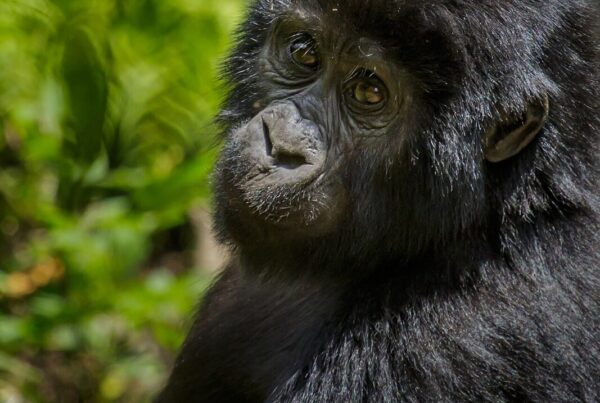
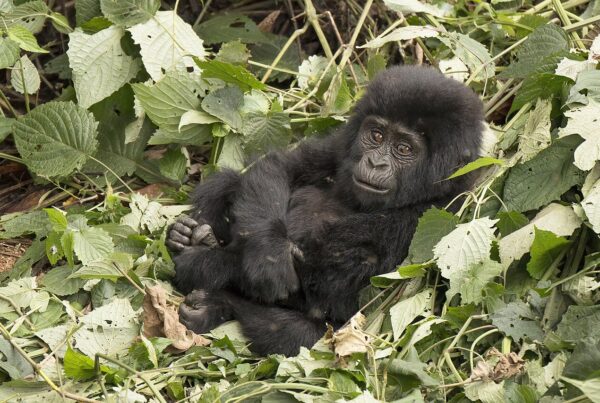
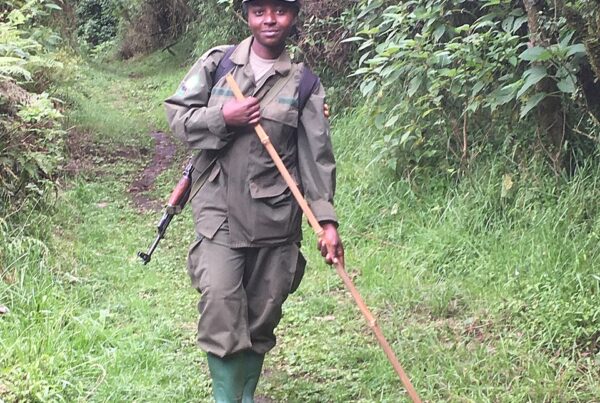
The pre-trek briefing was methodical and informative. The guide was a man named Emmanuel who had been leading treks for fifteen years and who spoke about the gorilla family we were assigned to (the Rushegura group) with the specific affection that comes from watching the same animals grow up over many years. He knew their names. He knew their personalities. He told us that the dominant female was unusually tolerant of human proximity and that the youngest juvenile had a habit of approaching groups out of curiosity.
We walked for two and a half hours. The forest was everything and more than the things I had read about it. The density, the layering, the quality of light that filters through several hundred years of canopy — these are things that descriptions approach but do not arrive at. The smell is vegetable and deep and specific. The sounds are constant and sourceless. Walking in it produces the particular quality of attention that the forest demands: present, physical, immediate.
The Lesson the Forest Teaches
We found the Rushegura family in a section of forest where a large tree had fallen, creating a clearing. Seventeen gorillas were distributed across the clearing and the surrounding undergrowth. The silverback was eating from a plant at the clearing’s edge. He was perhaps nine metres from where I crouched.
What the forest teaches — what the gorilla teaches — is not a lesson you can be told. It is a lesson you have to be in the presence of. The lesson is approximately this: the world has been doing this for a very long time without your assistance. These gorillas, this forest, this mountain, this sky — they existed before your anxieties and they will exist after them. Your internal weather is not the weather. The weather is the weather. These are statements that every person knows intellectually and almost no person fully feels. Standing in the forest, watching the silverback eat with complete unconcern for my presence or my life history or the contents of my most recent therapy session, I felt it.
What Changed
I returned to therapy after the trip and my therapist noted in our third session back that something had shifted. Not in my understanding of my patterns — that knowledge had been accumulating for years. In my relationship to them. There was less investment in whether they resolved quickly. A greater tolerance for the pace of change. She asked what I attributed this to. I told her about the silverback.
The forest taught me that I am a temporary living thing in a very large and very old living world. Therapy taught me about myself. Both are necessary. If you are doing one and not the other, consider whether the other might usefully supplement it.
Frequently Asked Questions
Uganda is home to the mountain gorilla (Gorilla beringei beringei), one of two subspecies of eastern gorilla. They live exclusively in the Virunga volcanic highlands (Uganda/Rwanda/DRC) and Bwindi Impenetrable Forest (Uganda only). Mountain gorillas are the only gorilla subspecies that cannot survive in captivity — every individual you can trek is a wild animal.
The standard gorilla trekking permit gives you exactly 1 hour with the gorilla family. This time begins when you make first contact with the family — the ranger signals the start. The Gorilla Habituation Experience gives 4 hours with a semi-wild family. The walk to find the gorillas can take 30 minutes to 5 hours depending on where the family has moved.
Stay calm, crouch down slowly, avoid direct eye contact, and remain quiet. Do not run — running triggers a chase response. Rangers accompanying your group manage close approaches. Habituated gorillas are accustomed to humans and almost never make contact, but a charging silverback is managed by staying still and following ranger instructions immediately.
A maximum of 8 visitors per habituated gorilla family per day for standard trekking. The Gorilla Habituation Experience has a maximum of 4 visitors per family per day. These limits are set by UWA to minimise stress on the gorilla families and maintain the quality of the experience.
Uganda is home to the mountain gorilla (Gorilla beringei beringei), one of two subspecies of eastern gorilla. They live exclusively in the Virunga volcanic highlands (Uganda/Rwanda/DRC) and Bwindi Impenetrable Forest (Uganda only). Mountain gorillas are the only gorilla subspecies that cannot survive in captivity — every individual you can trek is a wild animal.