Updated
gorilla trekking Uganda priorities reset is one of Africa’s most extraordinary wildlife experiences, connecting travellers with mountain gorillas in their natural forest habitat. I had built a life that looked correct from the outside. Good job, nice flat, social calendar, fitness routine, responsible savings plan. I was doing all the things you are supposed to do and feeling, with increasing persistence, that I was doing them for reasons I could no longer clearly articulate. Gorilla trekking in Uganda did not fix this. It did something more useful: it gave me a reference point I could actually use to measure everything else against.
The Trip That Reset My Priorities: What Gorilla Trekking Taught Me
The Impulse to Go Somewhere Completely Different
I had been on holidays that were good. Beach holidays, city trips, a week in the mountains. None of them produced the reset I was looking for because none of them were sufficiently different from the life I was trying to get perspective on. What I needed was somewhere so unlike my regular environment that my regular priorities could not follow me in. A mountain gorilla in a forest at altitude in central Africa seemed, and turned out to be, sufficiently unlike my regular environment.
I booked through a licensed Uganda Tourism Board operator, secured the permit ($800 USD per person — the standard price for international visitors), and flew into Entebbe five months later. The permit was for Buhoma sector, Bwindi Impenetrable National Park. The flight from Entebbe to Kihihi airstrip was one hour and the view from the small charter aircraft — the Rift Valley, the forest, the scale of everything — was the beginning of the reset before I had even reached the lodge.
What the Forest Does to Your Thinking
Bwindi is a UNESCO World Heritage Site and one of the most biologically diverse forests in Africa. It is also very old — the forest predates the last ice age and has been continuously forested for over 25,000 years. I am not sure whether knowing this changes how the forest feels or whether the forest feels old regardless of whether you know its history. What I can say is that walking in it produces a specific quality of thought that is unlike thinking in cities or offices or other places I habitually think.
The thoughts become slower. Not duller — slower, in the sense of less hurried, with more space between them. The things that seemed urgent at home retained their categorical designation as urgent but lost their emotional charge. A deadline that had been producing anxiety became, in the forest, simply a future event. This is not insight, exactly. It is perspective — the sense that you are seeing the same things from a greater distance and finding that the distance is clarifying rather than distancing.
The Gorilla Family
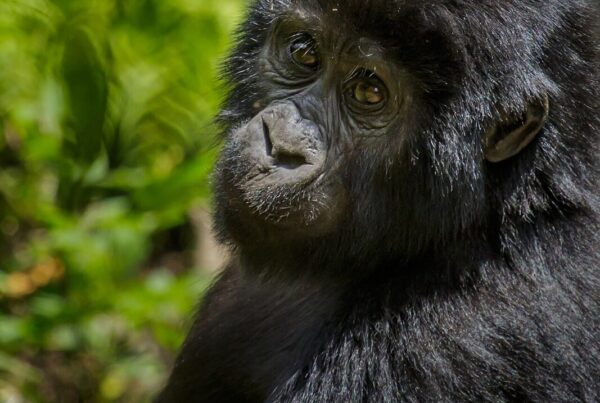
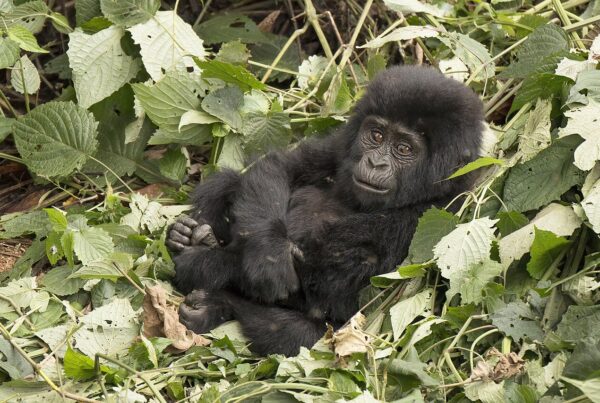
We found the Habinyanja family after two hours of walking. Thirty-two gorillas, which is one of the largest habituated families in Bwindi. The guide moved us quietly into position. The family was feeding in a section of forest where the canopy opened slightly and the light was better than it had been on the trail. The silverback was visible from where we crouched — he was perhaps twelve metres away and showed no interest in us beyond a brief orientation in our direction when we arrived.
What struck me was the purposefulness of the gorillas’ existence. They were eating because they were hungry. They were resting because they were tired. The mothers were holding their infants because the infants needed holding. Everything in the family was oriented toward the immediate, the present, the actual. There was no apparent gap between what they needed and what they were doing about it. It was, I realised, almost the exact opposite of the life I had been living.
The Priority Reset
The reset did not happen during the gorilla encounter, though the encounter was its catalyst. It happened over the following two days — during the forest walks, the evenings on the lodge veranda, the long meals with nowhere else to be. Watching a way of being that was so completely oriented toward the genuine and the present produced a sustained interrogation of what I was orienting my own existence toward and why.
The flat: I genuinely liked it. The savings plan: actually important to me. The fitness routine: it made me feel better and I wanted to keep it. The job: I was doing it for reasons that had made sense five years earlier and had not been re-examined since. The social calendar: full of events I attended and none I was particularly looking forward to. This is not a profound analysis — anyone with a journal and two free hours could reach the same conclusions. What the trip gave me was the emotional impetus to take the analysis seriously rather than continuing to operate on autopilot.
What I Changed and What I Kept
I changed jobs. I cleared my social calendar and rebuilt it around the people and activities I actually valued rather than the ones I had accumulated. I kept the flat and the savings plan. I started going for long walks on weekday mornings before work, which is the closest I have found to the quality of the forest thinking in a city context. I went back to Uganda the following year, which I had not anticipated doing. The gorillas were there. They were eating leaves and ignoring me in the most useful way I had encountered.
Gorilla trekking in Uganda in 2027 costs $800 per person for the permit. It is not cheap. It is, for the specific purpose of getting enough perspective on your life to see it clearly, extremely cost effective.
Frequently Asked Questions
Uganda is home to the mountain gorilla (Gorilla beringei beringei), one of two subspecies of eastern gorilla. They live exclusively in the Virunga volcanic highlands (Uganda/Rwanda/DRC) and Bwindi Impenetrable Forest (Uganda only). Mountain gorillas are the only gorilla subspecies that cannot survive in captivity — every individual you can trek is a wild animal.
The standard gorilla trekking permit gives you exactly 1 hour with the gorilla family. This time begins when you make first contact with the family — the ranger signals the start. The Gorilla Habituation Experience gives 4 hours with a semi-wild family. The walk to find the gorillas can take 30 minutes to 5 hours depending on where the family has moved.
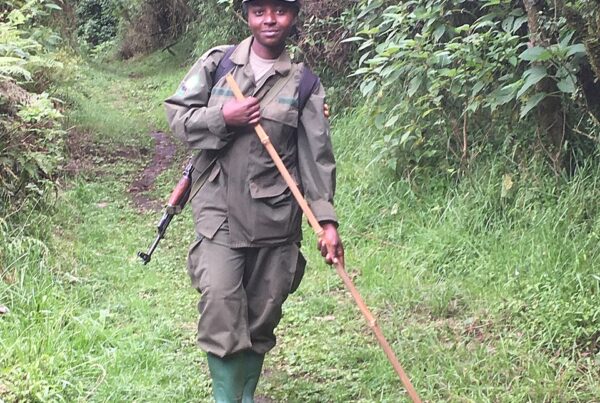
Stay calm, crouch down slowly, avoid direct eye contact, and remain quiet. Do not run — running triggers a chase response. Rangers accompanying your group manage close approaches. Habituated gorillas are accustomed to humans and almost never make contact, but a charging silverback is managed by staying still and following ranger instructions immediately.
A maximum of 8 visitors per habituated gorilla family per day for standard trekking. The Gorilla Habituation Experience has a maximum of 4 visitors per family per day. These limits are set by UWA to minimise stress on the gorilla families and maintain the quality of the experience.
Uganda is home to the mountain gorilla (Gorilla beringei beringei), one of two subspecies of eastern gorilla. They live exclusively in the Virunga volcanic highlands (Uganda/Rwanda/DRC) and Bwindi Impenetrable Forest (Uganda only). Mountain gorillas are the only gorilla subspecies that cannot survive in captivity — every individual you can trek is a wild animal.