Updated
quit job Uganda gorilla trekking Bwindi is one of Africa’s most extraordinary wildlife experiences, connecting travellers with mountain gorillas in their natural forest habitat. I quit my job and flew to Uganda to see gorillas, and I would do it again without hesitation. People thought I was having a breakdown. My mother called it a “midlife crisis.” My boss looked at me as though I had announced I was joining a cult. But standing in Bwindi Impenetrable Forest six weeks later, watching a silverback gorilla eat wild celery with the calm authority of someone who owns the entire planet, I understood that I had made exactly the right decision.
I Quit My Job and Flew to Uganda to See Gorillas: No Regrets
The Decision That Came Out of Nowhere
I had been in the same corporate job for eleven years. Marketing manager, respectable salary, standard misery. One Tuesday morning in February, I watched a documentary about mountain gorillas while eating cereal before work. By the time the credits rolled, I had missed three meetings and made a decision.
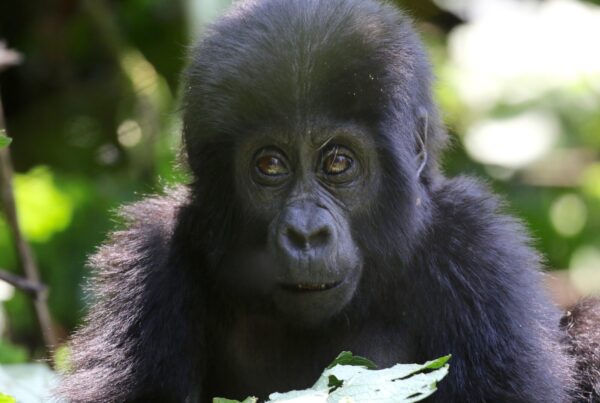
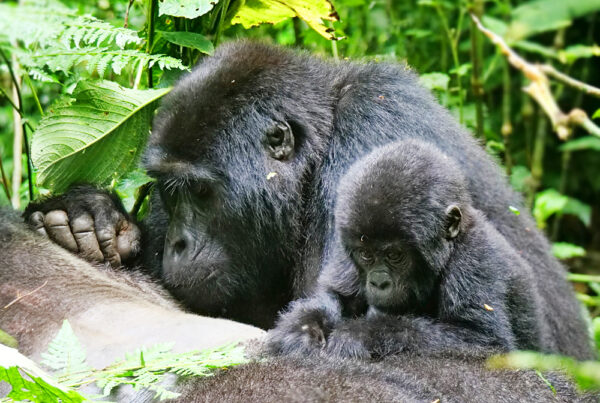
I am not usually impulsive. I am the person who researches restaurant menus before making a reservation. But something about watching those gorillas — the intelligence in their eyes, the tenderness of a mother with her infant, the sheer size and dignity of the silverback — made me feel a kind of restlessness I had no other way to address.
I gave my notice that afternoon. I booked Uganda the following week.
What Everyone Said Before I Left
The Safety Concerns
Everyone had opinions. Uganda was dangerous, they said. Africa was risky. What about disease? What about political instability? I researched all of it methodically. Uganda is one of the safest countries in East Africa for tourists. The gorilla trekking infrastructure is professional, regulated, and has operated successfully for decades. The Foreign Office advisories were largely benign for the areas I was visiting.
The Cost Argument
The gorilla permit alone costs $800. Combined with flights, accommodation, and in-country transport, a two-week Uganda trip is not cheap. Multiple people suggested I could spend that money more sensibly. They were correct. I was not interested in being sensible.
The Career Argument
Several colleagues said I was throwing away a good career. I pointed out that I had spent eleven years building a career and had not once done anything that felt truly alive. Nobody had a response to that.
Arriving in Uganda
Entebbe Airport at night is quietly beautiful. The air is warm and carries the smell of the lake. My driver, Moses, met me with a hand-lettered sign and spent the two-hour journey to Kampala telling me about his country with the pride of someone who genuinely loves where he is from. By the time we reached the hotel, I already knew Uganda was different from what I had imagined.
Kampala First
I spent two days in Kampala before heading south. The city is chaotic in the best way — boda-bodas weaving through traffic, markets stacked with colour, restaurants serving rolex (a chapati rolled with eggs and vegetables that is one of the best things I have ever eaten). I loved it immediately.
The Drive to Bwindi
The drive from Kampala to Bwindi Impenetrable National Park takes approximately eight hours. My driver, a different man named Ronald, narrated the entire journey. We passed through tea plantations, equatorial forest, villages where children waved from the roadside, and eventually into the highlands where the air cooled and the landscape became something from a dream.
The Trek
I was assigned to the Habinyanja family group on the morning of my trek. My guide briefed us on protocol: stay seven metres from the gorillas, do not make eye contact with the silverback, do not run if charged, do not eat or drink in their presence.
Finding the Family
The trackers had already located the family before we set off — they go ahead each morning before dawn. We walked for two and a half hours through increasingly dense forest, crossing streams and scrambling up slopes that my boots were not entirely prepared for. I was out of breath and sweating freely by the time we stopped.
First Sight
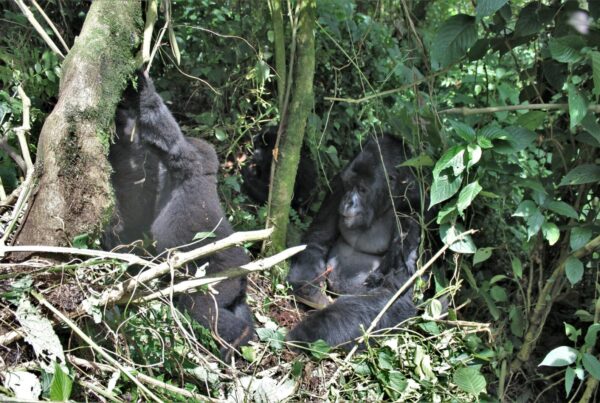
The silverback was sitting in a clearing, eating. He was enormous — not in the way a video prepares you for, but in a way that makes you recalibrate your understanding of scale. Around him, eight or nine other gorillas went about their morning. An infant clung to its mother. Two juveniles chased each other with what I can only describe as joy.
I stood completely still for at least three minutes before I remembered that I had a camera.
What an Hour Feels Like
The regulations allow one hour with each gorilla family. I had known this before I arrived and had accepted it intellectually. In the forest, standing three metres from a female gorilla who was regarding me with the expression of someone tolerating a minor inconvenience, the idea of an hour ending felt like a sentence.
When our guide signalled the end of the hour, I turned and walked back into the forest and then, when I was far enough away, I sat down on a log and did not move for a long time.
The Journey Back
I stayed in Uganda for twelve days. I visited Kibale Forest to trek with chimpanzees — noisier and more chaotic than gorillas, and completely extraordinary. I spent a day at Queen Elizabeth National Park watching tree-climbing lions. I took a boat along the Kazinga Channel and counted more hippos than I have ever seen in one place.
On the last evening, at a small lodge above the Bwindi Forest, I sat on the veranda and thought about the life I had left behind. Not with regret. With something closer to gratitude for having finally done something that mattered to me.
What Happened After I Came Home
The Job
I found a new job within two months — a different company, a role I actually enjoy. The career was not ruined. It was reset.
The People
The colleagues who said I was making a mistake have since asked me, variously, for the name of my travel agent, advice on Uganda, and whether the gorilla permit is really worth $800. It is. Absolutely and without question.
The Effect
I think differently now. Not dramatically — I have not become someone who quotes philosophy or refuses to wear shoes. But I have a clearer sense of what matters. The gorillas did that. An hour in a forest in Uganda recalibrated eleven years of accumulated wrong priorities.
Should You Do It?
If you are reading this and something in your life is not right — not catastrophically, just quietly wrong — I am not saying quit your job and fly to Uganda. That is specific advice that applies specifically to me.
But I am saying: go see the gorillas. Book the permit. Make the trip happen. Whatever obstacle you are using as an excuse — cost, timing, fear, inertia — weigh it honestly against what you might feel standing three metres from a silverback gorilla in one of the last intact mountain forests on Earth.
I quit my job and flew to Uganda to see gorillas. No regrets. Not one.