Updated
gorilla touched my hand Bwindi trekking story is a subject central to Uganda’s wildlife tourism, where mountain gorilla conservation and responsible visitor experiences go hand in hand. A gorilla touched my hand and I burst into tears — and I am not someone who cries easily. Standing in the misty forest of Bwindi Impenetrable National Park, with a juvenile mountain gorilla reaching out to examine my fingers, something inside me broke open in the best possible way. This is the story of what happened on one of the most profound days of my life.
A Gorilla Touched My Hand and I Burst Into Tears: What Happened
The Trek That Almost Did Not Happen
I had almost cancelled three times. Work pressures, a nagging fear of Uganda’s reputation in certain travel circles, and the sheer cost of gorilla permits had all conspired to make me hesitate. My travel agent, a patient woman who had been nudging me toward East Africa for two years, finally said: “Book it or stop talking about it.” I booked it.
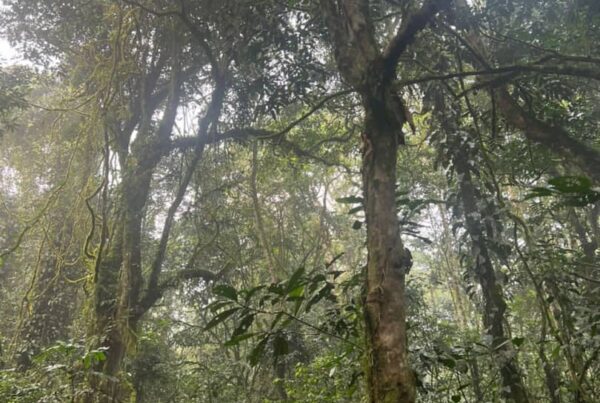
The morning of the trek, I was awake before my alarm at the Buhoma Lodge. The air smelled of wet earth and wood smoke. My guide, David, met me at the briefing point with twelve other trekkers. He was calm, methodical, and said something that stuck with me: “The gorillas are not a show. They are a family. You are a guest.”
We set off into the forest at eight in the morning. The path disappeared almost immediately into dense undergrowth. Porters offered to carry our bags — I accepted without hesitation, and it was one of the smartest decisions I made all day.
Two Hours In — The Forest Changes
For the first ninety minutes, we climbed. My legs ached, my shirt was soaked, and I had already used both my walking sticks in ways I had never imagined. Then David raised his hand and we stopped.
The Signal
Ahead, through a gap in the canopy, I could see something moving. Dark and massive. One of the trackers spoke into his radio in a low voice, and David turned to us and whispered: “The Mubare family. They are just ahead.”
Entering the Clearing
We spread out in a loose arc. A female gorilla sat nursing an infant not ten metres away. Behind her, half-hidden in the undergrowth, the silverback — Kanyonyi — was watching us with an expression I can only describe as thoroughly unimpressed. He had seen tourists before. We were nothing new to him.
Around us, the rest of the family went about their morning: eating, grooming, playing. A juvenile was swinging from a vine. Two young females were grooming each other with focused intensity. It was, by every measure, an ordinary morning for them.
When the Gorilla Reached for My Hand
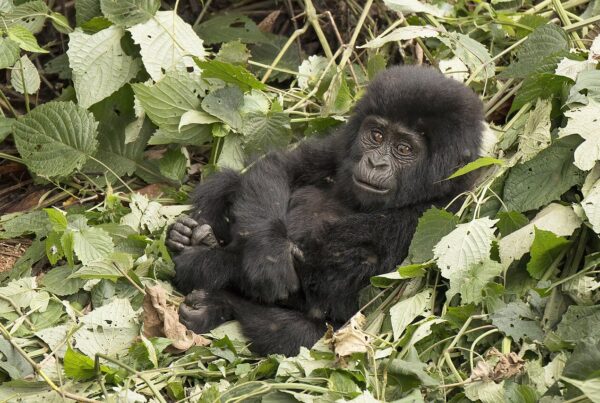
I was crouching, keeping my profile low as instructed, camera raised. A juvenile — maybe three years old, which in gorilla terms means curious and mischievous — had been eyeing the group. He approached the trekker next to me first, sniffed the air, then lost interest.
Contact
Then he came to me. He reached out and wrapped three fingers around my index finger. Not aggressively. Not as a test. Just — contact. One second. Maybe two. His fingers were warm and dry and impossibly strong even in their gentleness.
David said quietly: “Do not pull away. Do not make a sound.”
I did not pull away. I did not make a sound. What I did do, without any warning or intention, was begin to cry. Not dramatically. Just tears running down my face while I crouched there completely unable to explain what was happening inside me.
Why It Broke Me Open
Later, over dinner, I tried to articulate it to the other trekkers. The best I could manage was this: at the moment of contact, I understood — not intellectually, but physically — how close we are to these animals. We share 98.3% of our DNA with mountain gorillas. In that moment, that number stopped being a statistic and became a lived experience. The barrier between “human” and “animal” dissolved, and what remained was simply two primates from the same ancient lineage, meeting each other in a forest.
The Hour That Went By in Minutes
You are given one hour with the gorillas. Strict regulation, non-negotiable. I had assumed an hour would feel long enough. It did not. Not even close.
We watched Kanyonyi rise to his full height — an act that made every person in our group simultaneously step back and stop breathing. We watched the infant nurse. We watched adolescents chase each other through the undergrowth with the specific energy of teenagers who have been cooped up too long.
When David said “time,” I looked at my watch and could not understand where sixty minutes had gone.
What Nobody Tells You Before You Go
The Smell
Gorillas have a strong, distinctive smell — musky and earthy and faintly sweet. Nobody mentions this in the brochures. It is not unpleasant. It is just very, very present, and it is one of the things that confirms this is completely real.
The Silence
Visitors are not allowed to speak above a whisper in the gorillas’ presence. The combination of that silence, the forest sounds, and the proximity of the animals creates a sensory experience that no photograph can replicate.
The Weight of It
Mountain gorillas are critically endangered. There are just over 1,000 left on Earth. Every person who treks to see them contributes directly to their conservation — permit fees fund ranger salaries, anti-poaching patrols, and community programs that give local people economic reasons to protect the forest. Knowing this adds a layer of meaning to the experience that is hard to put into words.
Practical Notes for First-Time Trekkers
If this story has made you want to book, here is what to know:
Permits
Uganda gorilla trekking permits cost $800 per person. Only eight visitors are allowed per gorilla family per day. Book as far in advance as possible — popular dates sell out months ahead.
Fitness Level
The trek can take anywhere from one to six hours depending on where the gorillas have moved. Moderate fitness is recommended. Porters are available and worth every shilling.
What to Bring
Long sleeves and trousers, waterproof hiking boots, a rain layer, sun protection, and a camera with a good zoom. Leave the selfie stick at the lodge — guides discourage anything that might startle the animals.
A Note on Gorilla Trekking in Uganda Right Now
Uganda is open, safe, and welcoming visitors. The gorillas are healthy. The forests are intact. The rangers who have dedicated their careers to protecting these animals are doing extraordinary work.
If you are considering gorilla trekking and something is holding you back — fear, cost, uncertainty — I would say to you what my travel agent said to me: book it or stop talking about it. The juvenile gorilla who held my finger for two seconds has no idea he changed the way I see the world. But he did. And he can do the same for you.
Contact Uganda Gorilla Trekking to check permit availability and plan your visit. This is one experience that will not wait forever.