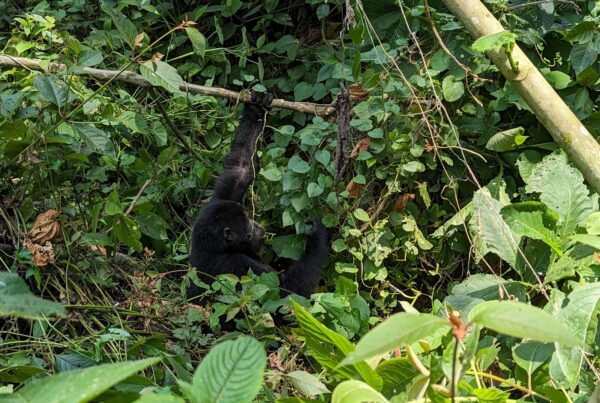
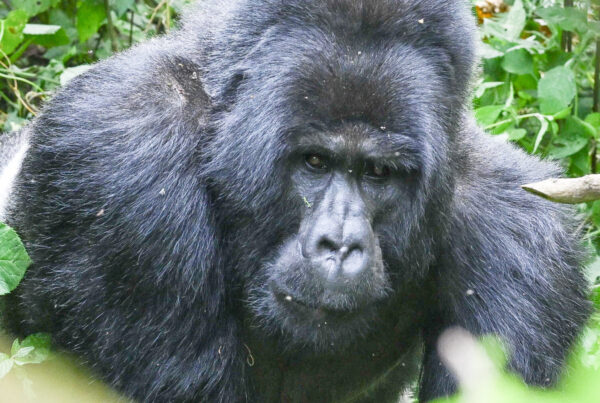
I have been on safari twelve times across seven African countries, and gorilla trekking in Uganda beats them all. This is not a statement I make lightly. I have seen the Great Migration in the Serengeti. I have been charged by a bull elephant in Hwange. I have spent a week on a houseboat on the Okavango and watched a leopard hunt at dusk from ten metres away. These were extraordinary experiences. None of them prepared me for what happens when you stand three metres from a mountain gorilla in Bwindi Impenetrable Forest.
The Context: Twelve Safaris
My first safari was in Kenya in my early thirties — a standard Masai Mara package that did exactly what it said and left me completely changed. I went back the following year, and the year after that. Over two decades, I have built something that my wife calls my “Africa obsession” and I prefer to describe as a sustained appreciation for the continent’s wildlife and what remains of its wild places.
I have done camps at different budget levels. I have done self-drive. I have done walking safaris with armed guides in Zambia and night drives in South Africa. I have accumulated a list of extraordinary moments that I keep mentally returning to: the leopard at dusk, a cheetah with cubs in the Mara, the hippo pool at Ruaha that sounded like a large aquatic argument at all hours of the night.
Uganda was my thirteenth destination, and gorilla trekking was the reason.
What Made Me Finally Go to Uganda
I had been resistant to Uganda for reasons that, in retrospect, were rooted in outdated information. My mental map of the country was stuck somewhere in the 1980s, which is a failure of research. When I finally started reading current information — about the conservation success story of the mountain gorillas, about Uganda’s political stability, about the quality of the lodges in the southwest — I booked within a week.
I chose Uganda over Rwanda because of cost ($800 versus $1,500 for a gorilla permit) and because I wanted to spend time in the country more broadly — not just a quick permit-and-go trip, but a proper two weeks that included Kibale Forest, Queen Elizabeth National Park, and Murchison Falls.
The Gorilla Trek: Katwe Family, Bwindi
I was assigned to the Katwe family on a morning that started overcast and cleared by the time we found the gorillas. The walk in took ninety minutes — not the hardest trek I have done, but honest work. Bwindi is not a neat, managed landscape. It is genuinely impenetrable in the way the name promises, and the path through it requires attention.
What I Expected
After twelve safaris, I had become practiced at calibrating expectations. I expected the gorillas to be impressive. I expected to be moved by the rarity of the experience. I expected good photographs and a story I could tell when people asked about favourite wildlife moments. I expected, in short, something excellent.
What I Did Not Expect
The complete disorientation of encountering an animal at that proximity that is not a prey animal, not a predator, not something that is afraid of you or indifferent to you in the way elephants and lions are largely indifferent to vehicles — but something that actually sees you. The silverback looked at me when we entered the clearing and I felt, in a very direct way, seen. Not assessed for threat level, not processed as an irrelevant background element. Seen.
That is not something you can prepare for by reading about it, including by reading this.
The Comparison With Other Safari Experiences
After the trek, sitting at the lodge with a beer and the specific exhausted contentment of someone who has had a very good day, I found myself running comparisons.
Why the Big Five Feel Different Now
Viewing Big Five animals on traditional safari is extraordinary. It is also mediated by distance and, usually, by the vehicle. The animals do not interact with you as individuals. They process you as a large, non-threatening (usually) object that can be safely ignored. This is not a criticism — it is simply the ecology of the situation.
Gorillas are different. You are on foot. There is no vehicle. The distance is measured in metres, not hundreds of metres. And the gorillas — particularly the habituated families of Bwindi — have a relationship with human visitors that is not based on threat assessment or indifference. They are genuinely accustomed to people. They will sometimes approach. They look at you. They allow their infants to approach you.
The Intelligence Factor
I have seen elephant intelligence at close range — problem-solving behaviour, evident grief, social complexity. I have seen dolphin intelligence on boat trips. But gorilla intelligence, visible in the face of an animal sitting two metres away, is a different kind of encounter. The eyes are too familiar. The expressions are too legible. The gap between “animal” and “us” becomes, in the presence of gorillas, uncomfortably thin.
I am a person who spends a lot of time in nature and thinks of himself as comfortable with wildlife. The gorilla encounter still broke something in my categorisation system in a way I have not quite reassembled.
The Conservation Dimension
Every experienced safari-goer knows that wildlife tourism funds conservation. But the gorilla situation makes this unusually direct and visible. The $800 permit fee funds ranger salaries, anti-poaching patrols, veterinary care for injured animals, and community programs that give local people economic reasons to protect the forest rather than convert it to agriculture.
The mountain gorilla population has increased from approximately 620 animals in 1989 to over 1,100 today. This is largely the result of conservation efforts funded by tourism. When you buy a gorilla permit, you are directly contributing to this success. That knowledge adds a layer of meaning to the experience that makes it unlike any other wildlife encounter I have had.
Practical Notes for the Experienced Traveller
How It Compares to a Standard Safari
If you are comparing gorilla trekking to a vehicle safari: they are not comparable experiences. They are different categories of encounter. Do not skip gorilla trekking because you have “done Africa” — it will not feel like something you have done.
Combining With Other Uganda Wildlife
Uganda offers remarkable wildlife beyond the gorillas. Kibale Forest has the highest density of primates in Africa — chimpanzee trekking here is extraordinary and very different from gorilla trekking. Queen Elizabeth National Park has tree-climbing lions. Murchison Falls has massive Nile crocodiles and the most powerful waterfall in Africa. A two-week Uganda circuit can be one of the richest wildlife trips on the continent.
Accommodation
The lodges around Bwindi range from budget-friendly community guesthouses to genuinely luxurious properties with forest views. I stayed at a mid-range lodge with a veranda overlooking the forest and could not have wished for better. For experienced travellers used to higher-end camps, the options at the premium end will not disappoint.
The Final Verdict
Twelve safaris. Gorilla trekking in Uganda beats them all. Not because the other experiences were lesser — they were not. But because gorilla trekking in Bwindi represents something available nowhere else: the chance to stand in a living forest, on your feet, with no vehicle between you and the animal, and be seen by something that shares 98.3% of your DNA and has been alive on this Earth for far longer than human civilisation.
If you have done safaris and are wondering whether gorilla trekking is a step up or simply a different flavour — it is a step up. It is a different category. And it is worth travelling a very long way to experience.
Contact Uganda Gorilla Trekking to book your permit and plan the trip. Go before your next safari. Go instead of your next safari. Just go.
Frequently Asked Questions
Uganda is home to the mountain gorilla (Gorilla beringei beringei), one of two subspecies of eastern gorilla. They live exclusively in the Virunga volcanic highlands (Uganda/Rwanda/DRC) and Bwindi Impenetrable Forest (Uganda only). Mountain gorillas are the only gorilla subspecies that cannot survive in captivity — every individual you can trek is a wild animal.
The standard gorilla trekking permit gives you exactly 1 hour with the gorilla family. This time begins when you make first contact with the family — the ranger signals the start. The Gorilla Habituation Experience gives 4 hours with a semi-wild family. The walk to find the gorillas can take 30 minutes to 5 hours depending on where the family has moved.
Stay calm, crouch down slowly, avoid direct eye contact, and remain quiet. Do not run — running triggers a chase response. Rangers accompanying your group manage close approaches. Habituated gorillas are accustomed to humans and almost never make contact, but a charging silverback is managed by staying still and following ranger instructions immediately.
A maximum of 8 visitors per habituated gorilla family per day for standard trekking. The Gorilla Habituation Experience has a maximum of 4 visitors per family per day. These limits are set by UWA to minimise stress on the gorilla families and maintain the quality of the experience.
Uganda is home to the mountain gorilla (Gorilla beringei beringei), one of two subspecies of eastern gorilla. They live exclusively in the Virunga volcanic highlands (Uganda/Rwanda/DRC) and Bwindi Impenetrable Forest (Uganda only). Mountain gorillas are the only gorilla subspecies that cannot survive in captivity — every individual you can trek is a wild animal.