Bad knees are one of the most common physical concerns raised by travellers considering gorilla trekking Uganda. Knee pain on uneven terrain is a legitimate concern — and one worth addressing honestly. The good news is that the gorilla trek is far more manageable for bad-knee travellers than its reputation suggests, provided you go in prepared.
What the Terrain Is Actually Like
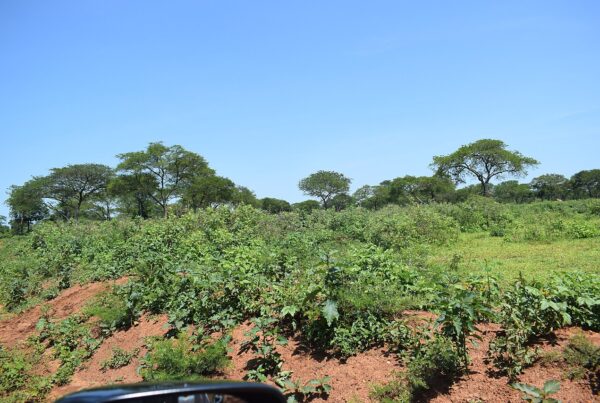
Bwindi Impenetrable Forest is a rainforest with variable terrain. Trails range from relatively flat and gentle (the approach trails in Buhoma sector, some Rushaga routes) to steep and muddy (some sections near Nkuringo, parts of Ruhija). The biggest challenge for bad knees is typically the descent after the trek — coming back down steep muddy sections on tired knees is harder than the climb up. Knowing this in advance allows you to prepare specifically for it.
The key variable — and the one you can influence through your booking — is which sector and which gorilla family you are assigned to. Not all treks are equal in difficulty. A Buhoma sector trek to the Mubare or Rushegura families often involves gentler terrain than a Nkuringo trek in the southwestern corner of Bwindi. When you contact us, tell us about your knee condition and we will specifically request a lower-impact assignment from the Uganda Wildlife Authority.
Trekking Poles: Non-Negotiable for Bad Knees
If you have bad knees, bring trekking poles. Not one — two. Poles shift load from your knees to your arms on the ascent and, critically, absorb impact on the descent. Leki, Black Diamond, and similar collapsible poles are widely available and pack easily. If you do not own poles, invest before this trip. The difference they make on Bwindi’s slopes is transformative. A knee that protests badly on uneven terrain without poles often handles the same terrain without complaint with poles, because the load is distributed across four points instead of two.
The Porter Is Your Best Asset
Hire a porter. For a bad-knee traveller, the porter is more than convenience — the porter actively assists on the most difficult sections. Porters position themselves on the downhill side during steep descents, offering a human anchor as you step down. On difficult scrambles, they guide foot placement and take your hand. They will not let you fall. At 15 to 20 USD, a porter is the most cost-effective safety net you can buy on this trek. Request a porter with specific experience helping older or less-mobile trekkers — we can arrange this through our ground partners.
Anti-Inflammatories and Knee Braces
If you use anti-inflammatory medication for knee pain, take it as prescribed in the days before and on the day of the trek. A well-fitted knee brace — either a neoprene compression sleeve or a hinged brace for instability — can significantly reduce discomfort on uneven terrain. Do not rely on pain management alone, but combined with poles and a porter, it rounds out your toolkit. Pack your medications in your day pack, not in luggage, so they are accessible on the trail.
Real Examples From Our Clients
We have organised gorilla treks for clients with knee replacements, clients with chronic osteoarthritis, clients with old ACL injuries, and clients who had knee surgery in the twelve months before their trek. The success rate is high when the right preparation is in place: correct sector assignment, porter engaged, poles packed, pace managed by the ranger. The one consistent lesson: travellers who disclosed their knee condition when booking had consistently better experiences than those who tried to tough it out undisclosed and underprepared.
What to Tell Your Doctor Before You Go
Consult your orthopaedic surgeon or GP before booking if your knee condition is significant. Describe the terrain (uneven forest floor, some steep slopes, two to four hours total walking time), ask specifically whether they clear you for this activity, and ask whether a specific brace or medication regimen is recommended. Most knee conditions — osteoarthritis, old injuries, mild instability — do not preclude gorilla trekking with the right precautions. Severe instability, recent surgery, or conditions where falling would be catastrophic warrant an honest medical conversation.
The Experience Is Worth the Preparation
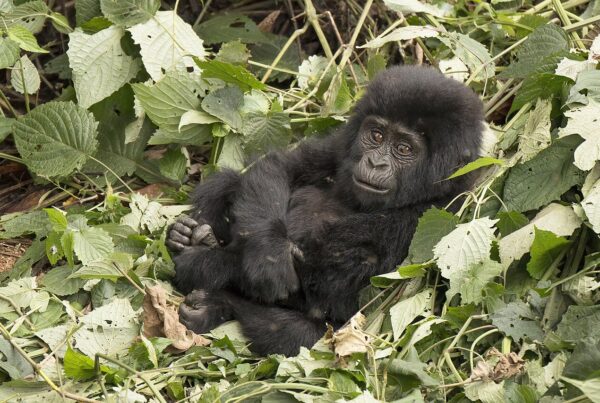
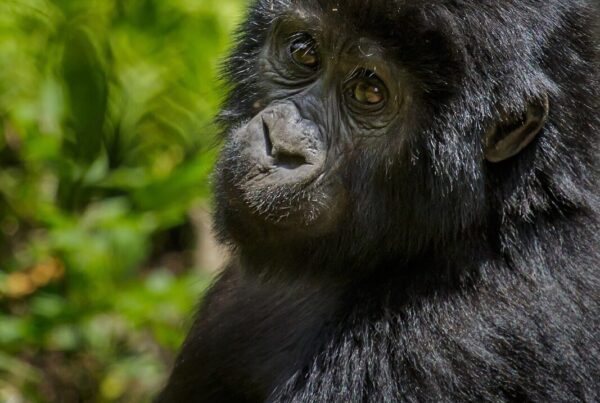
Every traveller with bad knees who has completed a gorilla trek and stood in front of a mountain gorilla family has told us the same thing: it was absolutely worth it. The knee was sore that evening and fine the next day. Nobody has ever said they wished they had not gone because of their knees. The preparation — poles, porter, sector choice — converts a difficult scenario into a manageable one. Start planning your trek today and tell us about your knees from the beginning. We will build the right trip around your situation.
Frequently Asked Questions
Uganda is home to the mountain gorilla (Gorilla beringei beringei), one of two subspecies of eastern gorilla. They live exclusively in the Virunga volcanic highlands (Uganda/Rwanda/DRC) and Bwindi Impenetrable Forest (Uganda only). Mountain gorillas are the only gorilla subspecies that cannot survive in captivity — every individual you can trek is a wild animal.
The standard gorilla trekking permit gives you exactly 1 hour with the gorilla family. This time begins when you make first contact with the family — the ranger signals the start. The Gorilla Habituation Experience gives 4 hours with a semi-wild family. The walk to find the gorillas can take 30 minutes to 5 hours depending on where the family has moved.
Stay calm, crouch down slowly, avoid direct eye contact, and remain quiet. Do not run — running triggers a chase response. Rangers accompanying your group manage close approaches. Habituated gorillas are accustomed to humans and almost never make contact, but a charging silverback is managed by staying still and following ranger instructions immediately.
A maximum of 8 visitors per habituated gorilla family per day for standard trekking. The Gorilla Habituation Experience has a maximum of 4 visitors per family per day. These limits are set by UWA to minimise stress on the gorilla families and maintain the quality of the experience.
Uganda is home to the mountain gorilla (Gorilla beringei beringei), one of two subspecies of eastern gorilla. They live exclusively in the Virunga volcanic highlands (Uganda/Rwanda/DRC) and Bwindi Impenetrable Forest (Uganda only). Mountain gorillas are the only gorilla subspecies that cannot survive in captivity — every individual you can trek is a wild animal.