Updated
Gorilla trekking in Uganda and diving or snorkelling on the Great Barrier Reef in Australia are both described, regularly and without exaggeration, as among the greatest wildlife experiences available to a human being in 2027. Both involve entering a natural ecosystem that is radically different from the environments most people live in. Both offer encounters with non-human intelligence — primate in one case, oceanic in the other — that expand the sense of what life on earth encompasses. But they are otherwise so different in every practical dimension that comparing them directly is useful only as a way of helping travellers who genuinely face this choice decide which to prioritise. Here is the comparison.
Accessibility and Physical Requirements
The Great Barrier Reef is accessible in multiple forms to almost any traveller regardless of physical fitness. Snorkelling requires no special training, and glass-bottom boat tours make the reef visible even to non-swimmers. Scuba diving requires Open Water certification for independent diving or a brief resort course for supervised beginner dives. The physical demands of reef access are minimal compared to gorilla trekking.
Gorilla trekking requires moderate to good physical fitness, as trekking distances and terrain vary significantly by sector and family location. The altitude in Bwindi (up to 2,600m), the steep terrain, and the potential for multi-hour treks through dense vegetation are genuine physical challenges that the reef experience does not impose. For travellers with mobility limitations, the reef offers more accessible options. For physically fit travellers willing to accept the challenge, gorilla trekking’s physical demands are part of what makes the encounter feel earned.
The Conservation Dimension
Both experiences are at the intersection of wildlife tourism and conservation concern. The Great Barrier Reef has experienced significant coral bleaching events linked to ocean warming and has lost approximately 50 percent of its coral cover since 1995. Its long-term survival under current climate trajectories is uncertain — visiting the reef in 2027 carries a genuine “see it while you can” dimension that has intensified the bucket-list urgency around reef tourism.
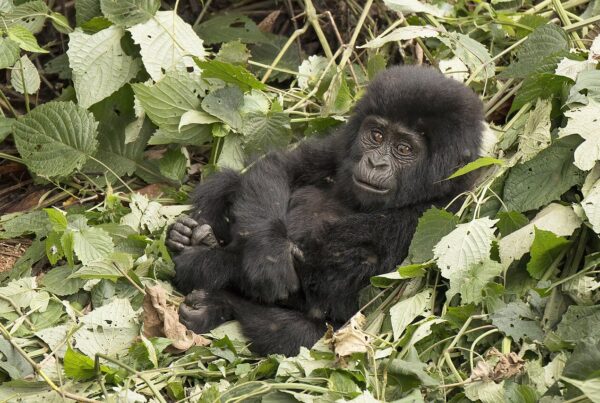
Mountain gorilla conservation has a different narrative: one of genuine recovery. The population has grown from 254 individuals in 1989 to over 1,000 in 2027 — the only great ape species whose population is increasing. This recovery is a conservation success story that gorilla trekking tourism has directly funded and sustained. Visiting gorillas in 2027 is visiting an endangered species that is, against expectation, recovering — a more optimistic narrative than the reef’s urgent fragility.
The Type of Encounter
Reef diving is an immersive sensory experience — coloured coral, fish species beyond counting, the physical sensation of moving through water in three dimensions. The reef is beautiful in a way that is immediately legible: colour, pattern, movement, scale. What it does not offer, for most divers, is the sense of individual encounter with another being of recognisable intelligence.
Gorilla trekking is almost the opposite. The visual environment is dense, sometimes obscure, and not always beautiful in the immediate sense. But the encounter at its centre is with individuals — gorillas whose facial expressions, social relationships, and behavioural repertoire reflect a form of intelligence recognisably continuous with our own. The reef’s beauty is ecological. The gorilla encounter’s power is personal. Which matters more depends on what you are looking for in a wildlife experience.
Logistics and Cost
Reaching the Great Barrier Reef from most international origin points requires travel to Australia (typically Cairns or the Whitsundays). Australian flights are among the most expensive international routes from Europe and North America. A quality reef experience (3 nights, reef day trips) costs USD 1,800 to 3,000 per person excluding intercontinental flights. Reaching Uganda from most international points requires transit through Nairobi, Doha, Dubai, or Addis Ababa. A gorilla trekking experience (3 nights, one trek) costs USD 1,800 to 2,500 per person excluding intercontinental flights. The in-country costs are broadly comparable; the international flight cost varies by origin point.
The Verdict
Both experiences belong on the serious traveller’s list. If your priority is immersive natural beauty of the kind that no human environment can replicate, and if you are drawn more to the oceanic than the terrestrial, the reef offers something gorilla trekking cannot. If your priority is connection with another form of primate intelligence in a setting where conservation is actively working and where your visit directly contributes to that work, gorilla trekking in Uganda is the more resonant choice. In 2027, contact us to begin planning the Uganda experience that will define its own half of this comparison for you.