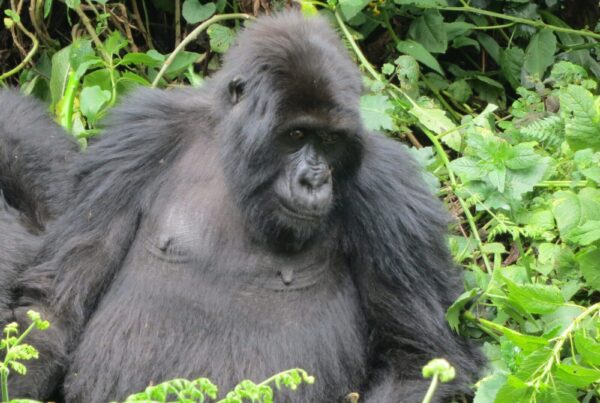
The choice between Uganda’s standard gorilla trek (1 hour with a fully habituated family, USD 800, up to 8 visitors) and the Gorilla Habituation Experience (4 hours with a habituating family, USD 1,800, maximum 4 visitors) is the most consequential decision in gorilla trekking trip planning after the initial commitment to go — the two experiences are structurally different encounters with a different character, pace, and intensity, not simply a longer and shorter version of the same thing. The standard trek’s habituated families are accustomed to daily human presence and move, rest, and feed with a predictable calm that allows the 8 visitors to observe at close range with consistent access; the GHE’s habituating family still associates human presence with mild stress and tests the group’s responses, meaning the encounter is less predictable, more active, and requires the ranger team to manage positioning carefully through a 4-hour arc of the family’s natural morning. For visitors who want depth, time, and proximity to the research team’s work, the GHE is the more meaningful experience; for visitors prioritising guaranteed encounter quality at lower cost, the standard trek delivers it. This guide compares both options across every relevant dimension. For permits and booking, see the permit guide.
GHE vs Standard Trek: Side-by-Side
- Standard trek: 1 hour with family | 8 visitors max | USD 800 | all Bwindi sectors | fully habituated
- GHE: 4 hours with family | 4 visitors max | USD 1,800 | Rushaga sector only | habituating family
- Research team: GHE only — trek accompanies the habituation researchers
- Encounter predictability: Higher in standard (habituated family stays calm); GHE more variable
- Physical demand: GHE consistently harder — 4 hours minimum, family moves more, longer total day
- Best for: first-time visitors → standard trek; adventure/specialist visitors → GHE
For most travellers, gorilla trekking means the standard experience: one precious hour with a fully habituated gorilla family, sharing space with these extraordinary creatures before retreating to leave them in peace. But Uganda offers a second, less well-known option that fundamentally changes the nature of the encounter. The Gorilla Habituation Experience provides four hours with a semi-habituated gorilla family, allowing deeper immersion into their world and participation in the gradual process of teaching wild gorillas to tolerate human presence. This alternative comes at a higher price, smaller group size, and greater unpredictability, but for the right traveller, it offers rewards that the standard trek cannot match.
This guide examines both experiences in detail, comparing their structures, costs, physical demands, emotional impacts, and the practical considerations that should guide your choice. Whether you choose one hour or four, understanding what each experience offers ensures that your decision aligns with your expectations, your budget, and your appetite for adventure.
What Standard Gorilla Trekking Offers
The standard gorilla trekking experience is the foundation of mountain gorilla tourism, refined over decades into a carefully managed encounter that balances visitor access with animal welfare. You are assigned to one of Bwindi’s habituated families, trek through the forest with seven other visitors, and spend exactly one hour observing the gorillas before withdrawing.
The families you encounter are fully habituated, meaning they have learned over years of gradual exposure to tolerate human observers without significant stress. They do not flee when your group approaches. They continue their daily activities, feeding, grooming, resting, and socialising, with apparent indifference to your presence. This predictability makes the standard experience reliable and accessible, suitable for first-time trekkers, families with older teenagers, and anyone who wants a guaranteed encounter with minimal uncertainty.
The one-hour time limit, while frustratingly brief, is based on research showing that longer visits increase stress hormones in gorillas. UWA enforces this limit strictly, and your guide will signal when the time has expired. The brevity intensifies the experience, forcing complete presence and attention, but it also leaves many trekkers wanting more.
Standard trekking costs eight hundred dollars for foreign non-residents, seven hundred dollars for foreign residents, and three hundred thousand Ugandan shillings for East African citizens. Group size is eight trekkers plus guides and rangers. Permits are more readily available than habituation experience permits, though they still sell out during peak season.
What the Habituation Experience Offers
The Gorilla Habituation Experience takes you deeper into the world of gorilla research and conservation. Instead of observing a fully habituated family, you spend four hours with a group that is in the process of being habituated, learning to accept human presence under the guidance of researchers and experienced trackers.
These semi-habituated gorillas are less predictable than their fully habituated counterparts. They may move more frequently, maintain greater distance initially, and display more natural avoidance behaviours. The four-hour duration allows time for these dynamics to unfold, for trust to be gradually established, and for you to witness behaviours that the one-hour standard trek cannot accommodate.
The experience is limited to four participants rather than eight, creating a more intimate group dynamic and reducing cumulative impact on the gorillas. The smaller group allows closer engagement with the habituation process, more personalised interaction with researchers, and greater flexibility in responding to gorilla movements.
The habituation experience costs fifteen hundred dollars for foreign non-residents, with reduced rates for residents and East African citizens. This higher price reflects the smaller group size, extended duration, specialised nature of the activity, and the research funding that habituation supports.
Key Differences in Practice
The practical differences between standard trekking and the habituation experience manifest throughout the day. Standard treks begin with a formal briefing, organised group assignment, and departure at a set time. Habituation experiences start earlier, often at six-thirty in the morning, because the gorillas must be located before they begin moving for the day and because the extended duration requires an earlier start.
During the encounter, standard trekking follows a structured protocol: approach to seven metres, observe for one hour, withdraw. The habituation experience is more fluid. Researchers may attempt to move closer gradually, responding to gorilla behaviour in real time. The gorillas may retreat, requiring the group to follow at a respectful distance. The dynamic is more like a dance than a static observation, with positions and distances adjusting continuously based on the animals’ comfort.
The physical demands of the habituation experience are generally greater. Four hours in the forest, much of it spent moving as the gorillas move, requires superior fitness and endurance. The terrain may be more challenging because semi-habituated groups sometimes range in less accessible areas to avoid human contact. Participants should be prepared for sustained exertion without the guaranteed rest breaks that standard trekking provides.
Who Should Choose Standard Trekking?
Standard gorilla trekking is the right choice for most visitors. If you are a first-time trekker, the reliability and structure of the standard experience provide the best introduction to gorilla encounters. If you have limited time, the shorter duration allows you to fit other activities into your itinerary. If you have moderate fitness concerns, the standard trek’s predictable pacing and one-hour limit are more manageable than four hours of continuous forest hiking.
Families with older teenagers, the minimum age is fifteen, may find the standard experience more appropriate because the habituation experience’s unpredictability and physical demands can be challenging for younger or less experienced trekkers. Travellers on tighter budgets will find the standard permit’s eight hundred dollar price significantly more accessible than the habituation experience’s fifteen hundred dollars.
Photographers who want guaranteed close encounters for portfolio-quality images may prefer standard trekking, where habituated gorillas are more predictable and maintain closer proximity. The habituation experience’s dynamic distances and potential retreats create photographic challenges that require patience and adaptability.
Who Should Choose the Habituation Experience?
The habituation experience suits travellers who want deeper engagement with gorilla behaviour and conservation research. If you are fascinated by primatology, wildlife research, or the science behind habituation, the four-hour immersion provides insights that no standard trek can match. You will observe the process by which wild animals learn to trust humans, and you will contribute directly to research through your presence and the permit revenue you generate.
Experienced wildlife enthusiasts who have already completed standard treks and want a different experience will find the habituation experience genuinely distinct. It is not merely more of the same; it is a qualitatively different encounter that reveals aspects of gorilla behaviour and human-wildlife interaction that standard trekking conceals.
Photographers seeking unique, behavioural images rather than standard portraits may find the habituation experience rewarding. The extended time, dynamic interactions, and less predictable movements create opportunities for images that standard treks cannot provide, though the technical challenges are greater.
The habituation experience also appeals to travellers who value exclusivity. With only four participants per day, compared to eight on standard treks, the experience feels more intimate and personalised. You have more time with the gorillas, more interaction with researchers, and less competition for viewing positions.
Physical and Logistical Considerations
The habituation experience demands superior physical fitness. Four hours of forest hiking, often following moving gorillas through difficult terrain, is substantially more demanding than the standard trek. Participants should be confident in their ability to sustain moderate to strenuous exertion for extended periods without significant rest.
Permit availability for the habituation experience is more limited than for standard trekking. Only a few groups are available for habituation at any given time, and permits sell out well in advance. Book at least six to nine months ahead, particularly for peak season dates.
The habituation experience is currently available primarily in Bwindi’s Rushaga sector. This means that your accommodation and logistics must be arranged around Rushaga rather than other sectors. Ensure your operator understands that you have booked the habituation experience, as the logistics differ from standard trekking.
Final Thoughts
Neither the standard trek nor the habituation experience is inherently superior. They serve different purposes, suit different travellers, and reveal different dimensions of gorilla life. The standard trek offers reliability, accessibility, and the classic encounter that has defined gorilla tourism for decades. The habituation experience offers depth, immersion, and a window into the science and patience that make all gorilla encounters possible.
Your choice depends on what you seek. If you want the iconic hour with a silverback, photographed and remembered as the highlight of your African journey, the standard trek delivers perfectly. If you want to understand how that hour became possible, to witness the slow building of trust between species, and to participate in the research that sustains conservation, the habituation experience offers something that no standard trek can replicate.
Whatever you choose, remember that both experiences depend on the same fundamental commitment: respect for the gorillas, compliance with the rules, and gratitude for the extraordinary privilege of sharing time with creatures who have no obligation to tolerate us and who do so only because decades of careful work have taught them that humans can be trusted. That trust, whether built over years of habituation or honoured in a single hour, is the true gift of gorilla trekking.
Frequently Asked Questions
The Gorilla Habituation Experience (GHE) is a Uganda Wildlife Authority programme that places a maximum of 4 visitors with a mountain gorilla family that is currently in the multi-year habituation process — the period of gradually conditioning wild gorillas to accept regular human presence near them. The GHE is conducted alongside the habituation research team (researchers and rangers who visit the family daily to advance the habituation process) and allows visitors to participate in that process rather than simply observing an already-habituated outcome. The practical differences from the standard trek: the GHE allows 4 hours with the family instead of the standard 1 hour; the maximum group size is 4 visitors instead of 8; the permit costs USD 1,800 instead of USD 800; the GHE is only available at Rushaga sector in Bwindi’s south; and the encounter character is significantly different because a habituating family is not yet fully comfortable with human presence — the gorillas may move more, keep greater distance at certain moments, and the ranger management of the group’s position is more active than in a standard habituated encounter. The GHE is specifically designed for visitors who want extended immersion in the gorilla family’s daily life and a connection to the conservation research process, rather than a complete encounter at a more relaxed pace. Is the Gorilla Habituation Experience worth the extra cost? Whether the GHE is worth the USD 700 premium over the standard trek (USD 1,800 vs USD 800) depends on what the visitor is seeking from the encounter. For visitors whose primary goal is a high-quality, emotionally complete gorilla encounter in calm, manageable conditions, the standard trek is worth significantly more than its cost and the GHE premium does not necessarily improve on that. For visitors specifically motivated by: extended time with the gorilla family (4 hours versus 1 hour); the intimacy of a 4-person group versus 8; connection to the research team and the habituation science; or a genuinely more variable and active encounter that includes the family’s morning ranging behaviour rather than a stationary or semi-stationary observation — the GHE provides all of these and the premium reflects that. First-time gorilla visitors are generally better served by the standard trek for their first encounter; repeat visitors or specialists who have already experienced the standard format and want the deeper version have a clear case for the GHE on a return trip. Can you do both the GHE and a standard gorilla trek in the same Uganda trip? Yes — doing both the GHE and a standard gorilla trek in the same Uganda trip is possible and is specifically done by visitors who want to experience both encounter formats. The logistics: the GHE is only available at Rushaga sector, so the standard trek should be booked at a different Bwindi sector (Buhoma, Nkuringo, or Ruhija) to ensure you encounter a different gorilla family in a different terrain context. The combined cost for both permits is USD 2,300 per person (USD 800 standard + USD 1,800 GHE), and both require advance booking through UWA or a licensed tour operator. A trip structure that incorporates both typically allocates 3–4 nights at Bwindi across two sectors — the standard trek day at one sector and the GHE day at Rushaga. This is the most comprehensive gorilla encounter itinerary available in Uganda, and visitors who have done both consistently report that the two formats complement each other in a way that makes the combined experience greater than either alone: the standard trek’s quality and calm provides the reference against which the GHE’s extended time and different character can be fully appreciated. How physically demanding is the Gorilla Habituation Experience compared to a standard trek? The GHE is consistently more physically demanding than a standard gorilla trek for three structural reasons. First, the total active time in the forest is 4 hours with the habituating family plus the walk to and from the family’s location — the total day in the forest is typically 6–9 hours from the briefing station to return, compared to the standard trek’s average of 3–5 hours. Second, habituating families are less predictable in their movement than habituated families, meaning the group must often move quickly through difficult terrain to follow the family rather than observing from a stable position. Third, the Rushaga sector terrain — where the GHE operates — is among Bwindi’s most challenging, with steep slopes and dense vegetation in the southern sector. Physical preparation for the GHE should be specific and realistic: a cardiovascular fitness level equivalent to completing a 6–8 hour mountain hike with elevation gain is the appropriate target. Visitors considering the GHE who have any doubt about their physical capacity should honestly assess their fitness against this standard and consider the standard trek as the safer first choice. How far in advance do you need to book the Gorilla Habituation Experience? The Gorilla Habituation Experience permits are more limited than standard gorilla trekking permits — only 4 visitors are allowed per day per habituating family, compared to 8 for standard trekking, and there are fewer habituating families available at any given time than fully habituated families. This combination of smaller group size and limited family availability means GHE permits are constrained and sell out well in advance during peak season. For peak months (June–August, December–January), booking the GHE 6–9 months in advance is advisable — the same lead time as luxury accommodation bookings at Bwindi in peak season. For shoulder season months (March–May, September–November), 3–4 months advance booking typically secures a GHE permit without difficulty, though specific date availability depends on the current habituation programme status at Rushaga. Book through Uganda Wildlife Authority directly or through a licensed Ugandan tour operator — the GHE permit is booked through the same UWA permit system as the standard trek, with the difference noted in the permit category. Choose your gorilla encounter format Gorilla Permit Guide — GHE and standard trek permit booking through UWA Uganda Gorilla Families — the habituated families for standard trekking and the Rushaga GHE families Bwindi Sector Guide — Rushaga sector details for the GHE; all sectors for the standard trek Full Safari Cost Guide — GHE vs standard permit cost comparison in the full trip budget Safari Itineraries — Uganda itineraries incorporating GHE at Rushaga alongside a standard trek Further Reading Gorilla Habituation Experience vs Standard Trekking: Which Should You Choose? Gorilla Trekking vs Gorilla Habituation: Which Should You Choose? Gorilla trekking versus gorilla habituation: what is the difference and which should you choose? Gorilla Trekking Uganda vs Rwanda: Which Should You Choose Uganda vs Rwanda Gorilla Trekking: Which Should You Choose? The World’s Most Famous Gorilla Tracking Experience: Why the USA Chooses Uganda What Is Mountain Gorilla Habituation Experience in Uganda? The Ultimate Primate Encounter Kenya or Uganda Safari — Which Should You Book Right Now? Is It Worth Upgrading to the Gorilla Habituation Experience? Gorilla Habituation Experience Uganda: 4-Hour Permit — How to Book
Whether the GHE is worth the USD 700 premium over the standard trek (USD 1,800 vs USD 800) depends on what the visitor is seeking from the encounter. For visitors whose primary goal is a high-quality, emotionally complete gorilla encounter in calm, manageable conditions, the standard trek is worth significantly more than its cost and the GHE premium does not necessarily improve on that. For visitors specifically motivated by: extended time with the gorilla family (4 hours versus 1 hour); the intimacy of a 4-person group versus 8; connection to the research team and the habituation science; or a genuinely more variable and active encounter that includes the family’s morning ranging behaviour rather than a stationary or semi-stationary observation — the GHE provides all of these and the premium reflects that. First-time gorilla visitors are generally better served by the standard trek for their first encounter; repeat visitors or specialists who have already experienced the standard format and want the deeper version have a clear case for the GHE on a return trip. Can you do both the GHE and a standard gorilla trek in the same Uganda trip? Yes — doing both the GHE and a standard gorilla trek in the same Uganda trip is possible and is specifically done by visitors who want to experience both encounter formats. The logistics: the GHE is only available at Rushaga sector, so the standard trek should be booked at a different Bwindi sector (Buhoma, Nkuringo, or Ruhija) to ensure you encounter a different gorilla family in a different terrain context. The combined cost for both permits is USD 2,300 per person (USD 800 standard + USD 1,800 GHE), and both require advance booking through UWA or a licensed tour operator. A trip structure that incorporates both typically allocates 3–4 nights at Bwindi across two sectors — the standard trek day at one sector and the GHE day at Rushaga. This is the most comprehensive gorilla encounter itinerary available in Uganda, and visitors who have done both consistently report that the two formats complement each other in a way that makes the combined experience greater than either alone: the standard trek’s quality and calm provides the reference against which the GHE’s extended time and different character can be fully appreciated. How physically demanding is the Gorilla Habituation Experience compared to a standard trek? The GHE is consistently more physically demanding than a standard gorilla trek for three structural reasons. First, the total active time in the forest is 4 hours with the habituating family plus the walk to and from the family’s location — the total day in the forest is typically 6–9 hours from the briefing station to return, compared to the standard trek’s average of 3–5 hours. Second, habituating families are less predictable in their movement than habituated families, meaning the group must often move quickly through difficult terrain to follow the family rather than observing from a stable position. Third, the Rushaga sector terrain — where the GHE operates — is among Bwindi’s most challenging, with steep slopes and dense vegetation in the southern sector. Physical preparation for the GHE should be specific and realistic: a cardiovascular fitness level equivalent to completing a 6–8 hour mountain hike with elevation gain is the appropriate target. Visitors considering the GHE who have any doubt about their physical capacity should honestly assess their fitness against this standard and consider the standard trek as the safer first choice. How far in advance do you need to book the Gorilla Habituation Experience? The Gorilla Habituation Experience permits are more limited than standard gorilla trekking permits — only 4 visitors are allowed per day per habituating family, compared to 8 for standard trekking, and there are fewer habituating families available at any given time than fully habituated families. This combination of smaller group size and limited family availability means GHE permits are constrained and sell out well in advance during peak season. For peak months (June–August, December–January), booking the GHE 6–9 months in advance is advisable — the same lead time as luxury accommodation bookings at Bwindi in peak season. For shoulder season months (March–May, September–November), 3–4 months advance booking typically secures a GHE permit without difficulty, though specific date availability depends on the current habituation programme status at Rushaga. Book through Uganda Wildlife Authority directly or through a licensed Ugandan tour operator — the GHE permit is booked through the same UWA permit system as the standard trek, with the difference noted in the permit category. Choose your gorilla encounter format Gorilla Permit Guide — GHE and standard trek permit booking through UWA Uganda Gorilla Families — the habituated families for standard trekking and the Rushaga GHE families Bwindi Sector Guide — Rushaga sector details for the GHE; all sectors for the standard trek Full Safari Cost Guide — GHE vs standard permit cost comparison in the full trip budget Safari Itineraries — Uganda itineraries incorporating GHE at Rushaga alongside a standard trek Further Reading Gorilla Habituation Experience vs Standard Trekking: Which Should You Choose? Gorilla Trekking vs Gorilla Habituation: Which Should You Choose? Gorilla trekking versus gorilla habituation: what is the difference and which should you choose? Gorilla Trekking Uganda vs Rwanda: Which Should You Choose Uganda vs Rwanda Gorilla Trekking: Which Should You Choose? The World’s Most Famous Gorilla Tracking Experience: Why the USA Chooses Uganda What Is Mountain Gorilla Habituation Experience in Uganda? The Ultimate Primate Encounter Kenya or Uganda Safari — Which Should You Book Right Now? Is It Worth Upgrading to the Gorilla Habituation Experience? Gorilla Habituation Experience Uganda: 4-Hour Permit — How to Book
Yes — doing both the GHE and a standard gorilla trek in the same Uganda trip is possible and is specifically done by visitors who want to experience both encounter formats. The logistics: the GHE is only available at Rushaga sector, so the standard trek should be booked at a different Bwindi sector (Buhoma, Nkuringo, or Ruhija) to ensure you encounter a different gorilla family in a different terrain context. The combined cost for both permits is USD 2,300 per person (USD 800 standard + USD 1,800 GHE), and both require advance booking through UWA or a licensed tour operator. A trip structure that incorporates both typically allocates 3–4 nights at Bwindi across two sectors — the standard trek day at one sector and the GHE day at Rushaga. This is the most comprehensive gorilla encounter itinerary available in Uganda, and visitors who have done both consistently report that the two formats complement each other in a way that makes the combined experience greater than either alone: the standard trek’s quality and calm provides the reference against which the GHE’s extended time and different character can be fully appreciated. How physically demanding is the Gorilla Habituation Experience compared to a standard trek? The GHE is consistently more physically demanding than a standard gorilla trek for three structural reasons. First, the total active time in the forest is 4 hours with the habituating family plus the walk to and from the family’s location — the total day in the forest is typically 6–9 hours from the briefing station to return, compared to the standard trek’s average of 3–5 hours. Second, habituating families are less predictable in their movement than habituated families, meaning the group must often move quickly through difficult terrain to follow the family rather than observing from a stable position. Third, the Rushaga sector terrain — where the GHE operates — is among Bwindi’s most challenging, with steep slopes and dense vegetation in the southern sector. Physical preparation for the GHE should be specific and realistic: a cardiovascular fitness level equivalent to completing a 6–8 hour mountain hike with elevation gain is the appropriate target. Visitors considering the GHE who have any doubt about their physical capacity should honestly assess their fitness against this standard and consider the standard trek as the safer first choice. How far in advance do you need to book the Gorilla Habituation Experience? The Gorilla Habituation Experience permits are more limited than standard gorilla trekking permits — only 4 visitors are allowed per day per habituating family, compared to 8 for standard trekking, and there are fewer habituating families available at any given time than fully habituated families. This combination of smaller group size and limited family availability means GHE permits are constrained and sell out well in advance during peak season. For peak months (June–August, December–January), booking the GHE 6–9 months in advance is advisable — the same lead time as luxury accommodation bookings at Bwindi in peak season. For shoulder season months (March–May, September–November), 3–4 months advance booking typically secures a GHE permit without difficulty, though specific date availability depends on the current habituation programme status at Rushaga. Book through Uganda Wildlife Authority directly or through a licensed Ugandan tour operator — the GHE permit is booked through the same UWA permit system as the standard trek, with the difference noted in the permit category. Choose your gorilla encounter format Gorilla Permit Guide — GHE and standard trek permit booking through UWA Uganda Gorilla Families — the habituated families for standard trekking and the Rushaga GHE families Bwindi Sector Guide — Rushaga sector details for the GHE; all sectors for the standard trek Full Safari Cost Guide — GHE vs standard permit cost comparison in the full trip budget Safari Itineraries — Uganda itineraries incorporating GHE at Rushaga alongside a standard trek Further Reading Gorilla Habituation Experience vs Standard Trekking: Which Should You Choose? Gorilla Trekking vs Gorilla Habituation: Which Should You Choose? Gorilla trekking versus gorilla habituation: what is the difference and which should you choose? Gorilla Trekking Uganda vs Rwanda: Which Should You Choose Uganda vs Rwanda Gorilla Trekking: Which Should You Choose? The World’s Most Famous Gorilla Tracking Experience: Why the USA Chooses Uganda What Is Mountain Gorilla Habituation Experience in Uganda? The Ultimate Primate Encounter Kenya or Uganda Safari — Which Should You Book Right Now? Is It Worth Upgrading to the Gorilla Habituation Experience? Gorilla Habituation Experience Uganda: 4-Hour Permit — How to Book
The GHE is consistently more physically demanding than a standard gorilla trek for three structural reasons. First, the total active time in the forest is 4 hours with the habituating family plus the walk to and from the family’s location — the total day in the forest is typically 6–9 hours from the briefing station to return, compared to the standard trek’s average of 3–5 hours. Second, habituating families are less predictable in their movement than habituated families, meaning the group must often move quickly through difficult terrain to follow the family rather than observing from a stable position. Third, the Rushaga sector terrain — where the GHE operates — is among Bwindi’s most challenging, with steep slopes and dense vegetation in the southern sector. Physical preparation for the GHE should be specific and realistic: a cardiovascular fitness level equivalent to completing a 6–8 hour mountain hike with elevation gain is the appropriate target. Visitors considering the GHE who have any doubt about their physical capacity should honestly assess their fitness against this standard and consider the standard trek as the safer first choice. How far in advance do you need to book the Gorilla Habituation Experience? The Gorilla Habituation Experience permits are more limited than standard gorilla trekking permits — only 4 visitors are allowed per day per habituating family, compared to 8 for standard trekking, and there are fewer habituating families available at any given time than fully habituated families. This combination of smaller group size and limited family availability means GHE permits are constrained and sell out well in advance during peak season. For peak months (June–August, December–January), booking the GHE 6–9 months in advance is advisable — the same lead time as luxury accommodation bookings at Bwindi in peak season. For shoulder season months (March–May, September–November), 3–4 months advance booking typically secures a GHE permit without difficulty, though specific date availability depends on the current habituation programme status at Rushaga. Book through Uganda Wildlife Authority directly or through a licensed Ugandan tour operator — the GHE permit is booked through the same UWA permit system as the standard trek, with the difference noted in the permit category. Choose your gorilla encounter format Gorilla Permit Guide — GHE and standard trek permit booking through UWA Uganda Gorilla Families — the habituated families for standard trekking and the Rushaga GHE families Bwindi Sector Guide — Rushaga sector details for the GHE; all sectors for the standard trek Full Safari Cost Guide — GHE vs standard permit cost comparison in the full trip budget Safari Itineraries — Uganda itineraries incorporating GHE at Rushaga alongside a standard trek Further Reading Gorilla Habituation Experience vs Standard Trekking: Which Should You Choose? Gorilla Trekking vs Gorilla Habituation: Which Should You Choose? Gorilla trekking versus gorilla habituation: what is the difference and which should you choose? Gorilla Trekking Uganda vs Rwanda: Which Should You Choose Uganda vs Rwanda Gorilla Trekking: Which Should You Choose? The World’s Most Famous Gorilla Tracking Experience: Why the USA Chooses Uganda What Is Mountain Gorilla Habituation Experience in Uganda? The Ultimate Primate Encounter Kenya or Uganda Safari — Which Should You Book Right Now? Is It Worth Upgrading to the Gorilla Habituation Experience? Gorilla Habituation Experience Uganda: 4-Hour Permit — How to Book
The Gorilla Habituation Experience permits are more limited than standard gorilla trekking permits — only 4 visitors are allowed per day per habituating family, compared to 8 for standard trekking, and there are fewer habituating families available at any given time than fully habituated families. This combination of smaller group size and limited family availability means GHE permits are constrained and sell out well in advance during peak season. For peak months (June–August, December–January), booking the GHE 6–9 months in advance is advisable — the same lead time as luxury accommodation bookings at Bwindi in peak season. For shoulder season months (March–May, September–November), 3–4 months advance booking typically secures a GHE permit without difficulty, though specific date availability depends on the current habituation programme status at Rushaga. Book through Uganda Wildlife Authority directly or through a licensed Ugandan tour operator — the GHE permit is booked through the same UWA permit system as the standard trek, with the difference noted in the permit category. Choose your gorilla encounter format Gorilla Permit Guide — GHE and standard trek permit booking through UWA Uganda Gorilla Families — the habituated families for standard trekking and the Rushaga GHE families Bwindi Sector Guide — Rushaga sector details for the GHE; all sectors for the standard trek Full Safari Cost Guide — GHE vs standard permit cost comparison in the full trip budget Safari Itineraries — Uganda itineraries incorporating GHE at Rushaga alongside a standard trek Further Reading Gorilla Habituation Experience vs Standard Trekking: Which Should You Choose? Gorilla Trekking vs Gorilla Habituation: Which Should You Choose? Gorilla trekking versus gorilla habituation: what is the difference and which should you choose? Gorilla Trekking Uganda vs Rwanda: Which Should You Choose Uganda vs Rwanda Gorilla Trekking: Which Should You Choose? The World’s Most Famous Gorilla Tracking Experience: Why the USA Chooses Uganda What Is Mountain Gorilla Habituation Experience in Uganda? The Ultimate Primate Encounter Kenya or Uganda Safari — Which Should You Book Right Now? Is It Worth Upgrading to the Gorilla Habituation Experience? Gorilla Habituation Experience Uganda: 4-Hour Permit — How to Book