Updated
gorilla trekking Uganda families teenagers is one of Africa’s most extraordinary wildlife experiences, connecting travellers with mountain gorillas in their natural forest habitat. Gorilla trekking in Uganda with teenagers is one of the most rewarding family travel experiences available — and one of the most misunderstood. Parents who have been to Africa with young children assume the same considerations apply to teenagers. They do not. Teenagers bring different capabilities, different emotional responses, and a different quality of engagement to the experience. Understanding what gorilla trekking Uganda is like for this specific age group — and how to make the most of it — transforms the trip from a parental endeavour into a genuine shared adventure. This is the guide for families planning gorilla trekking Uganda with teenagers.
Gorilla Trekking Uganda for Families With Teenagers: The Complete Guide
Age Requirements and What They Mean
Uganda Wildlife Authority requires that all gorilla trekking participants be at least 15 years old. This age minimum reflects the physical and behavioural requirements of the experience — sustained uphill walking at altitude and the absolute requirement for stillness and quiet during the gorilla encounter. For teenagers aged 15 and above, these requirements are generally manageable with appropriate preparation. The minimum age is firm; operators cannot obtain exceptions.
The permit is $800 per person regardless of age above the 15-year minimum. For a family of two adults and two teenagers, permits alone cost $3,200. This is a significant investment and is worth making with appropriate planning — accommodation that the teenagers will genuinely experience rather than tolerate, a sector appropriate to the family’s fitness levels, and enough days at Bwindi to give the experience the context it deserves beyond the single trek day.
What Teenagers Experience at Bwindi
Teenagers who trek at Bwindi consistently surprise their parents with the quality of their engagement. The specific combination of physical challenge, genuine novelty, and the gorilla encounter itself produces a response in 15-to-18-year-olds that parents describe as unlike anything they observe in their teenagers in ordinary contexts. The performance anxiety and social self-consciousness that characterise much adolescent behaviour are temporarily absent in the forest — there is no social context to perform for, no peer comparison to navigate, nothing to do except walk and then watch.
The gorilla encounter, specifically, reaches teenagers in a way that many parents find unexpectedly moving to witness. The directness and authenticity of the response — teenagers are less practiced at performing emotional reactions than adults — means that what you see in their face during the encounter is what they are actually feeling. This is not a common experience for parents of teenagers. It is worth the trip alone.
Making the Most of the Trip
Plan for the conversations that the trek enables — the evenings at the lodge, the morning coffees before departure, the long vehicle journeys through highland Uganda that empty conversation of its usual distractions. Teenagers who would resist a structured “family conversation” will talk freely when they are tired and far from home and have just done something extraordinary. The family relationships built in those conversations last. Contact us to plan your 2027 family gorilla trekking Uganda trip. The permit is $800 per person. Your teenagers will not admit it was good for them. They will tell everyone they know about it.
Frequently Asked Questions
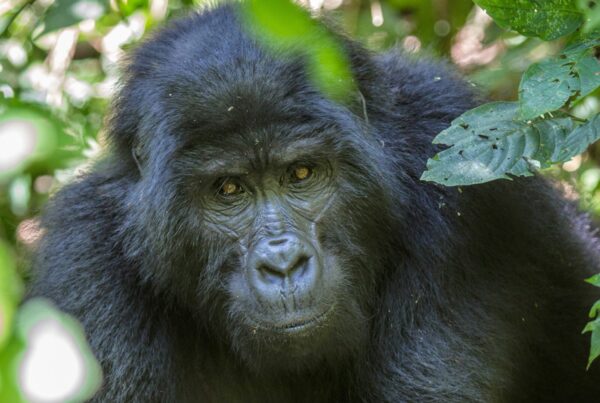
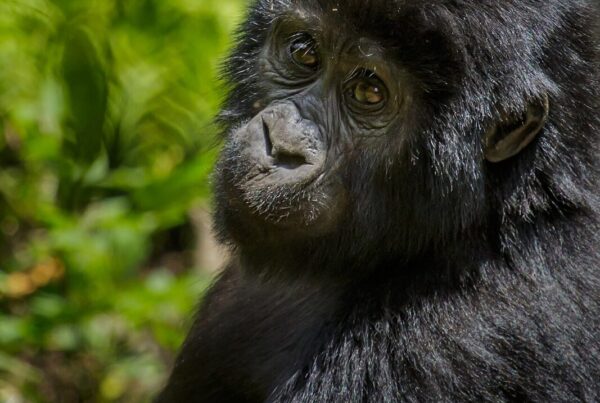
Uganda is home to the mountain gorilla (Gorilla beringei beringei), one of two subspecies of eastern gorilla. They live exclusively in the Virunga volcanic highlands (Uganda/Rwanda/DRC) and Bwindi Impenetrable Forest (Uganda only). Mountain gorillas are the only gorilla subspecies that cannot survive in captivity — every individual you can trek is a wild animal.
The standard gorilla trekking permit gives you exactly 1 hour with the gorilla family. This time begins when you make first contact with the family — the ranger signals the start. The Gorilla Habituation Experience gives 4 hours with a semi-wild family. The walk to find the gorillas can take 30 minutes to 5 hours depending on where the family has moved.
Stay calm, crouch down slowly, avoid direct eye contact, and remain quiet. Do not run — running triggers a chase response. Rangers accompanying your group manage close approaches. Habituated gorillas are accustomed to humans and almost never make contact, but a charging silverback is managed by staying still and following ranger instructions immediately.
A maximum of 8 visitors per habituated gorilla family per day for standard trekking. The Gorilla Habituation Experience has a maximum of 4 visitors per family per day. These limits are set by UWA to minimise stress on the gorilla families and maintain the quality of the experience.
Uganda is home to the mountain gorilla (Gorilla beringei beringei), one of two subspecies of eastern gorilla. They live exclusively in the Virunga volcanic highlands (Uganda/Rwanda/DRC) and Bwindi Impenetrable Forest (Uganda only). Mountain gorillas are the only gorilla subspecies that cannot survive in captivity — every individual you can trek is a wild animal.