The dominant narrative around African wildlife is one of decline. Elephant populations falling due to poaching. Lion ranges shrinking as habitats fragment. Rhino numbers collapsing under pressure from the illegal horn trade. This narrative is real — many species have declined significantly — but it is not the complete picture. In a number of African countries, and for a number of specific species, wildlife populations have actually grown since 2010. Understanding where these conservation successes have occurred, and why, offers both grounds for measured optimism and practical insight into what conservation approaches work.
Mountain Gorillas: Uganda, Rwanda, DRC
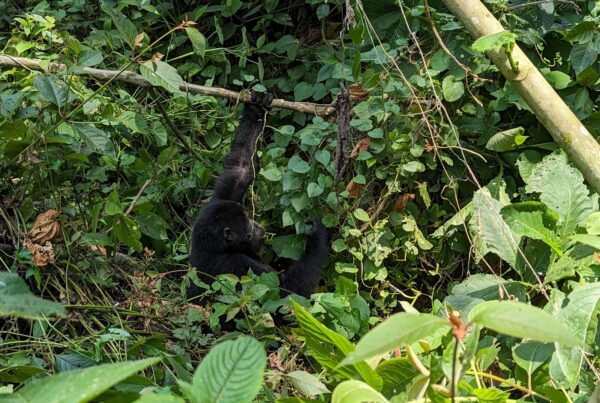
The mountain gorilla is the most prominent success case. The global population has grown from approximately 880 individuals in 2010 to over 1,100 today — a 25% increase over fifteen years in the context of a species that was considered potentially unsalvageable in the 1980s. The growth has been documented through census surveys using nest counting and DNA analysis. It spans both the Bwindi-Sarambwe ecosystem (Uganda and DRC) and the Virunga Massif (Uganda, Rwanda, DRC).
The primary drivers are intensive ranger protection funded by gorilla tourism permit revenue, veterinary intervention programmes that have treated injuries and disease in habituated families, and community support programmes that have reduced human pressure on forest boundaries. In Uganda, the gorilla permit costs $800 USD for international visitors in 2027. This revenue is the economic backbone of the conservation system that produced the population growth.
White Rhinoceros: South Africa, Kenya
The southern white rhinoceros population, reduced to fewer than 50 individuals in the early twentieth century, has recovered to approximately 17,000 individuals today — the largest rhinoceros population of any species or subspecies remaining on earth. Most live in South Africa, with significant populations in Kenya, Zimbabwe, and Uganda (where a small population was reintroduced to Ziwa Rhino Sanctuary). Intensive protection, breeding programmes, and private game reserve management have driven this recovery, with rhino tourism contributing to the economic case for maintaining the populations.
African Wild Dogs: Botswana, Zimbabwe, Mozambique
The African wild dog remains endangered, but populations in Botswana’s Okavango Delta and the Greater Limpopo Transfrontier Conservation Area (spanning Botswana, Zimbabwe, and Mozambique) have grown since 2010. Improved understanding of wild dog ranging behaviour, reduced persecution by farmers in areas with compensation programmes, and the expansion of protected area networks have contributed to the growth. Wild dog sightings have become more reliable in some Botswana reserves, and the species has become an increasingly significant draw for photographic safari tourists.
Elephant: Botswana
Botswana holds one of the few genuinely growing elephant populations in Africa. The country’s strong anti-poaching stance, large areas of protected and community-managed land, and proximity to Zimbabwe and Zambia elephant populations have supported continuous population growth. Current estimates put Botswana’s elephant population at approximately 130,000 — the largest national elephant population on earth. The growth has created its own challenges including human-elephant conflict and crop raiding, which have become significant conservation management issues.
Chimpanzee: Uganda
Uganda’s chimpanzee population has been stable to growing in well-protected forest areas including Kibale National Park, Budongo Forest, and the Kyambura Gorge in Queen Elizabeth National Park. The habituation of new chimpanzee communities for tourism in Kibale has allowed more visitor access without increasing pressure on established communities, while the core research populations at Kanyawara and Ngogo have been stable for decades. Kibale’s chimpanzee density — the highest in Africa — has been maintained through consistently funded park protection and active boundary management.
What These Cases Have in Common
The species whose populations have grown since 2010 share common characteristics in their conservation management. All of them benefit from dedicated and funded ranger protection. All of them have been the subjects of tourism products that generate income to sustain that protection. All of them have benefited from community engagement programmes that reduce human pressure on their habitats. None of them have recovered by accident or simply by the passage of time.
The conservation successes in Africa since 2010 are not evidence that the crisis is over. They are evidence that specific, well-funded, well-managed conservation programmes work. The mountain gorilla’s recovery from 620 individuals in 1989 to over 1,100 today is the most dramatic demonstration of this principle. It happened because people chose to pay the permit, make the trip, and fund the system. For anyone considering a gorilla trek in Uganda in 2027, the evidence of what their visit enables is available in the population numbers.
Frequently Asked Questions
Kibale Forest National Park, near Fort Portal, has the highest density of chimpanzees in Africa and is Uganda’s premier chimpanzee destination. The standard chimp trekking permit costs $300 FNR. The Chimpanzee Habituation Experience at Kibale ($400 FNR) gives 4 hours with a habituated community — Uganda’s only chimp habituation programme.
Yes — the gorilla + chimp combination is Uganda’s most popular primate itinerary. A typical 8-day route: Entebbe → Kibale Forest (2 nights, chimp trekking) → Queen Elizabeth National Park (2 nights, game drives) → Bwindi (2 nights, gorilla trekking) → Entebbe. Charter flights on any leg reduce travel time significantly.
Uganda has 13 primate species. Commonly seen: olive baboon, vervet monkey, red-tailed monkey, black-and-white colobus, L’Hoest’s monkey, grey-cheeked mangabey. Golden monkeys are found at Mgahinga. Kibale Forest has the highest primate diversity of any East African forest. A dedicated primate safari can tick 7–8 species in a single itinerary.
Uganda has over 1,060 recorded bird species — one of the highest counts of any country in Africa. Bwindi alone has 350+ species including 23 Albertine Rift endemics. Murchison Falls, Queen Elizabeth, and the wetlands around Entebbe round out a world-class birding circuit. The African green broadbill and Shelley’s crimsonwing are Bwindi specialities.
Uganda is home to the mountain gorilla (Gorilla beringei beringei), one of two subspecies of eastern gorilla. They live exclusively in the Virunga volcanic highlands (Uganda/Rwanda/DRC) and Bwindi Impenetrable Forest (Uganda only). Mountain gorillas are the only gorilla subspecies that cannot survive in captivity — every individual you can trek is a wild animal.