National Geographic has featured mountain gorilla trekking Uganda in multiple formats — print magazine features, documentary productions, and online content — over the past three decades. The National Geographic coverage of Bwindi and Uganda’s gorillas is part of the global story of how this species was saved, and it provides an extraordinary body of evidence about what the experience is like from the perspective of the world’s most respected nature publication.
National Geographic and Mountain Gorilla Conservation
National Geographic Society has been closely connected to mountain gorilla research and conservation since the 1960s, when it funded Dian Fossey’s pioneering work in the Virunga mountains of Rwanda. Fossey’s research, supported by National Geographic grants and documented in National Geographic Magazine, produced the foundational understanding of mountain gorilla social structure, behaviour, and conservation needs that underpins all subsequent gorilla tourism management. Her book “Gorillas in the Mist” — which became a National Geographic-supported feature film in 1988 — brought mountain gorillas to global consciousness and created the public interest that made gorilla tourism viable. Without National Geographic’s early conservation investment, the tourism model that now funds Bwindi’s protection would not exist.
What National Geographic Coverage Says About the Experience
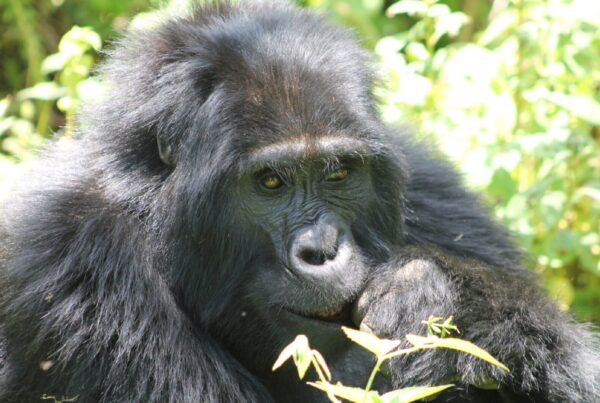
National Geographic’s travel coverage of gorilla trekking Uganda consistently emphasises the elements that distinguish the encounter from other wildlife experiences: the proximity, the intelligence, the conservation story, and the emotional impact. National Geographic Writers who have trekked in Bwindi describe the encounter in terms that are more philosophical than descriptive — not just an animal encounter but a moment of species recognition, a meeting with a being whose eyes hold something familiar. This language — used independently by journalists with no commercial interest in promoting the experience — is consistent with what independent traveller reviews say. The convergence between the world’s most respected nature publication’s language and ordinary travellers’ words is striking and meaningful.
National Geographic Traveller’s Uganda Coverage
National Geographic Traveller UK has featured Uganda gorilla trekking as a recommended experience in its annual rankings, and Bwindi Impenetrable National Park has appeared in National Geographic’s “Best of the World” destination lists in multiple years. These editorial recognitions carry no commercial relationship with operators — they reflect editorial assessments of experience quality, conservation impact, and authentic travel value. When National Geographic recommends a wildlife experience, it is recommending an experience that its editors would make themselves. Contact us to book your own National Geographic-grade gorilla trekking Uganda experience for 2027.
Frequently Asked Questions
Uganda is home to the mountain gorilla (Gorilla beringei beringei), one of two subspecies of eastern gorilla. They live exclusively in the Virunga volcanic highlands (Uganda/Rwanda/DRC) and Bwindi Impenetrable Forest (Uganda only). Mountain gorillas are the only gorilla subspecies that cannot survive in captivity — every individual you can trek is a wild animal.
The standard gorilla trekking permit gives you exactly 1 hour with the gorilla family. This time begins when you make first contact with the family — the ranger signals the start. The Gorilla Habituation Experience gives 4 hours with a semi-wild family. The walk to find the gorillas can take 30 minutes to 5 hours depending on where the family has moved.
Stay calm, crouch down slowly, avoid direct eye contact, and remain quiet. Do not run — running triggers a chase response. Rangers accompanying your group manage close approaches. Habituated gorillas are accustomed to humans and almost never make contact, but a charging silverback is managed by staying still and following ranger instructions immediately.
A maximum of 8 visitors per habituated gorilla family per day for standard trekking. The Gorilla Habituation Experience has a maximum of 4 visitors per family per day. These limits are set by UWA to minimise stress on the gorilla families and maintain the quality of the experience.
Uganda is home to the mountain gorilla (Gorilla beringei beringei), one of two subspecies of eastern gorilla. They live exclusively in the Virunga volcanic highlands (Uganda/Rwanda/DRC) and Bwindi Impenetrable Forest (Uganda only). Mountain gorillas are the only gorilla subspecies that cannot survive in captivity — every individual you can trek is a wild animal.