It is not the most famous fact about Entebbe Botanical Garden, and it is not even certain which of the many Tarzan films made use of the location, but the story has attached itself to this quietly extraordinary place and given it a second layer of mythological weight to add to its first. The garden itself — established in 1898 on the shore of Lake Victoria, one of Uganda’s oldest colonial-era institutions — does not need the Tarzan connection to be remarkable. What it needs is for visitors to slow down and actually look at what is around them.
Entebbe Botanical Garden sits on a promontory jutting into Lake Victoria, five kilometres from Entebbe International Airport, and is almost universally missed by international visitors who transit through the airport on their way to gorilla trekking at Bwindi. This is a significant and easily corrected mistake.
The Garden’s History
The garden was established in 1898 by the British colonial administration as a research and demonstration facility — a place where potentially commercially valuable plant species from across the tropical world could be trialled for cultivation in the Uganda Protectorate. The colonial context of this work was exploitative in intent, designed to identify crops that could generate revenue for the colonial economy. The incidental consequence was the creation of one of East Africa’s most diverse botanical collections, assembled over more than a century and now managed by the National Forestry Authority of Uganda.
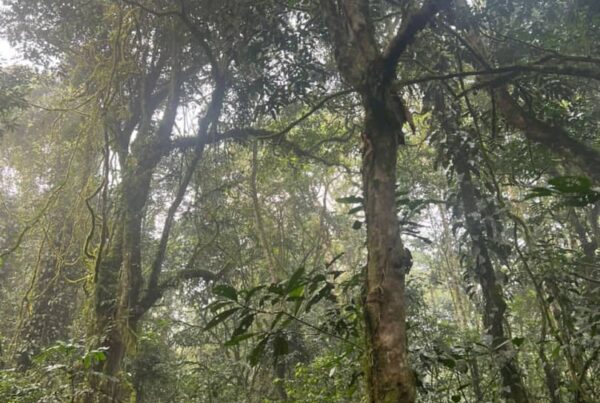
The garden covers approximately 40 hectares and contains both formal planting areas and patches of natural lakeshore forest that have been maintained essentially intact since the garden’s establishment. These forest fragments are among the best examples of original Lake Victoria shoreline vegetation remaining in Uganda — the rest of the shoreline having been cleared for agriculture, development, and aquaculture over the past century.
The Chimpanzee Population
Entebbe Botanical Garden supports a small but stable chimpanzee population — habituated individuals who have learned to coexist with the garden’s visitors and staff while maintaining enough wildness to make encounters unpredictable and genuine. The chimpanzees are not residents of the garden in the sense of being confined there; they move freely across the wider Entebbe peninsula, using the garden as a resource among others. But regular sightings are common, particularly in the early morning and late afternoon when the chimpanzees are most active.
These are genuine wild chimpanzees in a genuinely natural habitat — not the managed primate walks of Kibale Forest National Park, where chimpanzee tracking is conducted under controlled conditions with certified guides and strict protocols. In the botanical garden, you may turn a corner and find a chimpanzee three metres away in a fruit tree, looking back at you with an expression that suggests it has been observing you longer than you have been observing it. The experience is less predictable and therefore more viscerally surprising than the formal tracking experience.
The Birds of the Botanical Garden
For birders, Entebbe Botanical Garden is one of the most productive sites in Uganda for the amount of time and effort required. The combination of lakeshore habitat, forest fragments, open garden areas, and the proximity of Lake Victoria creates a diversity of microhabitats that supports an exceptionally varied bird community. Over 200 species have been recorded in the garden — an extraordinary list for a 40-hectare urban green space.
The lakeshore habitats hold species associated with large freshwater systems: African fish eagles, pied kingfishers, malachite kingfishers, grey herons, saddle-billed storks during migration periods, and various waders that use the mudflats exposed during low-water periods. The forest fragments hold endemics and near-endemics of the Lake Victoria basin — species found nowhere else in Uganda. The open garden areas attract species that use modified habitats without being dependent on them: sunbirds, weavers, starlings, and raptors that hunt the open grass between tree plantings.
The Dawn Chorus
Arriving at the garden’s gates at opening time — typically 7 or 8 in the morning depending on the season — allows access to the dawn chorus in one of its most spectacular forms. The chimpanzee pant-hoots that carry across the garden at dawn are underlaid by a layer of bird sound that experienced birders describe as among the most extraordinary they have encountered in East Africa. The sequence of species starting to call — first the African fish eagle, then the hornbills, then the smaller forest birds — is a reliable alarm clock for anyone sleeping in Entebbe and listening.
The Lake Victoria Connection
The garden’s position on the Lake Victoria shoreline gives it a relationship with the lake that transforms both environments. The lake views from the garden’s eastern edge are panoramic — the water extending to a horizon that is beyond visible distance, the islands of the Sese chain appearing as dark silhouettes on clear mornings. At dawn the lake surface catches the light in ways that change minute by minute, the colours moving through orange, gold, and then the flat blue of full morning.
The ecological connection between garden and lake is also significant. The forest fragments in the garden act as refugia for shoreline species that have nowhere else to go as the surrounding area is developed. The garden’s intact vegetation prevents the erosion and runoff that degraded lakeshore areas contribute to Lake Victoria’s water quality problems. Maintaining the garden in its current state is, in a modest way, a contribution to the health of the world’s second largest freshwater lake.
Tarzan and the Films
Several early Tarzan films used African locations, and Entebbe’s lakeshore forest — with its combination of dense canopy, open glades, and dramatic lake backdrop — provided exactly the visual vocabulary of “authentic African jungle” that these productions required. The specific films shot here are a matter of some debate among film historians, with various accounts naming different productions and different specific locations within the Entebbe area. What is consistent across accounts is that the lakeshore forest visible in certain scenes of certain early Tarzan productions was filmed in Uganda, and that Entebbe Botanical Garden was the most likely location.
The detail does not matter enormously in itself. What it gestures toward is the way this place has served as a proxy for “Africa” in the international imagination — lush, dramatic, teeming with wildlife, fundamentally different from the landscapes of European and North American filmmakers. The garden really is all of these things. The films simply recognised it.
Visiting on the Way to Gorilla Trekking
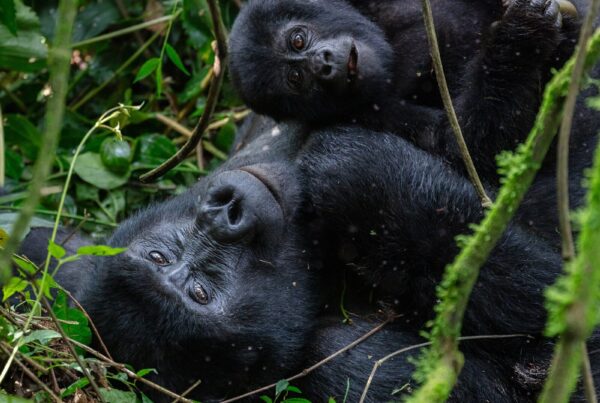
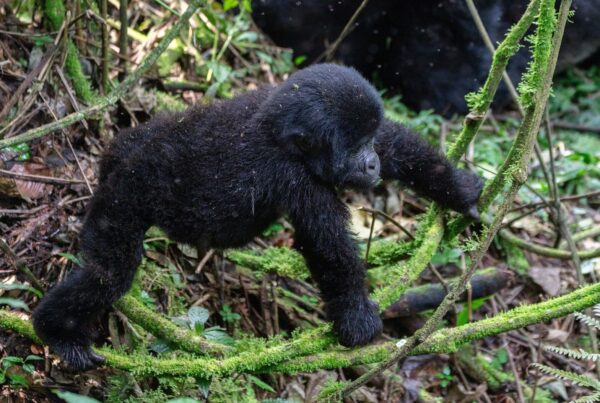
Entebbe Botanical Garden makes the ideal first stop for visitors who have just landed at Entebbe International Airport and are spending a night in Entebbe before beginning a gorilla trekking itinerary. The garden provides a gentle introduction to Ugandan wildlife — chimpanzees, birds, the lakeshore ecology — without the intensity of the full national park experience. It calibrates the eye and ear for what is to come in Bwindi or Kibale.
The $800 gorilla permits in 2027 represent access to one of the world’s great wildlife encounters. Entebbe Botanical Garden represents something different but complementary — a place where Africa’s wildlife coexists with a city, where history and ecology intersect in a few managed but genuine hectares of lakeshore forest. Visiting both is to encounter Uganda at different scales and with different expectations. Neither encounter is lesser for the existence of the other.