Updated
The Uganda ranger family Bwindi gorilla is one of the habituated mountain gorilla groups that trekkers can visit in Uganda or Rwanda, offering an intimate encounter with these remarkable primates. When Elias Tumuhairwe joined the Uganda Wildlife Authority as a ranger in Bwindi Impenetrable National Park in 1994, three years after the park’s gazetttement, he was part of a new institution building itself from scratch. The park had rangers before — forest guards whose role had been defined primarily around timber theft and wildlife poaching — but the conservation mandate that came with national park status was different, more demanding, and less familiar than anything in the previous job description. Elias learned his craft in the field, from colleagues who were also learning, in a forest that was still adjusting to its new protected status.
Thirty years later, his son Daniel is a ranger in the same park, working the same mountain ridges, following the same gorilla families that his father learned to track as a young man. And Daniel’s daughter, fifteen years old and already spending her weekends helping with the community environmental education programmes that run out of the park’s visitor centre, has told her parents she wants to do what they do. Three generations of the same family, committed to the same forest.
The Ugandan Ranger Family: Three Generations Protecting the Same Forest
How Ranging Worked in the Beginning
In the early years of Bwindi as a national park, ranging was primarily about presence — maintaining a human patrol footprint across a difficult terrain to deter poachers who had previously had largely free access to the forest. The equipment was minimal, the training was limited, and the systems for tracking gorilla family movements and recording ecological data were being developed simultaneously with the practical work of park protection.
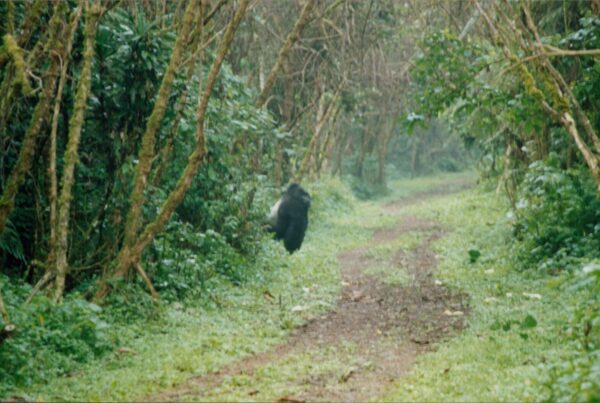
Elias recalls the early patrols as physically demanding in ways that are hard to convey to visitors who experience Bwindi along maintained trails with experienced guides. The forest interior — away from the gorilla circuits that tourists walk — is genuine impenetrable terrain: steep ravines, dense undergrowth, river crossings without bridges, and a visibility that rarely extends more than a few metres in any direction. Moving through Bwindi off-trail requires a navigational sense built through years of experience, a physical fitness developed through daily exposure to terrain that has no equivalent in lowland environments, and a tolerance for discomfort that is not taught in any classroom.
The Gorilla Families
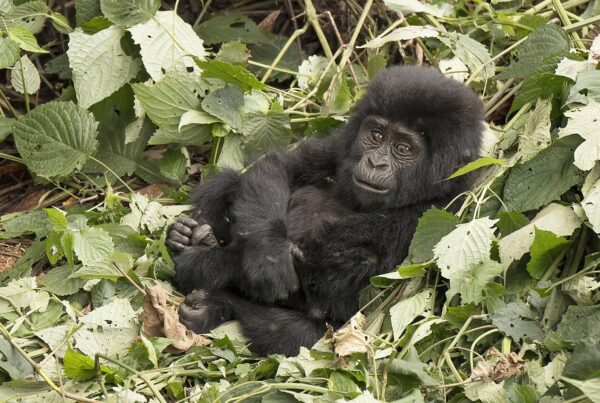
The most significant responsibility that rangers developed over the first decade of Bwindi’s operation was the daily monitoring of habituated gorilla families. Each habituated family — there are now more than a dozen across Bwindi’s four sectors — is visited daily by a monitoring team that records the group’s location, health, behaviour, and group composition. This record has been maintained for decades and represents one of the most detailed longitudinal datasets in primate research — a record that has been used in dozens of scientific publications and that informs current conservation management decisions.
Elias was among the rangers who monitored the Mubare family — Bwindi’s first habituated group, open to tourists from 1993 — during its early decades. He knows the individuals in the Mubare family across three generations, has watched silverbacks rise to dominance and eventually decline, has witnessed births and deaths and the complex social negotiations that shape gorilla group dynamics. His knowledge of the Mubare family is, in practical terms, irreplaceable — the product of thirty years of daily observation that no amount of research training can substitute.
What the Work Involves Now
Daniel’s experience of ranging is substantially different from his father’s, reflecting three decades of institutional development, technological change, and the evolution of conservation practice. Rangers in Bwindi now work with GPS devices, camera traps, radio communication systems, and data collection protocols that feed into national and international databases. The knowledge they acquire is documented systematically in ways that make it transferable — less dependent on the memory and experience of individuals, more accessible to the conservation management system as a whole.
The anti-poaching work continues, though its character has changed. Wire snare removal — one of the most time-consuming and important ranger activities, clearing the forest of the simple but deadly traps that kill and maim wildlife indiscriminately — is still a daily task in the areas of Bwindi closest to community farmland. The snares are set primarily to catch small antelope and other bushmeat species, but gorillas and other large mammals are caught in them accidentally, with consequences that range from temporary injury to permanent disability or death.
Gorilla Tourism and the Rangers’ Role
The $800 gorilla permits that international visitors pay in 2027 fund the Uganda Wildlife Authority’s operations, including ranger salaries, equipment, training, and the infrastructure that makes gorilla trekking possible. Rangers are the human infrastructure of gorilla tourism — without the daily monitoring that locates the gorilla families and the guiding expertise that leads tourists safely to encounters with them, the gorilla trekking industry does not exist.
Rangers who guide gorilla trekking groups occupy a public-facing role that sits awkwardly alongside the more familiar aspects of their work. They are wildlife professionals with deep ecological knowledge, but tourism requires them to also be interpreters, educators, crowd managers, and occasionally therapists for visitors who find the physical demands of the trek more challenging than expected. The best guides combine these roles with apparent ease. The less visible work — the pre-dawn monitoring hikes, the snare removal patrols, the late-night responses to crop-raiding incidents at park boundaries — remains largely unknown to the visitors they guide.
The Community Dimension
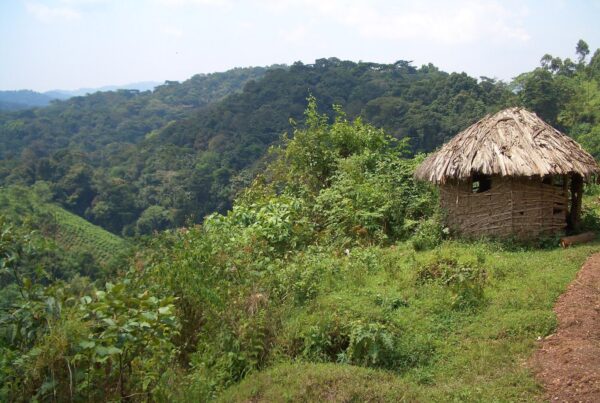
Elias, Daniel, and the rangers of their generation have been integral to the development of community conservation relationships around Bwindi. The early years of the park were marked by significant community resentment — memories of exclusion from forest resources, anger at crop raiding by wildlife for which no compensation was available, and a general sense that the park existed for the benefit of outsiders rather than the communities adjacent to it.
Rangers who lived in the adjacent communities — who were neighbours and relatives of the farmers most affected by the park — served as crucial bridges in this difficult relationship. Their presence in both worlds gave them credibility in community negotiations that institutional representatives from Kampala or international NGOs could not achieve. The community revenue-sharing programmes, the crop compensation schemes, the community ranger initiatives that emerged over the following decades all depended on the trust that individual rangers had built through years of presence and relationship in their home communities.
What Will Be Passed On
When Daniel’s daughter eventually joins the Uganda Wildlife Authority — if she does, and the pattern suggests she might — she will inherit an institutional knowledge base, a set of conservation tools, and a physical understanding of Bwindi that has been built across her family’s three generations of service. She will also inherit the specific knowledge of specific gorilla families that has been transmitted from Elias to Daniel: which routes the Rushegura family prefers in the wet season, where the Nkuringo group shelters during afternoon storms, which community farms are most vulnerable to gorilla raiding in which months.
This knowledge is not in any database. It exists in relationships — between rangers and the forest they inhabit, between generations of a family committed to the same place, between the humans who have dedicated their working lives to the protection of animals that know nothing of their debt. The gorilla families that visitors pay $800 to see in 2027 survive in part because of institutional conservation systems and in part because families like the Tumuhairwes have kept showing up, year after year, knowing the forest and choosing to protect it.
Frequently Asked Questions
The global mountain gorilla population is approximately 1,100 individuals — one of the smallest populations of any great ape. They exist in two separate populations: one in the Virunga Massif spanning Uganda, Rwanda, and DRC; and one in Bwindi Impenetrable Forest (Uganda only). The population has grown from approximately 620 in the 1980s, largely due to tourism-funded conservation.
Uganda Wildlife Authority directs 20% of every gorilla permit fee to communities adjacent to Bwindi and Mgahinga. These funds pay for school construction, healthcare programmes, borehole maintenance, and community microfinance. Permit revenue also funds ranger salaries, anti-poaching patrols, and the research teams that monitor gorilla health daily.
The Batwa (also called Twa) are an indigenous forest people who lived inside Bwindi for thousands of years until it was gazetted as a national park in 1991. Conservation displaced them from their ancestral forest. Gorilla tourism revenue now funds Batwa cultural programmes and livelihoods. The Batwa Cultural Trail at Buhoma sector is run by the Batwa community and is one of the most authentic cultural experiences near Bwindi.
Mountain gorillas are classified as Endangered on the IUCN Red List — one step down from Critically Endangered, which they held until 2018. Their population has grown consistently since the 1980s, making them one of the few great ape populations increasing in number. This recovery is directly attributed to the conservation funding generated by gorilla tourism.
Uganda is home to the mountain gorilla (Gorilla beringei beringei), one of two subspecies of eastern gorilla. They live exclusively in the Virunga volcanic highlands (Uganda/Rwanda/DRC) and Bwindi Impenetrable Forest (Uganda only). Mountain gorillas are the only gorilla subspecies that cannot survive in captivity — every individual you can trek is a wild animal.