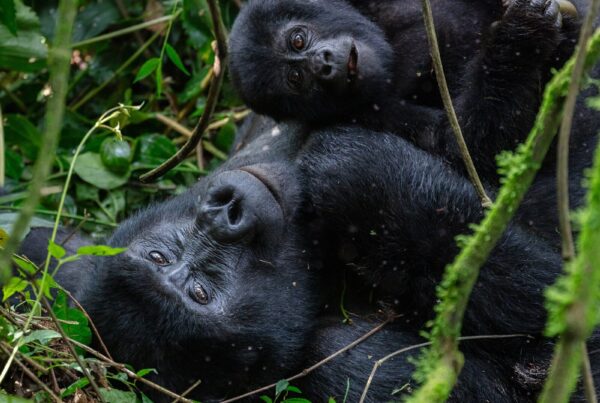
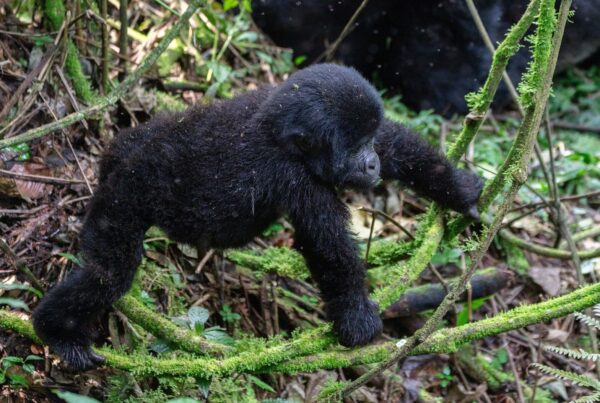
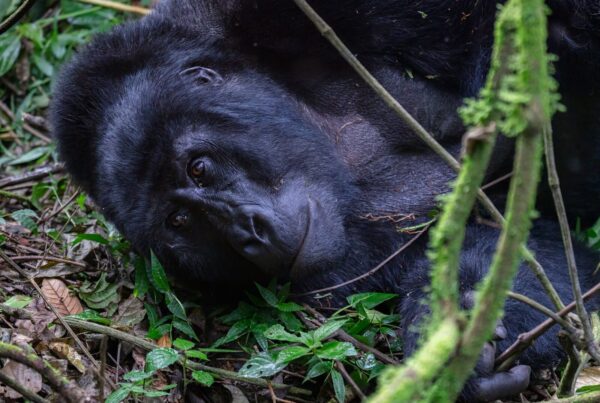
The conservation of mountain gorillas in Uganda has a technical and institutional dimension — permits, rangers, revenue sharing, international NGOs — but it also has a cultural and moral dimension that is often overlooked: the traditional knowledge systems, proverbs, and ecological relationships that communities adjacent to Bwindi have maintained across generations. Among the Bakiga and Bafumbira people who live at Bwindi’s edge, there is a practical understanding of the forest as a water tower, a climate regulator, and a provider of resources whose destruction would be self-defeating — an understanding that predates the national park by centuries. See how Bwindi’s communities relate to the forest and the gorilla families they now help protect.
- Bakiga people: the primary community adjacent to Bwindi’s northern sector (Buhoma)
- Bafumbira: community adjacent to the southern sectors, with Rwandan ethnic and cultural roots
- Traditional forest relationship: pre-colonial communities used forest resources sustainably under traditional governance
- Proverb culture: oral tradition encodes ecological wisdom in Bakiga society, as in many African cultures
- Tension: national park establishment in 1991 disrupted traditional forest access — rebuilding community-conservation relationship has taken decades
There is a saying among the Bakiga people who live adjacent to Bwindi Impenetrable Forest: Omushana gw’omuti agutaaha mu isho ry’omuntu — roughly translated as “the shade of a tree does not enter the eye of the person who cut it down.” It is a proverb about consequences, about the way that destruction returns to the one who caused it. And while it predates modern conservation by centuries, it captures something that took the global environmental movement decades of painful experience to learn: that the protection of nature and the welfare of communities are not competing interests but the same interest expressed in different ways.
Proverbs as Conservation Philosophy
Ugandan oral traditions contain a remarkable body of wisdom about human relationships with the natural world. This is not surprising — for the vast majority of human history in the region, the forest was not an abstract entity to be preserved or exploited but an intimate environment on which daily survival depended. The Bakiga, the Bafumbira, and the Batwa peoples who lived around Bwindi developed sophisticated understandings of forest ecology not through scientific study but through generations of observation, use, and consequence.
Another Bakiga proverb states: Omushana tagurikwa — “a shade tree is not for sale.” The implication is that some things cannot be reduced to market value, that there are resources whose worth lies precisely in their continued existence rather than their consumption. Applied to the mountain gorillas of Bwindi, this proverb articulates something that conservation economists have struggled to quantify: the value of the gorilla is not the value of what you can take from it but the value of what continues to exist because of it.
The Batwa and the Forest
The Batwa people, one of Uganda’s indigenous forest-dwelling communities, have the most intimate historical relationship with Bwindi of any human group. For centuries they lived within the forest, hunting, gathering, and moving through the canopy with a knowledge that still astonishes conservationists. Their language contains dozens of words for different states of forest — different light conditions, different stages of vegetation succession, different sounds and silences — that have no direct equivalents in English or Luganda.
The relationship between Batwa knowledge and gorilla protection is complex and often painful. When Bwindi was gazetted as a national park in 1991 and the Batwa were excluded from their traditional forest home, a profound injustice was committed in the name of conservation. The knowledge the Batwa held about the forest — knowledge that would have been invaluable to gorilla conservation — was simultaneously denied and extracted, used without acknowledgement, and then forgotten as the Batwa themselves were pushed to the margins of a tourist economy built in part on the forest they once called home.
What Traditional Knowledge Understood
The traditional ecological knowledge held by forest communities around Bwindi understood several things that formal conservation science took decades to recognise. First, that the gorilla is a keystone species — that the forest depends on the gorilla’s movement patterns, feeding behaviour, and seed dispersal in ways that make gorilla protection indistinguishable from forest protection. Communities who had lived alongside gorillas for generations understood intuitively what scientists later demonstrated through research: remove the gorillas and you change the forest; change the forest and you change everything that depends on it, including the communities on its edges.
Second, traditional knowledge understood that boundaries are ecologically meaningless. The forest does not know the edges of the national park. Gorillas move across park boundaries. Water systems flow from inside the park to outside it. The insects and birds that pollinate the agricultural crops grown by communities adjacent to the park depend on the habitat within the park for part of their life cycles. Protecting the park while ignoring what happens outside it was always going to be insufficient, and traditional land management, which recognised no such boundary, had always treated the landscape as continuous.
The Proverb of the Honey Bird
A particularly instructive traditional story involves the honeyguide bird — known in Luganda as omuyuni gw’omubisi — which leads honey hunters to wild bee nests and expects a share of the honey as reward. The relationship between hunter and bird is one of mutual benefit: the hunter gets honey they could not find alone; the bird gets access to the beeswax it cannot consume without human help. The protocol for this relationship was strict in traditional practice — fail to leave the bird its portion, and it would guide you to a lion next time, or to nothing at all.
Conservation practitioners have used this story to explain the logic of community benefit-sharing around Bwindi. The gorillas, like the honeyguide, provide something of value to outsiders — in this case, the tourism revenue that gorilla trekking generates. But this provision is not free, and it is not unconditional. The communities adjacent to the park bear real costs — crop raiding by gorillas and other wildlife, restrictions on land use, loss of access to forest resources — in exchange for the protection that makes gorilla trekking possible. If those communities do not receive their portion, the relationship breaks down.
Modern Conservation Learning from Traditional Wisdom
The evolution of gorilla conservation policy in Uganda over the past three decades has, often unconsciously, moved toward positions that traditional wisdom had already reached. The community revenue-sharing programme, through which a portion of gorilla permit revenue flows directly to communities adjacent to Bwindi, reflects the proverb of the honeyguide. The integrated conservation and development approach, which recognises that park protection cannot succeed if surrounding communities have no stake in it, reflects the proverb about the shade tree that cannot be sold.
In 2027, Uganda charges $800 for a gorilla trekking permit. A portion of this revenue — managed through a structured programme administered by the Uganda Wildlife Authority — goes to community projects: schools, healthcare facilities, water systems, roads. The logic is explicit: the communities that live with the costs of having a national park as their neighbour deserve a share of the benefits that park generates. This logic was not invented by conservation economists. It was already present in the proverbs.
The Intergenerational Dimension
Several Ugandan proverbs address obligations to future generations in ways that map directly onto conservation ethics. Abazzukulu ni baffe — “our grandchildren are ourselves” — articulates a view of temporal continuity that sees future people not as abstract beneficiaries of present decisions but as extensions of the present community, worthy of the same consideration as living neighbours. To destroy the forest for present gain is, in this framework, to harm your own grandchildren — which is to say, to harm yourself.
This framing is more emotionally compelling than most conservation arguments, which tend to rely on abstract future scenarios or scientific projections that feel distant. The proverb makes the stakes immediate and personal. It is not the unborn who will suffer if the gorillas disappear; it is you, projected forward through your descendants.
What Visitors Learn
Visitors who trek to see mountain gorillas in Bwindi often describe the experience as transformative — a word that gets overused in travel writing but that, in this context, seems genuinely accurate. The hour spent in the presence of a gorilla family changes something in the way people think about wildness, about human uniqueness, about the distance between ourselves and other forms of intelligence.
What is less often communicated is the cultural context in which this encounter takes place — the centuries of coexistence between human communities and gorilla populations, the accumulated wisdom about that coexistence encoded in proverbs and stories, and the political struggle through which communities have asserted their right to share in the benefits of a conservation system built on their land.
Uganda’s gorillas are protected by science, by law, by permit revenue, and by anti-poaching patrols. But they are also protected by ideas — by a tradition of thought that recognised the shade tree’s value before anyone thought to assign it a dollar amount. The proverbs got there first.
What traditional beliefs do Ugandan communities hold about gorillas?
Traditional relationships between Bakiga communities and gorillas were defined primarily by distance and occasional agricultural conflict — gorillas raiding crops at the forest edge were seen as a nuisance and occasionally hunted. Gorillas were not typically objects of spiritual reverence in Bakiga tradition in the way that some other African communities relate to specific animals. The shift in community attitudes toward gorillas has come not from a revival of traditional reverence but from the economic reality of gorilla tourism: when the gorillas pay for schools and employ family members, the community’s relationship to them becomes materially invested in their survival.
Do Ugandan proverbs encode ecological wisdom about forests?
Yes — Bakiga oral tradition, like many African oral traditions, encodes practical ecological knowledge in proverbial form. The understanding that forest destruction has downstream consequences — water shortages, soil erosion, climate instability — is expressed in proverbs that predate formal environmental science by centuries. These proverbs circulate in a culture that observed forest clearing and its consequences across generations. Conservation education programmes that connect this traditional ecological knowledge to the scientific conservation model build bridges between cultural authority and institutional conservation in ways that purely technical approaches cannot.
How did the Bakiga people use Bwindi’s forest before it became a national park?
The Bakiga used the forest edges for firewood collection, medicinal plant harvesting, beekeeping, and in some areas limited cultivation and hunting. This use was governed by customary rules that limited exploitation and maintained the forest’s productive capacity over generations. The colonial-era demarcation of Bwindi as a Forest Reserve (1932) and the 1991 gazettal as a national park progressively restricted this access, ultimately banning all resource extraction. The loss of these use rights — without adequate compensation or alternative income provision at the time — created the resentment that conservation programmes have spent three decades rebuilding trust to address.
Are there any traditional ceremonies or customs connected to Bwindi’s wildlife?
The Bakiga and Bafumbira communities do not have widely documented ceremonial connections to gorillas specifically. The Batwa, who lived within the forest itself before eviction in 1991, have the deepest traditional relationship with Bwindi’s wildlife and maintain cultural practices connected to forest life — documented in the cultural experiences offered near Bwindi today. For the Bakiga and Bafumbira, the forest is significant as a resource and a landscape rather than as a ceremonial or spiritual centre, and their conservation-relevant cultural practices are ecological knowledge and community governance systems rather than wildlife ceremonies.
Can gorilla trekking visitors engage with Ugandan cultural traditions near Bwindi?
Yes — several cultural experience options are available near all four Bwindi sectors. The Buhoma Community Village Walk includes cultural demonstrations of traditional practices including storytelling, basket weaving, and local brewing. Batwa cultural experiences are specifically designed to share forest knowledge and traditional practices from the Twa people who lived within Bwindi until 1991. Traditional dance performances by community groups are offered at several lodges. These experiences are community-operated and the income flows directly to participants — they are substantive cultural encounters, not staged performances, when chosen through operators who work directly with community groups.
- Uganda proverbs: 20 sayings that reveal the Ugandan worldview
- The Ugandan Woman Who Became the First Female Gorilla Tracker in Bwindi
- How a Ugandan Local Saved Up to Send His Daughter to University Via Tourism
- Why Local Ugandan Guides Give Better Gorilla Treks Than Foreign Ones
- How Gorilla Trekking Gave One Ugandan Guide the Life He Dreamed Of
- How a Silverback Protected His Family From a Buffalo Encounter
- Gorilla Trekking Uganda for Ugandan Citizens: Local Permit Pricing Explained
- Africa’s Remaining Intact Forests: Bwindi and Why It Must Be Protected
- The Ugandan Coffee That Competes With Ethiopian: The Specialty Story
- What Ugandans Eat for Breakfast: Food Culture Before the Safari