Updated
Despite the best efforts of anti-poaching patrols, wire snares — traps set by local hunters for small animals such as duiker and bush pig — occasionally injure gorillas in Bwindi Impenetrable National Park. The snares are indiscriminate: a young gorilla investigating the forest floor can catch a hand or foot in a loop that, over hours or days, causes progressive constriction and injury. The response to a snared gorilla is one of the most demanding interventions in mountain gorilla veterinary medicine, and the cases documented by Gorilla Doctors offer a detailed picture of what conservation medicine looks like in practice.
How Snares Are Detected
The UWA rangers and trackers who monitor habituated gorilla groups in Bwindi observe each family daily. A gorilla that is moving unusually, favouring a limb, or showing signs of distress will be noted in the daily monitoring report and flagged to the Gorilla Doctors team. In most snare cases the injury is first observed within one to three days of the snaring event — before the constriction has caused irreversible damage — because the monitoring frequency is high enough to detect behavioural changes quickly.
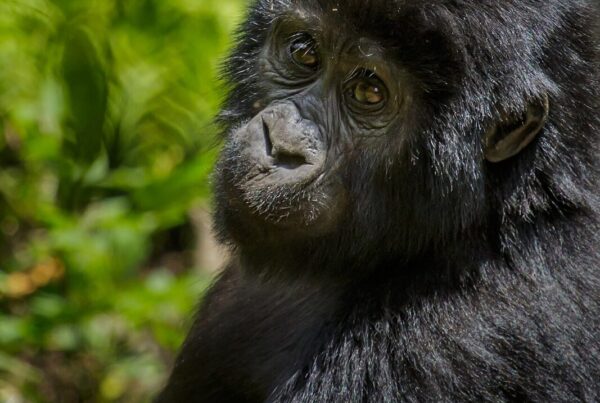
The female gorilla in this account — a juvenile from the Nshongi group at Rushaga sector — was identified in a morning monitoring visit as moving with an unusual gait. The tracker noticed that her right hand was held in an abnormal position and that she was not using it for locomotion or feeding. The Gorilla Doctors team was notified by mid-morning and arrived at the gorilla group’s location that afternoon.
The Assessment
The initial assessment confirmed a wire snare around the juvenile’s right wrist. The snare had been in place for an estimated twenty-four to thirty-six hours — long enough to cause significant constriction and swelling but short enough that vascular compromise had not yet occurred. The decision on whether to intervene immediately or monitor depended on whether the snare would loosen on its own — a wire snare around a wrist that is still swelling will not — and whether the gorilla could remove it without assistance.
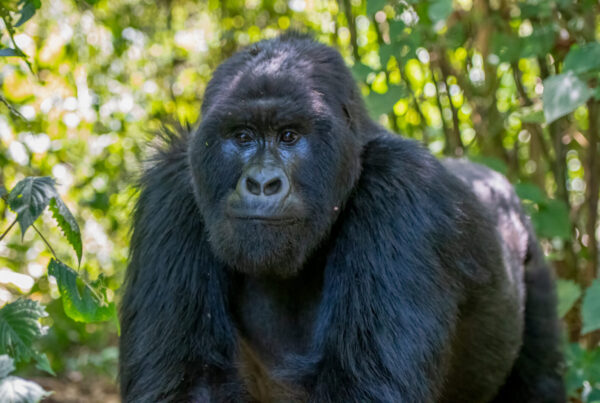
Juvenile gorillas do not have the manual dexterity or the tool-using capacity to remove wire snares. The team made the decision to intervene. This required darting the juvenile — using a remote injection of immobilising agent — while managing the response of the rest of the Nshongi group, particularly the dominant silverback, who would react protectively to his group member being darted.
The Intervention
The darting was conducted by the lead Gorilla Doctors veterinarian with UWA ranger support. The juvenile went down within minutes. The silverback’s response — charging toward the dart site before the veterinarian and rangers moved to create distance — was managed by the ranger team. The gorilla was worked on quickly: snare removed, wounds cleaned and treated, antibiotics administered, reversal agent given. The entire intervention from dart to recovery took under twenty minutes.
The juvenile recovered from the immobilising agent within the hour, returned to her mother, and resumed normal behaviour within two days. The monitoring team confirmed full use of the hand within two weeks. The injury left no permanent impairment.
What This Requires
This outcome required daily monitoring that detected the injury within thirty-six hours, a veterinary team with the training and equipment to conduct safe interventions in dense forest, ranger support capable of managing the response of a thirty-gorilla group, and the habituation status that made the whole operation possible. All of these are funded, directly or indirectly, by gorilla tourism. The permit costs $800. Some of what that maintains is the system that removed a wire snare from a juvenile gorilla’s wrist before she lost the use of her hand.
The Gorilla Doctors’ snare removal operation in Bwindi demonstrates the practical necessity of maintaining a resident veterinary team for habituated gorilla populations. Wire snares set by poachers for small mammals — bush pigs, duikers, and small antelopes — are frequently encountered by gorillas who disturb them while moving through the forest. A snare wound that goes untreated typically leads to infection, septicaemia, and death within weeks. The Gorilla Doctors programme’s ability to identify, assess, and treat snare wounds in free-ranging gorillas — using darting protocols that minimise the physical and psychological stress of immobilisation — has directly contributed to the survival of individuals who would otherwise have died from treatable injuries.
The Gorilla Doctors’ snare removal operations in Bwindi are supported partly by the gorilla trekking permit revenue that funds UWA’s veterinary partnership budget — making the $800 permit a direct financial contribution to the medical intervention infrastructure that protects the habituated families from snare injuries.