Updated
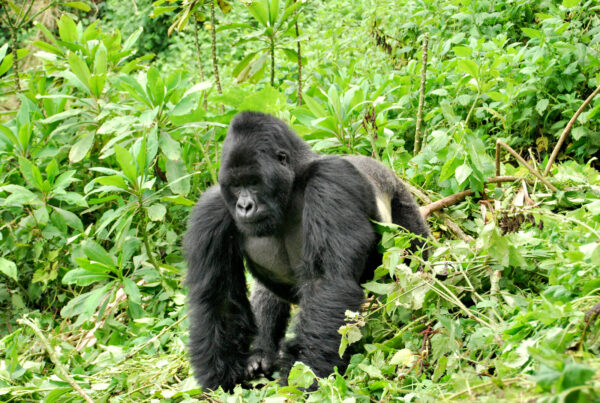
A silverback mountain gorilla stands about 1.5 to 1.8 m (5 to 6 ft) tall if it rises fully on two legs, which it rarely does. On all fours, walking on its knuckles, it is about 1.2 to 1.5 m at the shoulder. What makes silverbacks so imposing is their bulk: adult males typically weigh 140 to 200 kg, with an arm span that can exceed 2 m, much longer than their height.

Size compared with females and humans
Adult males are roughly twice the weight of adult females, one of the biggest size differences between the sexes among primates. A silverback’s arms are longer than its legs, and its huge chest, neck and jaw muscles give it a massive look. Males also develop a bony crest on top of the skull, which makes the head look taller.
When a male becomes a silverback
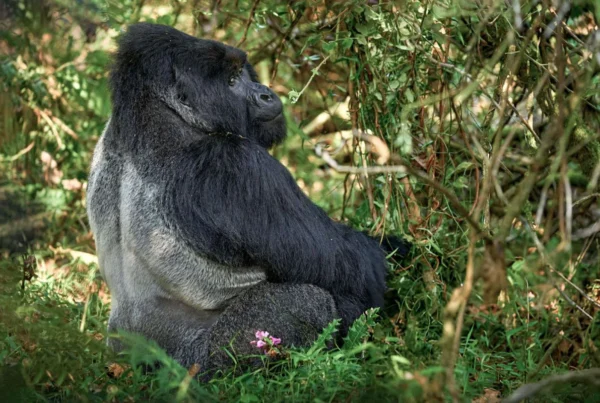
Males start to grow silver hair on the back at around 12 years old, when they become adults. Younger mature males without the silver saddle are called blackbacks. Silverbacks reach their full size in their mid-teens and may lead a group for many years.

Seeing one on a trek
Seen from 7 m on a trek, a resting silverback looks like a large, calm heap of muscle; standing and chest-beating, he seems much bigger. The gorilla permit costs US$800, or US$600 in April, May and November. See our guides to the silverback’s role, silverbacks versus blackbacks, Bwindi’s gorilla families and are mountain gorillas dangerous.
Frequently asked questions
About 1.5 to 1.8 m, or 5 to 6 ft.
Typically 140 to 200 kg.
The arm span can exceed 2 m.
Around 12 years old.